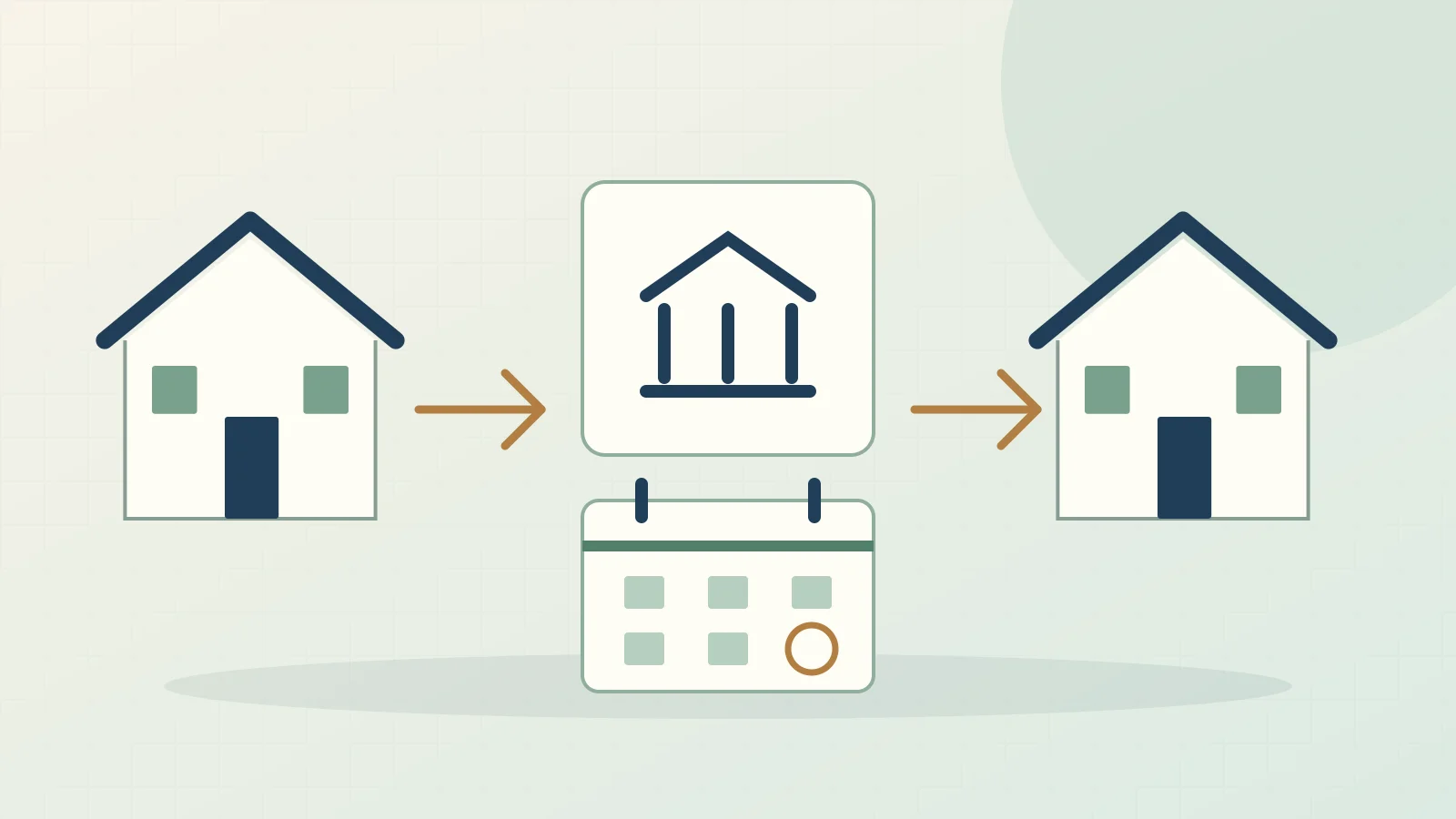
A 1031 exchange can defer gain when you replace qualifying investment real estate. Arrange the exchange before closing, keep control of the proceeds with the intermediary and plan both deadlines. The deferred gain follows you into the replacement property's basis.
The rules below are current for 2026.
What a 1031 exchange actually defers
When you sell a rental at a gain without an exchange, several taxes can stack up on the same sale:
- Federal long-term capital gains tax on your appreciation, at 0%, 15% or 20% depending on your income.
- Tax on the depreciation you claimed, called unrecaptured Section 1250 gain, at a maximum federal rate of 25%.
- Ordinary income tax on depreciation taken on short-life components if you did a cost segregation study.
- The 3.8% net investment income tax, if your income is above the threshold for it.
- State income tax, in most states that have one.
An exchange can defer qualifying real-property gain, including unrecaptured Section 1250 gain. It does not automatically defer every tax on a mixed-asset sale. Personal property is ineligible, and Section 1245 recapture can sometimes be recognized even without cash boot.
Separate the assets before estimating the tax deferred. Our depreciation recapture guide shows how the building and component calculations differ.
You can put your own numbers into the 1031 exchange calculator to see what a sale would cost with and without an exchange.
How it works · illustrated
This is the article’s starting funding position: $470,000 after selling costs, with a $150,000 loan to pay off. The remaining $320,000 goes to the intermediary.
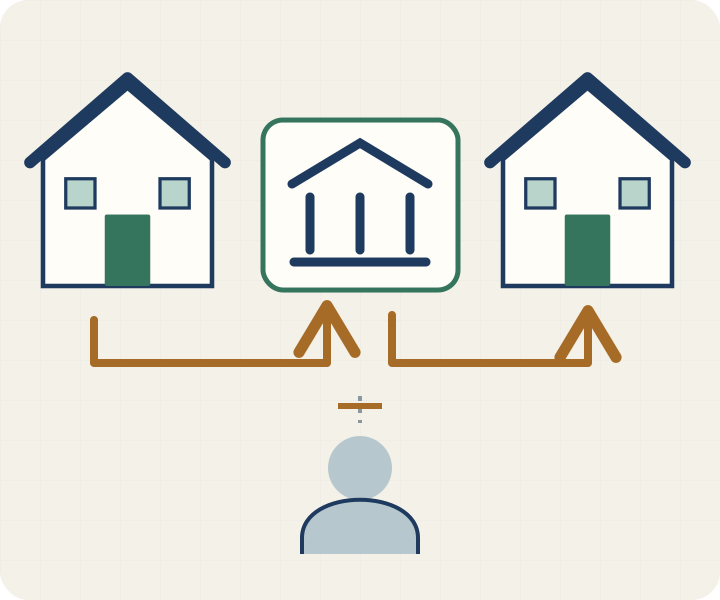
- Net sale proceeds
- $470,000
The transaction amount after selling costs.
- Old loan payoff
- −$150,000
Debt paid at sale; replacement funding still needs its own review.
- Held by the QI
- $320,000
Directed toward the replacement, without receipt by the owner.
This diagram explains the cash route, not qualification by itself. Property eligibility, identification, deadlines, debt relief and any cash received still determine the tax result.
Original RentalCalcs illustration · Conceptual artwork, not to scale · Hypothetical example, USD · Reviewed October 16, 2026. Rules: IRS Form 8824 instructions. The article’s worked example supplies the assumptions and arithmetic.
What property qualifies
Since 2018, Section 1031 applies to real property only. Equipment, vehicles, furniture and other personal property no longer qualify.
Both properties must be held for investment or business use. US real property is not like kind to real property outside the United States.
Within those limits, the property types need not match. A single-family rental can be exchanged for a fourplex, or a duplex for land held for investment. The IRS Form 8824 instructions explain the qualifying-property requirements.
What does not qualify:
- Your primary residence.
- Property held mainly for resale, which includes most fix and flip projects.
- A second home you use personally and do not rent. The IRS has a safe harbor for vacation homes with limited personal use and real rental activity, so ask a CPA if that is your situation.
- An interest in a partnership. The partnership can exchange a property it owns, but a partner cannot exchange a share of the partnership.
A general one-year holding rule does not establish eligibility. Your investment or business purpose matters, and special situations such as related-party exchanges have additional requirements. Keep evidence of how you used and intended to hold the property.
The same taxpayer who sells has to be the one who buys. If you sell in your own name, buy in your own name or in a single member LLC that is disregarded for tax purposes.
The two deadlines
Both clocks start on the day you close the sale of the property you are giving up (the relinquished property). They run at the same time.
| Deadline | What has to happen | Notes |
|---|---|---|
| Day 45 | Identify replacement property in a signed written document delivered to your qualified intermediary | Calendar days, weekends and holidays count |
| Day 180 | Close on the replacement property | Or your tax return due date for the year of the sale, including extensions, if that comes first |
The second row has a trap in it. If you sell in November or December, day 180 lands after April 15 of the following year. Unless you file an extension for your tax return, your exchange period ends on the return due date and you lose weeks you were counting on. File the extension.
Do not plan on extra time for lender delays, failed inspections, weekends or holidays. Specific IRS disaster relief can change deadlines for eligible taxpayers; confirm any exception with your QI and preparer.
A late-year sale calendar
For a hypothetical closing on November 20, 2026, the ordinary calendar-day counts are:
Worked illustration
Original RentalCalcs illustration · Reviewed October 16, 2026 · Hypothetical figures, not an observed transaction.
Sale closes
The identification and acquisition clocks start together.
Day 45: identify in writing
Deliver the signed identification to the permitted recipient by the deadline.
Assumed return due date
Without an extension, this earlier date ends the exchange period in this example.
April 15 is an assumption for this taxpayer. Verify your own return due date and applicable relief.
Day 180: outer limit
Reach this date only if a valid return extension moves the return deadline beyond it.
The 45-day and 180-day clocks run together. A return extension can prevent the earlier return deadline from cutting the exchange short; it does not extend the 180-day limit.
Source: deferred-exchange rules in the IRS Form 8824 instructions. Calendar days are counted from the hypothetical sale; this is an ordered process diagram, not a timeline drawn to scale.
Open printable exchange deadline and funding worksheetFree worksheet with example values, space for your records and source links. No account required.
Assume this taxpayer's return is due April 15, 2027. Without an extension, that date ends the exchange period before May 19.
A valid return extension can preserve the full period, but May 19 remains the 180-day limit. Check your dates and applicable relief against the deferred-exchange section of the IRS Form 8824 instructions.
How identification works
You cannot name an unlimited list of candidates and pick later. The identification has to fit one of these rules:
- The three property rule. Identify up to three properties of any value. This is what most small investors use.
- The 200% rule. Identify any number of properties as long as their combined value does not exceed 200% of what you sold.
- The 95% rule. Identify any number at any value, but then you have to actually acquire 95% of the total value identified. This one is rarely practical.
Describe each property clearly, with a street address or legal description. After day 45 the list is locked. If every property on it falls through, the exchange fails, which is why experienced exchangers identify a backup or two.
Why you need a qualified intermediary
Actual or constructive receipt of the proceeds can turn the transaction into a taxable sale. Buying another rental afterward does not fix that.
In a standard delayed exchange, a qualified intermediary (QI) enters a written exchange agreement, receives the sale proceeds and directs the funds to the replacement closing. The agreement restricts your access to the money.
The QI has to be in place before your sale closes. You cannot close, deposit the check, and then hire one.
Your own agent, attorney, accountant or employee may be a disqualified person under the prior-two-year agency rules; specific exceptions apply. Check eligibility against the IRS intermediary rules.
Also examine fund custody, safeguards and the exchange agreement. Use the questions in how to choose a qualified intermediary when reviewing a firm from the QI directory.
Reverse and improvement exchanges use different structures. A reverse exchange can involve an accommodation titleholder holding property before the old rental sells. An improvement exchange can include construction before you receive the replacement. Obtain specialist advice on the applicable safe harbor, timing and costs before committing to either arrangement.
Boot: the part that gets taxed anyway
Boot is anything you receive in the exchange that is not like kind real property. The two common forms:
- Cash boot. Sale proceeds you take out or do not reinvest.
- Mortgage boot. Debt that was paid off on the old property and not replaced on the new one, unless you make up the difference with your own cash.
To defer the entire gain, three things generally need to be true. You buy replacement property worth at least as much as the net sale price of the old one. You reinvest all of the net cash proceeds. And you replace the debt that was paid off, either with a new loan or with added cash from outside the exchange.
A qualifying partial exchange can leave some gain deferred while recognizing gain on boot. In a straightforward real-property exchange without additional recapture, recognized gain is generally limited to the smaller of net boot or realized gain. Separate recapture rules can change that result. Have your preparer compute both amount and character using the Form 8824 instructions, rather than multiplying every cash distribution by 15%.
A worked example
This hypothetical illustration assumes a rental held more than one year, $80,000 of straight-line building depreciation and no Section 1245 assets or additional recapture. There are no other gains, losses or Section 1231 lookback adjustments.
Assume 25% on building depreciation gain, 15% on remaining gain and 3.8% net investment income tax on all recognized gain. State tax and replacement costs are excluded; the stated closing costs are qualifying selling expenses.
You bought a rental 10 years ago for $300,000. You have claimed $80,000 of depreciation, so your adjusted basis is $220,000. You sell for $500,000 and pay $30,000 in commissions and closing costs. The loan payoff is $150,000.
- Amount realized: $500,000 minus $30,000 = $470,000
- Total gain: $470,000 minus $220,000 = $250,000
- Cash to the qualified intermediary: $470,000 minus $150,000 = $320,000
If you sell outright:
- Unrecaptured Section 1250 gain: $80,000 at 25% = $20,000
- Remaining gain: $250,000 minus $80,000 = $170,000, at 15% = $25,500
- Net investment income tax: $250,000 at 3.8% = $9,500
- Federal total: $20,000 plus $25,500 plus $9,500 = $55,000
That leaves $320,000 minus $55,000 = $265,000 to reinvest, before any state tax.
Full exchange: buy a $700,000 replacement with all $320,000 of QI funds and a $380,000 loan. Price exceeds the $470,000 net sale amount, all cash is reinvested and the new debt exceeds the $150,000 paid off.
Under these assumptions, there is no boot and no current federal tax. You retain $55,000 more for the replacement than in the outright-sale case.
Trade down: buy for $420,000 using $270,000 from the QI and a $150,000 loan. Receive the remaining $50,000 of proceeds at the end of the exchange as cash boot.
In this assumed case, the $50,000 is unrecaptured Section 1250 gain: $12,500 at 25%, plus $1,900 of net investment income tax. Federal tax is $14,400, while the other $200,000 of gain remains deferred.
Can you take a smaller replacement mortgage?
Yes, if sufficient outside cash replaces the debt reduction and the rest of the exchange qualifies. Keep the same $470,000 net sale value, $150,000 old debt, $320,000 of QI proceeds and $250,000 realized gain from the example above:
Preview: 3 of 8 rows
| Item | Full exchange | Less debt + cash | Trade down |
|---|---|---|---|
| New price | $700,000 | $470,000 | $420,000 |
| QI funds used | $320,000 | $320,000 | $270,000 |
| New loan | $380,000 | $100,000 | $150,000 |
| Outside cash | $0 | $50,000 | $0 |
| Cash returned | $0 | $0 | $50,000 |
| Taxable gain | $0 | $0 | $50,000 |
| Deferred gain | $250,000 | $250,000 | $200,000 |
| New tax basis | $450,000 | $220,000 | $220,000 |
Scroll the table sideways for more columns.
The full exchange recognizes $0 of gain, defers $250,000 and leaves $450,000 of replacement basis. The less-debt-plus-cash scenario also recognizes $0 and defers $250,000, leaving $220,000 of basis. The trade-down scenario recognizes $50,000, defers $200,000 and leaves $220,000 of basis.
In the middle column, the new loan is $50,000 smaller than the old loan. The $50,000 cash contribution covers that reduction, so these assumed facts create no mortgage boot. In the last column, the $50,000 you receive is cash, while the potential $14,400 federal tax illustrated above still needs to be paid. Cash received and cash available after tax are different amounts.
These simplified columns exclude personal property, settlement prorations and acquisition costs. Your QI and preparer should reconcile the actual closing statements, including which expenses can be paid with exchange proceeds. Also test the replacement's rent, debt service and reserves in the single-family rental calculator. Avoid buying a weaker property solely to preserve a tax deferral.
Your basis carries over, and so does the deferred gain
An exchange does not reset your basis to the new purchase price. In the full exchange example, your basis in the $700,000 property is:
- Purchase price: $700,000
- Minus deferred gain: $250,000
- New basis: $450,000
Checked another way, your old adjusted basis of $220,000, plus the $230,000 of additional value you paid for ($700,000 minus $470,000), also equals $450,000.
You do not start with $700,000 of fresh depreciable basis. Land must still be excluded, and exchanged and excess basis can follow different depreciation rules. The depreciation calculator handles ordinary planning estimates; it does not replace an exchange-basis schedule.
The old property's depreciation history also matters. A later taxable sale of the replacement can recognize deferred gain along with gain accumulated during the new holding period. Keep the original records with the replacement's file.
Many investors keep exchanging for decades. Under current law, heirs generally receive a stepped up basis at death, which can wipe out the deferred gain entirely. That is an estate planning question, and the law can change.
Give any cost segregation study to your preparer before exchanging. Short-life components have separate recapture rules, and some recapture can be taxable without cash boot.
A replacement study must reconcile carried-over and additional basis. The cost segregation calculator can illustrate scale, but bonus depreciation eligibility requires a separate review of those basis components.
What to prepare before listing the rental
Bring the QI and tax preparer your purchase closing statement, depreciation schedules, improvement costs, any cost segregation report, current loan payoff estimate and proposed sale costs. Ask for a written comparison of an outright sale, full exchange and any planned cash withdrawal.
For each replacement candidate, record the price, expected loan, outside cash required and realistic closing date. Include those financing needs in your identification plan: an attractive listing is not a workable replacement if you cannot fund or close it within the exchange period.
Common mistakes
- Hiring the QI too late. The exchange agreement has to be signed before the sale closes. Call the QI when you list, not the week of closing.
- Starting the search after closing. Forty-five days is short. Line up candidates, and ideally get one under contract, before your sale closes.
- Identifying only one property. If it fails inspection on day 50, you have no fallback. Use your three slots.
- Forgetting the debt. Reinvesting all the cash but taking a smaller loan creates mortgage boot unless you add outside cash.
- Paying non-exchange costs from exchange funds. Prorated rents, security deposits and some loan costs paid from exchange funds can create small amounts of boot. Have your QI and CPA review the settlement statement first.
- Missing the tax return trap. For a late year sale, file an extension so you get the full 180 days.
- Changing the name on title. Selling as an individual and buying in a new multi member LLC or partnership breaks the same taxpayer requirement.
- Exchanging with a relative without advice. Related party exchanges carry a two year holding requirement.
- Ignoring state rules. Most states follow the federal treatment, but rules vary by state. Some states track the deferred gain when you exchange into property in another state, and some require withholding at closing unless you file an exemption form.
You report the exchange on Form 8824 with your tax return for the year you sold the relinquished property.
Bottom line
Prepare the exchange before the sale closes: vet the QI, identify fundable replacements and calendar both deadlines. Compare the replacement's operating prospects with the tax you defer; preserving a deferral does not justify a weaker purchase.
Use the investor tax tools for the funding comparison and the depreciation and cost segregation strategy guide to connect the exchange with your ownership plan.
This article is general information, not tax or legal advice. Confirm your situation with a CPA.
Get new articles and market updates
Investing guides and market data, straight to your inbox. Unsubscribe anytime.