Which Ventura County cap rate is being quoted?
A cap rate divides annual net operating income by price before debt. Here the statistic’s meaning matters more than choosing the newest or highest number.
On narrow screens, swipe tables sideways to read all columns.
| Measure / period | Cap | Meaning and limit |
|---|---|---|
| Qualifying closed-sale median Oct 2025–Sep 2026 | 5.75% | 12 qualifying reported-cap sales, after publisher exclusions; not the full county transaction count. NOI normalization undisclosed. A small changing sample, not a city or vintage premium. |
| Inventory market-cap model Q3 2026 | 4.82% | CoStar Ventura modeled yield. Its spread to 12 selected sale caps is a scope difference, not an arbitrage return or a measured distressed discount. |
Read the methods alongside the numbers; they do not form an investable range. No basis-point trend is calculated across incompatible periods or cohorts. A sale price per unit cannot supply missing sale NOI. Broker research has commercial interests.
What changes apartment income in Ventura County?
| Measure | Value / period | What it can establish |
|---|---|---|
| Occupancy | 96.1% Q2 2026 | CBRE EA market-rate 5+ inventory; +0.1 percentage point quarterly, not a collections ratio. |
| Average effective monthly rent | $2,769 Q2 2026 | +0.1% quarterly. Same-store institutional sample; includes free-rent periods/discounts, excludes non-rent incentives. Not asking rent. |
| Absorption / completions | 42 / 0 units Q2 2026 | CBRE completion requires 60% occupancy. Zero here does not mean no buildings physically opened or no lease-up competition. |
Oxnard occupied apartments: a rent cap and a cash budget answer different questions
Oxnard’s official program limits covered increases to 4% once in 12 months and describes annual rental registration. Its reviewed fee-study page labels program fees proposed. [1]
If the subject’s income is constrained while buyer taxes, insurance or owner-paid utilities reset, a high advertised cap may disappear after the buyer rebuilds expenses. The legal maximum is not assured demand, automatic notice compliance or a promise of collection.
Use existing receipts as the base and treat increases as unit/date-specific upside. A proposed registration fee should be a watch item rather than silently inserted as an adopted charge. Do not extend Oxnard’s rule to Ventura city or Camarillo.
Obtain certificate-of-occupancy and exemption records, leases, prior notices, registry receipt, actual utility bills and insurance terms. Confirm current fee adoption before budgeting an amount.
Verified exemption, lawful notice history and durable demand may permit a different income path. Binding quotes and clean meter/lease records can also show the seller budget was adequate.
Ventura city waterfront: concept clearance is not an apartment opening
The city FAQ states no designs or uses have been approved. It records a September 9 SLA finding and still describes an October 6 presentation prospectively. [1]
A waterfront concept can affect an eventual amenity or construction scenario without supplying one rentable unit today. A stale future-tense entry is not proof that the meeting occurred, that housing was approved or that a particular building will compete with the subject.
Assign no new apartment count or rent premium to this concept in the base case. Track adopted actions separately from visions and get current staff/permit records if the investment relies on waterfront changes.
Record the parcel, adopted council action, permitted use and start/opening evidence. Keep the ordinary current competitor set separate from the concept.
An adopted plan, executed ground lease, permits, financing and a dated construction schedule would justify revisiting the scenario. A rendering alone would not.
County small sales versus institutional operations: keep the denominators intact
K2’s county median uses 12 qualifying reported-cap sales. CBRE’s Q2 operating report covers market-rate 5+ stock and same-store institutional effective rents, with completions defined at 60% occupancy. [1] [2]
A smaller stabilized Oxnard or Ventura building can trade while an institutional sale series records no qualifying activity. An effective-rent statistic already counts specified rent incentives, so subtracting the same free months again understates income.
Treat operations as context, then choose sale comps by format, size, rent restrictions and condition. The median/model spread cannot support a lower bid without the subject’s income and capital evidence. Conejo/Simi addresses do not inherit a coastal-city cap.
Identify each comp’s actual income period, buyer costs and financing. Reconcile lease consideration to banked receipts and label which concessions are already in the effective-rent baseline.
More reported-cap closings with consistent buyer NOI could support narrower comparison. Subject leases may also reveal incentives excluded from the institutional measure, which need separate treatment.
Where the evidence stops
| Area / product | Available | Still needed |
|---|---|---|
| County qualifying sale caps | Trailing-year median /12 reported-cap sales | City, vintage and size cap distributions; normalized buyer NOI; complete cap reporting |
| CBRE operating market | Dated occupancy and effective rent with explicit inventory definition | Subject collections, non-rent incentives and smaller noninstitutional rent coverage |
| Oxnard regulation | Municipal covered-increase and registration guidance | Parcel coverage, notice compliance and final fee adoption |
| Ventura waterfront / Conejo / Simi | Concept-stage official record and county context | Waterfront housing approval/opening; matched local sales and expense quotes |
The Ventura County cap-rate screening tool retains its separate modeled methodology. Its rent and home-value inputs are not matched apartment sale NOI. Use the county evidence page for geographic context and the California research report for regional comparisons.
What would change the comparison
The selected sale median measures reported transactions; the model measures inventory. Their difference does not establish mispricing. CBRE EA supplies a separate operating lens with effective-rent and completion definitions, while municipal records constrain the income timing and development story. The base thesis is documented income durability, not a countywide compression claim.
No numerical Ventura cap forecast is adopted. The waterfront record describes a process, not an apartment-delivery forecast. A small sales sample and one operating quarter cannot establish future financing or price direction.
Match new sale observations by building size, restrictions and condition. For the waterfront, obtain adopted actions and permits before adding homes to the competitor set.
Do not subtract the same free month twice
Assume a lease charges $2,400 a month and includes one free month over a twelve-month term. Scheduled rent is 12 × $2,400 = $28,800; after the $2,400 concession, annual receipts are $26,400 and effective monthly rent is $2,200. These are hypothetical amounts, not Ventura rent estimates.
If the budget already starts at $2,200 effective monthly rent, subtracting the free month again would understate receipts by $2,400. Start with either scheduled rent and a separate concession allowance, or the effective rent that already includes it. Reconcile the result with actual lease dates and collections; CBRE's market average cannot replace the subject's records.
Obtain a buyer parcel estimate, special charges and supplemental-bill timing before setting property taxes. Keep initial compliance work in the cash budget separately from recurring operations.
Take the evidence request to the property
What is the average cap rate for Ventura County apartments?
This report has a selected trailing-year median, not an all-sales average. The 12-cap cohort and model remain distinct. A lender or broker quoting a different cap should identify the properties, period and NOI convention.
Do Oxnard cap rates also apply in Thousand Oaks or Simi Valley?
No municipal cap sample is established here. Those buildings may have different unit mixes, income constraints, competing inventory and capital needs; obtain matched sales rather than add an invented location premium.
Does no reported new supply mean no current lease-up risk?
No. The operating publisher uses an occupancy threshold for completion. Inspect current competing availability and incentives instead of equating that definition with physical construction completion.
Open the free Ventura County worksheet
Includes local document prompts, source-basis comparison and a separate hypothetical buyer budget. That older full-budget example is not a county benchmark or a continuation of the focused rent illustration above. Manual fields do not recalculate the example. Entries stay in the open page; print or save to PDF before closing. No automatic saving or account is required.
Sources and method
Photo credit
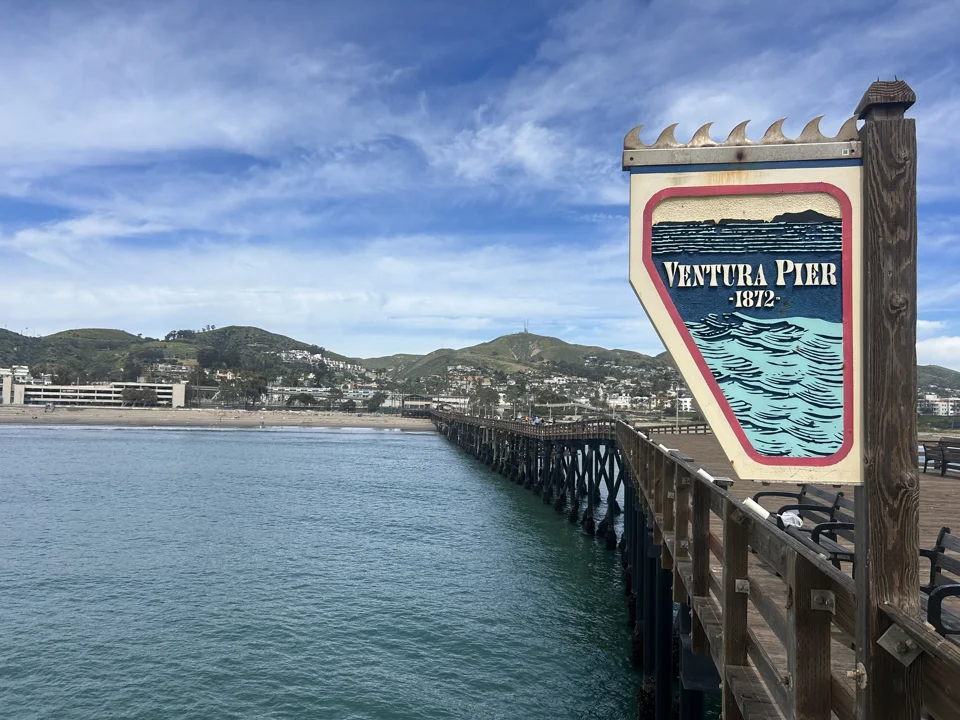
Busition — Ventura Pier. Captured 2026-03-13. CC BY4.0. Resized and converted to WebP; no generative edits.

Historical source access and substantive review: October 21, 2026. Observation periods and publication dates remain separate. Benchmark release: ventura-county-2026-10-21-v1, region qualifying-sales. This explicit binding does not refresh other reports automatically.
CBRE source-access limitation: the October 21, 2026 research record documents a review of the six-page report, including its page-six definitions. The linked PDF could not be retrieved during the current independent editorial review. The dated figures and method descriptions retain that historical provenance; independent verification of the full report and its methods remains unresolved.
- K2 — Ventura reported caps and separate model
Geography / scope: Ventura County qualifying multifamily sales; separate publisher Ventura model. Period: Sale median Oct 2025–Sep 2026; model Q3 2026. Published: October 2026.
Provider: CoStar comparables / market analytics; K2 calculation. Method / limitations: 12 qualifying reported-cap sales; median 5.75%. Model 4.82% is not a transaction statistic. Filters: ≥$1 million, ≥5,000 sf, no condos, reported caps 2–15%, single-property only; excludes partial interests, recapitalizations, ground leases, sale-leasebacks, bulk/portfolio and business value. Median only at 8+ qualifying caps; weighting median, NOI unnormalized/undisclosed.
Refresh: Next source edition, correction or material change. Accessed 2026-10-21; substantively reviewed 2026-10-21.
- CBRE — Ventura Multifamily Figures Q2 2026
Geography / scope: Camarillo, Oxnard, Simi Valley/Moorpark, Thousand Oaks, Ventura; market-rate 5+ unit stock, no condos. Period: Q2 2026; Q1 comparison. Published: July 30, 2026.
Provider: CBRE Econometric Advisors operating; MSCI Real Capital Analytics investment sales. Method / limitations: Same-store institutionally managed market-rate 5+ rent sample. Effective rent includes free periods/prorated discounts; excludes reduced deposits and non-rent giveaways. Sample count and weighting not specified. Completion means 60% occupied. Unverified submarket/vintage table values are excluded.
Refresh: Next source edition, correction or material change. Accessed 2026-10-21; substantively reviewed 2026-10-21.
- City of Oxnard — rent stabilization
Geography / scope: Covered Oxnard residential rentals; not all Ventura County. Period: Current guidance accessed Oct 21, 2026. Published: Not stated.
Provider: Official municipal program and linked ordinance. Method / limitations: Covered increase maximum 4%, once in 12 months, with exemptions and procedural requirements. Annual registration described. June 15, 2026 fee study still described as draft/proposed on reviewed page; proposed fees not treated as adopted expenses. Check current ordinance and property coverage.
Refresh: Next source edition, correction or material change. Accessed 2026-10-21; substantively reviewed 2026-10-21.
- City of Ventura — waterfront project FAQ
Geography / scope: Specified city-owned Ventura waterfront parcels only. Period: September 9, 2026 SLA finding; FAQ reviewed Oct 21. Published: Not stated.
Provider: Official municipal project record. Method / limitations: City states no designs or uses approved; current page still refers prospectively to October 6 presentation. The passing calendar date does not prove its outcome. No housing unit count, construction start or opening inferred.
Refresh: Next source edition, correction or material change. Accessed 2026-10-21; substantively reviewed 2026-10-21.
- California BOE — changes in ownership
Geography / scope: California assessment framework; Ventura parcel bill unresolved. Period: Guidance reviewed Oct 21, 2026. Published: Not stated.
Provider: California Board of Equalization. Method / limitations: Assessment process, not a tax rate, insurance quote or property budget. Verify buyer tax and special charges locally.
Refresh: Next source edition, correction or material change. Accessed 2026-10-21; substantively reviewed 2026-10-21.
Limited facts summarized; proprietary reports and graphics are not redistributed. On a new edition, review narrative, benchmarks, calculator defaults and generated worksheet together. Builds alone do not advance review dates. Send a correction with the source and claim.