Syracuse rent & investment research · NY
Syracuse metro rent report
Buy Syracuse income that works before Micron production; do not finance a 2030 rent assumption today.
Zillow all-home metro asking-rent index · All bedroom counts · Seasonally adjusted
By RentalCalcs editorial · Reviewed
Live refresh status unavailable; showing the dated source snapshot shipped with this edition.

The investment view
Prefer a legal, occupied rental whose current annual leases pay its expenses, debt and capital reserve. Micron’s construction progress makes the regional demand case more tangible, but an expected production start is not rent collected today. A contractor lease can support a separate opportunity when its term, payer and service costs are documented. A student-rental purchase needs its own university-area evidence.
Syracuse’s realized asking-rent gains are already in the seller’s comparison set
Typical provider-metro asking rent is $1,627 monthly, +3.4% over a year and +17.1% over three years. These are all-home, all-bedroom measurements for the provider metro. The change describes asking-rent movement already observed; it does not promise an identical gain between your purchase and the factory’s first production.
Monthly rent data
| Month | Typical rent |
|---|---|
| September 2021 | $1,203 |
| October 2021 | $1,214 |
| November 2021 | $1,224 |
| December 2021 | $1,246 |
| January 2022 | $1,252 |
| February 2022 | $1,263 |
| March 2022 | $1,263 |
| April 2022 | $1,277 |
| May 2022 | $1,299 |
| June 2022 | $1,301 |
| July 2022 | $1,310 |
| August 2022 | $1,315 |
| September 2022 | $1,324 |
| October 2022 | $1,337 |
| November 2022 | $1,346 |
| December 2022 | $1,339 |
| January 2023 | $1,338 |
| February 2023 | $1,335 |
| March 2023 | $1,351 |
| April 2023 | $1,360 |
| May 2023 | $1,369 |
| June 2023 | $1,373 |
| July 2023 | $1,376 |
| August 2023 | $1,385 |
| September 2023 | $1,389 |
| October 2023 | $1,397 |
| November 2023 | $1,402 |
| December 2023 | $1,418 |
| January 2024 | $1,436 |
| February 2024 | $1,448 |
| March 2024 | $1,454 |
| April 2024 | $1,455 |
| May 2024 | $1,455 |
| June 2024 | $1,469 |
| July 2024 | $1,480 |
| August 2024 | $1,484 |
| September 2024 | $1,484 |
| October 2024 | $1,492 |
| November 2024 | $1,500 |
| December 2024 | $1,516 |
| January 2025 | $1,515 |
| February 2025 | $1,525 |
| March 2025 | $1,519 |
| April 2025 | $1,533 |
| May 2025 | $1,536 |
| June 2025 | $1,547 |
| July 2025 | $1,552 |
| August 2025 | $1,562 |
| September 2025 | $1,574 |
| October 2025 | $1,577 |
| November 2025 | $1,583 |
| December 2025 | $1,580 |
| January 2026 | $1,589 |
| February 2026 | $1,591 |
| March 2026 | $1,605 |
| April 2026 | $1,607 |
| May 2026 | $1,618 |
| June 2026 | $1,617 |
| July 2026 | $1,621 |
| August 2026 | $1,623 |
| September 2026 | $1,627 |
The buyer’s risk is paying twice for the same story: first through today’s higher rent comparison, then through an additional purchase premium justified by projected industrial growth. Start with existing leases and actual collections. Add supported new rent only when matched executed leases, unit condition and timing make it repeatable.
The selected public evidence does not establish a current, consistently defined metro apartment vacancy rate. We therefore do not assign one to Syracuse or claim that every segment is undersupplied. Obtain availability, concessions and time-to-lease from the actual competing properties, separating downtown apartments, university-area rentals and northern suburban homes.
Micron’s 2026 concrete milestone leaves a different income test from expected 2030 production
Project milestones and the lease evidence they support
Construction can create housing demand before production, but its duration and customer differ from a permanent household lease. Micron reported that more than 80% of workers on site through its July announcement were New York residents. That does not tell us how many commute locally, travel within the state or need temporary accommodation. A statewide worker-origin figure cannot become a Syracuse rental-absorption estimate.
For a Clay or Liverpool purchase, ask which contractor or worker cohort supports the proposed rent, when the assignment begins and ends, and who signs and pays the lease. Test the actual trip to the site and competing lodging. A property close on a map still needs a useful layout, parking and a service plan. Avoid furnishing a building on the assumption that every construction worker will rent it.
The bull case is credible contracted demand before the plant opens, followed by a broader permanent employment base. The bear case is a premium purchase with short contracts, idle furnished units or a changed construction schedule. We would price the ordinary annual-lease fallback first and treat any supported temporary-rental margin as a separate operating business.
A hypothetical $800 monthly contractor premium leaves only $360 extra over a year
Hypothetical one-unit comparison · annual dollars
| Paid months at $2,400 | After $5,400 extra annual costs | Versus annual-lease case |
|---|---|---|
| 9 | $16,200 | −$2,040 |
| 10 | $18,600 | +$360 |
| 11 | $21,000 | +$2,760 |
The monthly premium is large; the annual margin need not be. Initial furnishing cash, a booking fee or another unoccupied month can eliminate it. Require a signed contract, evaluate counterparty credit and cancellation terms, and price the full operating workload. Do not capitalize a temporary service-business premium as permanent apartment NOI.
Syracuse University’s first two years do not translate into an unrestricted off-campus tenant pool
The university requires traditional first- and second-year students to live in university housing. Upperclass students can also choose university housing. Total enrollment is therefore a poor multiplier for a private landlord’s potential tenants.
A university-area acquisition needs leases and renewals for the actual eligible tenant segment, lawful bedroom capacity, and a funded turnover calendar. Verify whether tenants pay for twelve months, who covers summer utilities, and how much clustered turnover costs. A per-bedroom asking figure cannot be compared directly with the metro’s all-home index.
Prefer a property with demonstrated academic-year leasing and a workable annual cash budget. Pass on a conversion whose purchase price assumes extra bedrooms that are neither approved nor evidenced by leases. Student demand and Micron demand should not be added together to justify incompatible layouts or lease calendars.
A three-unit Syracuse building has a different closing task from a two-unit house
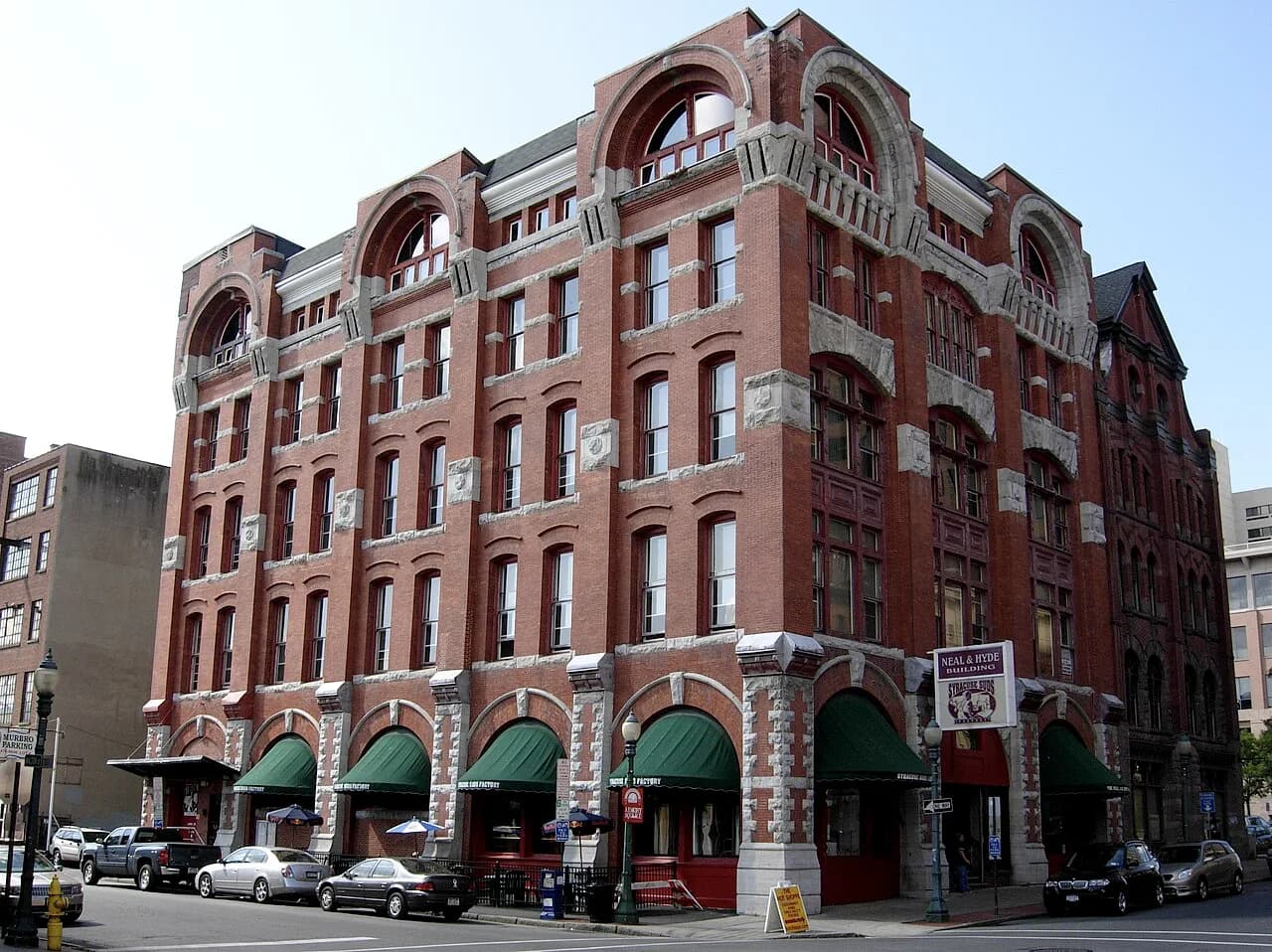

The city describes a rental registry and inspection requirement for one- and two-unit rentals, including after sale. Three-plus-unit rentals and mixed-use buildings use its certificate-of-compliance process, including transfer-related inspection before sale. Verify the correct path, legal unit count, certificate status and outstanding violations with the city before committing to a closing timetable. These city rules do not automatically apply to a property in Clay.
For an older residential conversion, inspect heating distribution, roof, moisture, electrical capacity and the cost of separating owner-paid utilities. A fourth advertised room does not establish a fourth lawful bedroom or unit. Obtain building-specific scopes and required corrective work, rather than treating compliance as a small administrative fee.
In Armory Square, separate commercial income from apartments above. A shop’s lease expiration, tenant improvements and share of common systems can dominate a small building’s cash needs. Underwrite a vacant-shop case and allocate roof, heating and insurance costs explicitly. Residential rent growth cannot repair an unsupported commercial lease.
Start with Syracuse ZIP rent comparisons and Onondaga County research, then narrow to comparable leases and the actual municipality. The metro also includes Madison and Oswego counties; its index is not a downtown apartment quote.
This Syracuse four-unit must carry its $380,000 basis without a factory rent premium
Assume an occupied four-unit purchased for $330,000, $1,550 monthly rent per unit, 7% combined vacancy/collection loss, $30,000 annual operating expenses and $4,000 annual replacement reserves. Initial repairs are $40,000; 3% acquisition closing costs bring total basis to $379,900. Financing is assumed at 65% of purchase price, 7% interest and 30-year amortization. These are editable hypotheses, not available listings, financing offers or surveyed market cap rates.
Acquisition lab · assumed Syracuse property
Editable assumptions, not an available listing or financing quote. Closing costs are fixed at 3% of purchase price; repairs are paid upfront. No appreciation, tax benefits, refinancing proceeds or rent growth are needed to generate the results.
Edit property assumptions
| Measure | Base | Downside |
|---|---|---|
| Scheduled rent | $74,400 | $70,680 |
| After vacancy / collection loss | $69,192 | $63,612 |
| Net operating income (NOI) | $39,192 | $30,612 |
| Annual loan payments | $17,125 | $17,125 |
| Cash after debt + capital reserve | $18,067 | $9,487 |
| Debt coverage (NOI ÷ payments) | 2.29× | 1.79× |
NOI excludes financing and capital reserves. Operating expenses must include taxes, insurance, management, routine maintenance and owner-paid utilities. A reserve reduces spendable cash; it does not make a known roof or sewer replacement disappear. Results describe a stabilized year after initial repairs. Fund renovation downtime and carrying costs separately; they are not estimated here.
| Required yield | Base NOI | Downside NOI |
|---|---|---|
| 6.5% | $546,557 | $418,402 |
| 7.5% | $468,505 | $357,437 |
| 8.5% | $408,818 | $310,817 |
A price below a yield ceiling can still fail debt coverage or require more cash than you have. Check the loan terms, unit-level leases and a contractor’s scope before treating a modeled ceiling as an offer.
Operating expenses must include property-specific taxes, insurance, management, maintenance and owner-paid utilities. Check winter utility bills and the mechanical scope against actual records. NOI excludes debt, initial repairs and reserves; the cash result deducts debt and annual reserves separately. Neither price appreciation nor a future refinance funds a current deficit.
The downside challenges the property without relying on Micron: 5% lower rents, three more percentage points of loss and 10% higher expenses. If the investment fails there, a promised 2030 premium is not a cash reserve. Fund construction downtime and carrying costs separately from this stabilized-year model.
Acquire proven annual income; revisit Micron premiums only when contracts support them
Acquire or hold a functioning annual rental
Keep the price tied to collected rent and priced capital work. Retain a productive lease while correcting required systems. Rent growth already realized in the neighborhood is not permission to defer the roof or exhaust liquidity.
Renovate for a defined tenant and a legal layout
Choose the business plan first: annual household, eligible student or contracted temporary resident. Require matched executed comparisons and enough incremental cash to recover vacancy, work and service costs. Avoid a hybrid plan that counts the highest rent from each segment and the lowest expenses from another.
Change the offer when the evidence changes
Signed contractor leases with adequate duration can support a temporary-rental budget now. Repeatable year-round household leases, actual employment and delivered competing housing can support a different stabilized rent later. A revised factory schedule or a competing-housing surge warrants more liquidity and a lower price. Follow new evidence rather than keeping 2030 fixed in the model.
For renters, compare an ordinary annual lease with furnished, utility-inclusive terms over the full intended stay. For buyers, extend the capital and debt schedule in the rental-property calculator before making an offer.
Sources and methodology
Evidence behind this report
- Micron January 16, 2026 groundbreaking release: expected production start in 2030, followed by ramp; forward-looking company expectation, not a guaranteed delivery date
- Micron July 9, 2026 first-concrete milestone at Clay: transition toward vertical construction; more than 80% of workers on site to that date were New York residents, not necessarily local commuters or relocating households
- Syracuse University returning-student housing: traditional first- and second-year students subject to two-year university residency requirement; upperclass students may also use university housing
- City of Syracuse periodic inspections: rental registry for one/two-unit properties; certificate of compliance for three-plus units and mixed-use, with inspection/transfer distinctions. Checked October 20, 2026; applies to the city, not the entire metro.
- City of Syracuse April 4, 2025 Look Before You Rent announcement; address-level rental and code information
- Zillow all-home, all-bedroom, smoothed, seasonally adjusted metro ZORI CSV; observation 2026-09-30; retrieved 2026-10-21T03:09:00.655Z UTC
- Zillow repeat-rent methodology
- Census July 2023 metro delineations
- Zillow county-to-metro crosswalk, retrieved 2026-10-19
Geography and comparable populations
Official July 2023 county membership matches the counties in Zillow’s undated provider crosswalk. Provider RegionID and CBSA are distinct identifiers. Official CBSA: 45060; separate Zillow RegionID: 395143. County and city figures are useful local checks but cannot reproduce this metro index.
| County | State | Zillow crosswalk |
|---|---|---|
| Madison County | NY | Included |
| Onondaga County | NY | Included |
| Oswego County | NY | Included |
What the rent index measures
ZORI follows repeat asking-rent changes, weights toward the rental stock and smooths observations. It does not measure every signed lease, concessions, a two-bedroom quote, property income or a voucher payment standard. Broker apartment surveys have their own boundaries and property populations. Their vacancy and effective-rent readings are labeled by period and are never averaged into ZORI.
The headline and historical chart use one validated version. The file contains 740 metro rows; 740 have a latest-month observation. These are market counts, not rental-unit sample sizes; Zillow does not supply underlying unit sample counts here. Missing observations remain missing and prior months may be revised.
Refresh and editorial review
Provider Last-Modified: Fri, 16 Oct 2026 01:56:12 GMT. This page serves the committed last-good snapshot. The shared weekly refresh publishes validated versions atomically and retains the previous version on failure. Changed interpretation is flagged for review; imports do not advance the editorial review date. Local broker studies and photographs retain their own dates.
SHA-256: cf1ac2ab12236da3e05a81d06542e6fb95581704c6e9f375424e73b72ccb444b
Investment judgments are RentalCalcs’ analysis of the stated evidence. Purchase examples are explicitly assumed underwriting cases, not listings, appraisals, financing quotes or observed market cap rates. Report a correction.