Lancaster rent & investment research · PA
Lancaster metro rent report
Buy Lancaster housing you can keep safely occupied; a shortage does not repay an unpriced rehabilitation.
Zillow all-home metro asking-rent index · All bedroom counts · Seasonally adjusted
By RentalCalcs editorial · Reviewed
Live refresh status unavailable; showing the dated source snapshot shipped with this edition.

The investment view
Favor a legally occupied older rental with documented collections, a priced building-system scope and cash to preserve it. Lancaster’s housing strategy treats production and preservation as separate tasks. For a small-property buyer, required roof, moisture, mechanical and lead-safe work comes before a cosmetic rent premium. A discounted rehabilitation can be attractive when its price funds the full scope and delay; a regional rent rise alone cannot make that budget work.
Lancaster’s higher regional asking rent does not establish a return on a particular renovation
The provider-metro index is $1,575 monthly, +3.9% over one year and +13.7% over three. The official metro is Lancaster County. This all-home, all-bedroom asking-rent series is the regional starting point; it cannot price the legal units, condition and expenses of a city conversion.
Monthly rent data
| Month | Typical rent |
|---|---|
| September 2021 | $1,195 |
| October 2021 | $1,206 |
| November 2021 | $1,216 |
| December 2021 | $1,229 |
| January 2022 | $1,234 |
| February 2022 | $1,240 |
| March 2022 | $1,250 |
| April 2022 | $1,263 |
| May 2022 | $1,271 |
| June 2022 | $1,283 |
| July 2022 | $1,291 |
| August 2022 | $1,305 |
| September 2022 | $1,307 |
| October 2022 | $1,315 |
| November 2022 | $1,323 |
| December 2022 | $1,330 |
| January 2023 | $1,337 |
| February 2023 | $1,346 |
| March 2023 | $1,358 |
| April 2023 | $1,366 |
| May 2023 | $1,373 |
| June 2023 | $1,375 |
| July 2023 | $1,374 |
| August 2023 | $1,378 |
| September 2023 | $1,386 |
| October 2023 | $1,393 |
| November 2023 | $1,396 |
| December 2023 | $1,404 |
| January 2024 | $1,412 |
| February 2024 | $1,415 |
| March 2024 | $1,413 |
| April 2024 | $1,417 |
| May 2024 | $1,427 |
| June 2024 | $1,436 |
| July 2024 | $1,448 |
| August 2024 | $1,452 |
| September 2024 | $1,461 |
| October 2024 | $1,464 |
| November 2024 | $1,473 |
| December 2024 | $1,474 |
| January 2025 | $1,484 |
| February 2025 | $1,491 |
| March 2025 | $1,500 |
| April 2025 | $1,500 |
| May 2025 | $1,501 |
| June 2025 | $1,504 |
| July 2025 | $1,506 |
| August 2025 | $1,514 |
| September 2025 | $1,517 |
| October 2025 | $1,522 |
| November 2025 | $1,526 |
| December 2025 | $1,532 |
| January 2026 | $1,532 |
| February 2026 | $1,537 |
| March 2026 | $1,541 |
| April 2026 | $1,551 |
| May 2026 | $1,556 |
| June 2026 | $1,561 |
| July 2026 | $1,567 |
| August 2026 | $1,571 |
| September 2026 | $1,575 |
A city house, a suburban apartment and a county house with a different commute or utility arrangement can all sit within the index. Match executed leases and full recurring costs before assigning rent to a purchase. A private renovation also cannot assume the rent schedule or financial support of an income-restricted project.
The selected evidence does not establish a current, consistently defined rental vacancy percentage for the whole metro. Older housing studies and planning estimates identify important needs, but they are not a fresh lease-up census. Our recommendation therefore depends on the subject’s collections, competing available units and repair scope rather than an invented vacancy figure.
Lancaster’s 2,502-unit housing tally includes three different stages, not 2,502 deliveries
City housing strategy · April 2026 update · total since 2018
The acquisition implication is to identify the specific projects that compete with the intended unit, their actual completion dates and their rent restrictions. A project under review may affect long-run supply while doing little for a tenant searching today. A recently delivered unrestricted building can affect a cosmetic-renovation plan immediately through its effective leasing offer.
The countercase to a shortage premium is that more competing units reach occupancy before the buyer finishes the work. The countercase to excessive caution is that a necessary repair preserves an already productive lease without needing to compete as a new luxury product. Underwrite those two business plans separately.
Lancaster’s preservation work makes the building scope a first-order acquisition decision

The April 2026 city update separately reports 453 lead-hazard-control completions and 100 critical-repair completions. Those program figures are evidence of real preservation work, not the number of unique currently deficient homes; households may appear across programs. The important buyer question is what the particular property needs before it can remain safely and lawfully occupied.
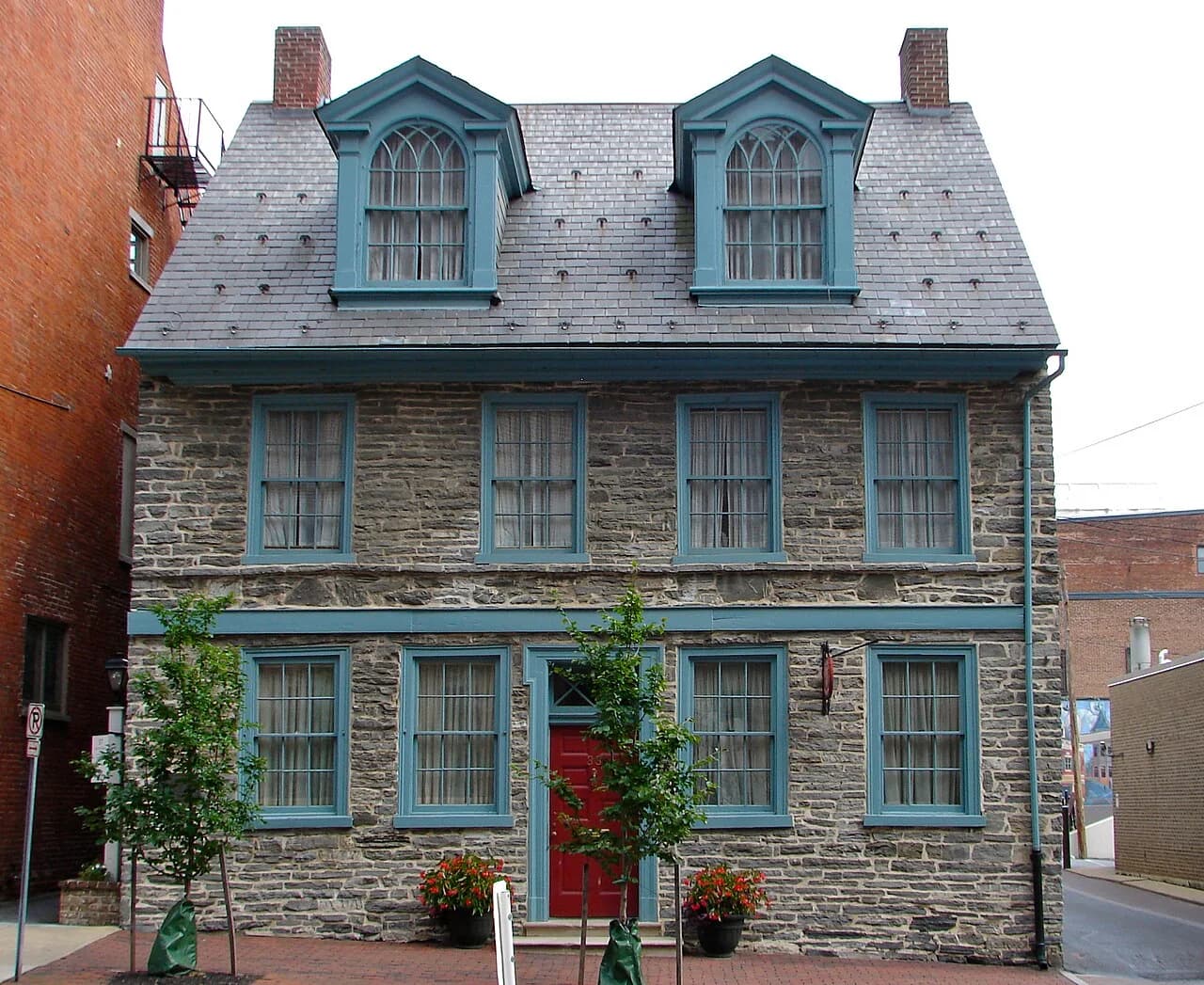
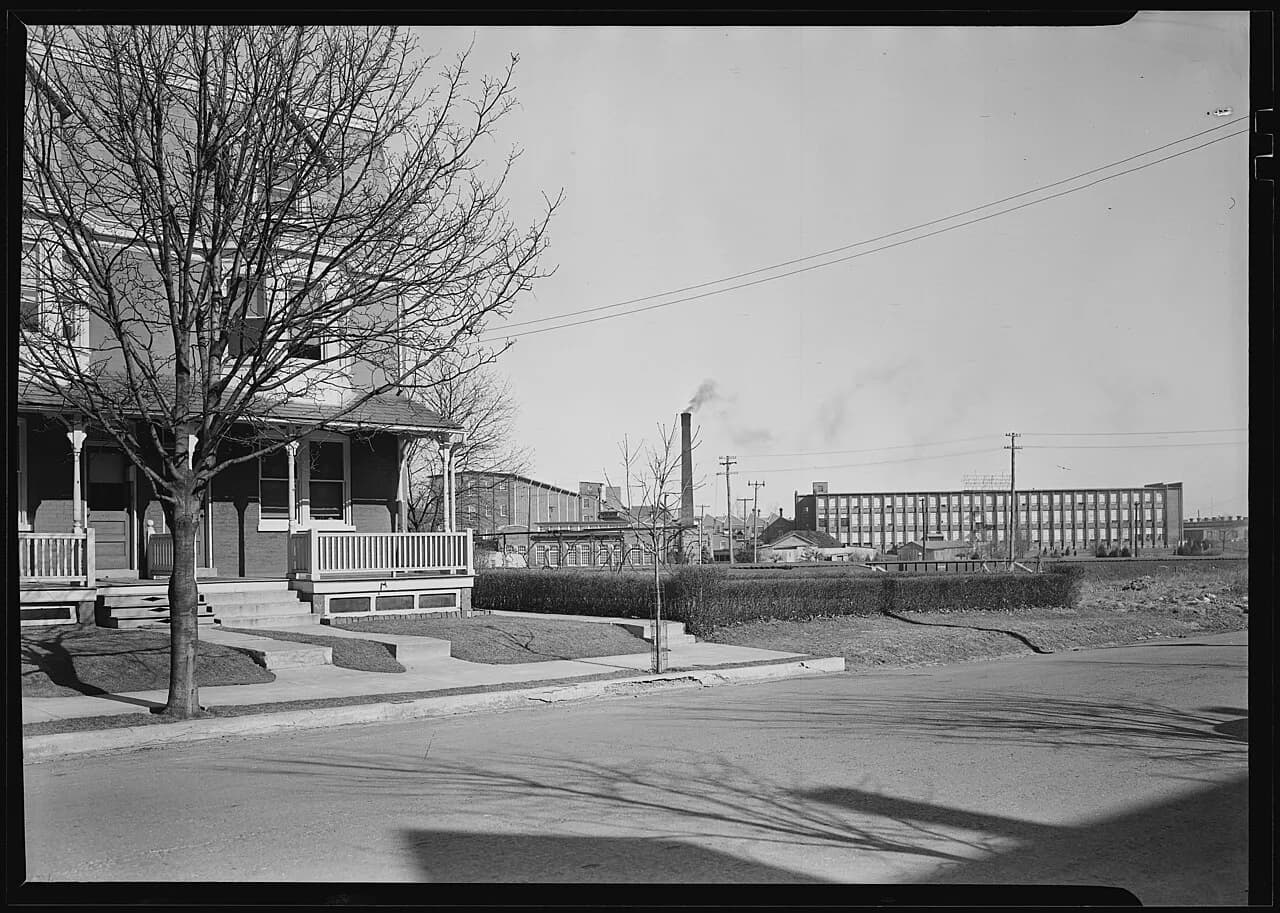
For an older Duke Street-type building form, investigate roof and drainage, masonry, moisture, electrical capacity, heating and utility distribution. Establish legal units and permitted bedrooms before applying a rent roll. The lead photograph and historical worker-housing image do not establish current hazards or condition at any pictured property.
The current city code requires targeted housing to meet its lead-safe compliance/certification prerequisite for rental licensing. Obtain the actual license, inspection findings, compliance notice or certification and open-case history, then confirm the property’s requirements with the city. A paint allowance is not a substitute for the appropriate qualified scope, examination and documentation.
A purchase contract should allocate responsibility and timing for unresolved work. Confirm whether the planned occupancy and work can proceed on that schedule. The March 2026 rental-code amendment history is another reason to check current requirements rather than rely solely on a seller’s old handbook.
A $150 monthly premium does not justify calling every $70,000 repair budget a value-add return
Hypothetical four-unit project · collected premium before added expenses
| Initial project cost | Premium / cost, before downtime and extra expenses |
|---|---|
| $40,000 | 16.9% |
| $70,000 | 9.7% |
| $100,000 | 6.8% |
Commission separate required-work and elective-work scopes. The required work may maintain existing rent rather than increase it; it still consumes cash. For elective improvements, require condition-matched signed leases to support the premium and compare that benefit with work, downtime and financing costs.
Preserving a paying lease can be the more attractive operating decision. If a vacant rehabilitation is the chosen plan, fund a slower inspection and leasing case. A shortage narrative cannot pay contractors or replace cash after a delayed completion.
A Lancaster city conversion and a county house require different operating evidence
In the city, an older conversion may involve shared systems, a compact lot, legal-unit questions and city rental licensing. Elsewhere in Lancaster County, a detached rental can have a different utility, parking, maintenance and travel budget. Confirm the actual municipality; city rules are not automatically countywide requirements.
For a mixed-use city building, underwrite shop income, vacancy and tenant improvements separately from apartments. For a suburban or rural house, compare matching homes and the actual worksite trip rather than importing a downtown apartment’s rent. Do not assume an accessory unit or a short-stay conversion is permitted merely because the layout accommodates it.
Use the Lancaster ZIP rent reference, Lancaster County research and Pennsylvania rent guide to screen. Verify leases, permitted use, expenses and current competing offers before choosing the offer price.
A $420,000 Lancaster four-unit has a $502,600 basis after closing costs and $70,000 work
Assume four occupied units at $1,650 monthly, 6% combined vacancy/collection loss, $30,000 operating expenses and $4,800 annual replacement reserves. Purchase price is $420,000, initial repairs $70,000 and closing costs 3% of price. Financing is assumed at 65% of price, 7% interest and 30-year amortization. These are editable hypothetical inputs, not an available building, contractor quote or surveyed cap rate.
Acquisition lab · assumed Lancaster property
Editable assumptions, not an available listing or financing quote. Closing costs are fixed at 3% of purchase price; repairs are paid upfront. No appreciation, tax benefits, refinancing proceeds or rent growth are needed to generate the results.
Edit property assumptions
| Measure | Base | Downside |
|---|---|---|
| Scheduled rent | $79,200 | $75,240 |
| After vacancy / collection loss | $74,448 | $68,468 |
| Net operating income (NOI) | $44,448 | $35,468 |
| Annual loan payments | $21,795 | $21,795 |
| Cash after debt + capital reserve | $17,853 | $8,873 |
| Debt coverage (NOI ÷ payments) | 2.04× | 1.63× |
NOI excludes financing and capital reserves. Operating expenses must include taxes, insurance, management, routine maintenance and owner-paid utilities. A reserve reduces spendable cash; it does not make a known roof or sewer replacement disappear. Results describe a stabilized year after initial repairs. Fund renovation downtime and carrying costs separately; they are not estimated here.
| Required yield | Base NOI | Downside NOI |
|---|---|---|
| 6.5% | $595,937 | $461,813 |
| 7.5% | $507,417 | $391,177 |
| 8.5% | $439,726 | $337,160 |
A price below a yield ceiling can still fail debt coverage or require more cash than you have. Check the loan terms, unit-level leases and a contractor’s scope before treating a modeled ceiling as an offer.
Base NOI is $44,448 before debt, reserves and initial work. The full basis matters: a $420,000 price is not a $420,000 completed investment. Operating expenses must include current property taxes, insurance, management, maintenance and owner-paid utilities. Compare the cost and income as one plan before calling the building inexpensive per unit.
The combined downside assumes 5% lower rent, three more percentage points of loss and 10% higher operating costs. Construction downtime, clearance delays and acquisition carry need separate cash beyond this stabilized-year model. If required work rises, lower the supported price or add funded capital; do not offset a known expense with an unproven rent premium.
Acquire a funded preservation plan; pass when the price requires repairs to create instant premium rent
Acquire occupied housing with a priced essential scope
Reconcile receipts, legal units and inspection records. Require cash left after closing for known work and a disruption reserve. The discount should compensate for the actual capital obligation, not just look attractive against a recently renovated asking price.
Hold and repair a working rental
Address hazards and failed systems promptly. Compare retaining a reliable resident with the entire vacant-turn alternative. Elective renovation is worthwhile when collected incremental income pays for the additional work; otherwise preservation can be the better use of capital.
Reconsider when priced work and executed leases replace assumptions
A firm compliant scope, a feasible schedule and matched signed leases can justify a repair-heavy acquisition. Larger required work, delayed occupancy or new competing effective-rent discounts justify a lower offer or a pass. A city production headline alone cannot settle that decision.
Renters should verify the unit’s legal and maintained condition alongside rent and utility responsibilities. Buyers can extend the rehabilitation and debt schedule in the rental-property calculator or multifamily calculator.
Sources and methodology
Evidence behind this report
- City of Lancaster Interim Housing Strategy progress report to Council, April 2026: since-2018 housing production stages, 1,423 built/under construction, 747 approved/not built, 332 under review; combined total 2,502. City geography, mixed tenure and stages—not current rental vacancies. Also reports 453 lead-hazard-control completions and 100 critical-repair completions; program totals need not represent unique households across programs.
- City housing strategy index links the April 2026 progress report. Older shortage, interest-rate and household figures elsewhere on this page are not presented as current market measurements.
- City of Lancaster Property Maintenance and Housing Inspections: rental licensing, systematic inspection and housing maintenance responsibilities
- Current city code, Chapter 182 Article III: targeted housing license prerequisite involving notice of lead-safe compliance or lead-safe certification. Verify the property’s classification, required examinations and current status with the city; certification is not a guarantee of all future conditions.
- Current city rental-property code, Chapter 238, including March 10, 2026 amendment history; older handbooks must be checked against current code
- Zillow all-home, all-bedroom, smoothed, seasonally adjusted metro ZORI CSV; observation 2026-09-30; retrieved 2026-10-21T03:09:00.655Z UTC
- Zillow repeat-rent methodology
- Census July 2023 metro delineations
- Zillow county-to-metro crosswalk, retrieved 2026-10-19
Geography and comparable populations
Official July 2023 county membership matches Zillow’s undated county crosswalk. The index retains the provider geography and naming, rather than a reconstructed county average. Official CBSA: 29540; separate Zillow RegionID: 394768. County and city figures are useful local checks but cannot reproduce this metro index.
| County | State | Zillow crosswalk |
|---|---|---|
| Lancaster County | PA | Included |
What the rent index measures
ZORI follows repeat asking-rent changes, weights toward the rental stock and smooths observations. It does not measure every signed lease, concessions, a two-bedroom quote, property income or a voucher payment standard. Broker apartment surveys have their own boundaries and property populations. Their vacancy and effective-rent readings are labeled by period and are never averaged into ZORI.
The headline and historical chart use one validated version. The file contains 740 metro rows; 740 have a latest-month observation. These are market counts, not rental-unit sample sizes; Zillow does not supply underlying unit sample counts here. Missing observations remain missing and prior months may be revised.
Refresh and editorial review
Provider Last-Modified: Fri, 16 Oct 2026 01:56:12 GMT. This page serves the committed last-good snapshot. The shared weekly refresh publishes validated versions atomically and retains the previous version on failure. Changed interpretation is flagged for review; imports do not advance the editorial review date. Local broker studies and photographs retain their own dates.
SHA-256: cf1ac2ab12236da3e05a81d06542e6fb95581704c6e9f375424e73b72ccb444b
Investment judgments are RentalCalcs’ analysis of the stated evidence. Purchase examples are explicitly assumed underwriting cases, not listings, appraisals, financing quotes or observed market cap rates. Report a correction.