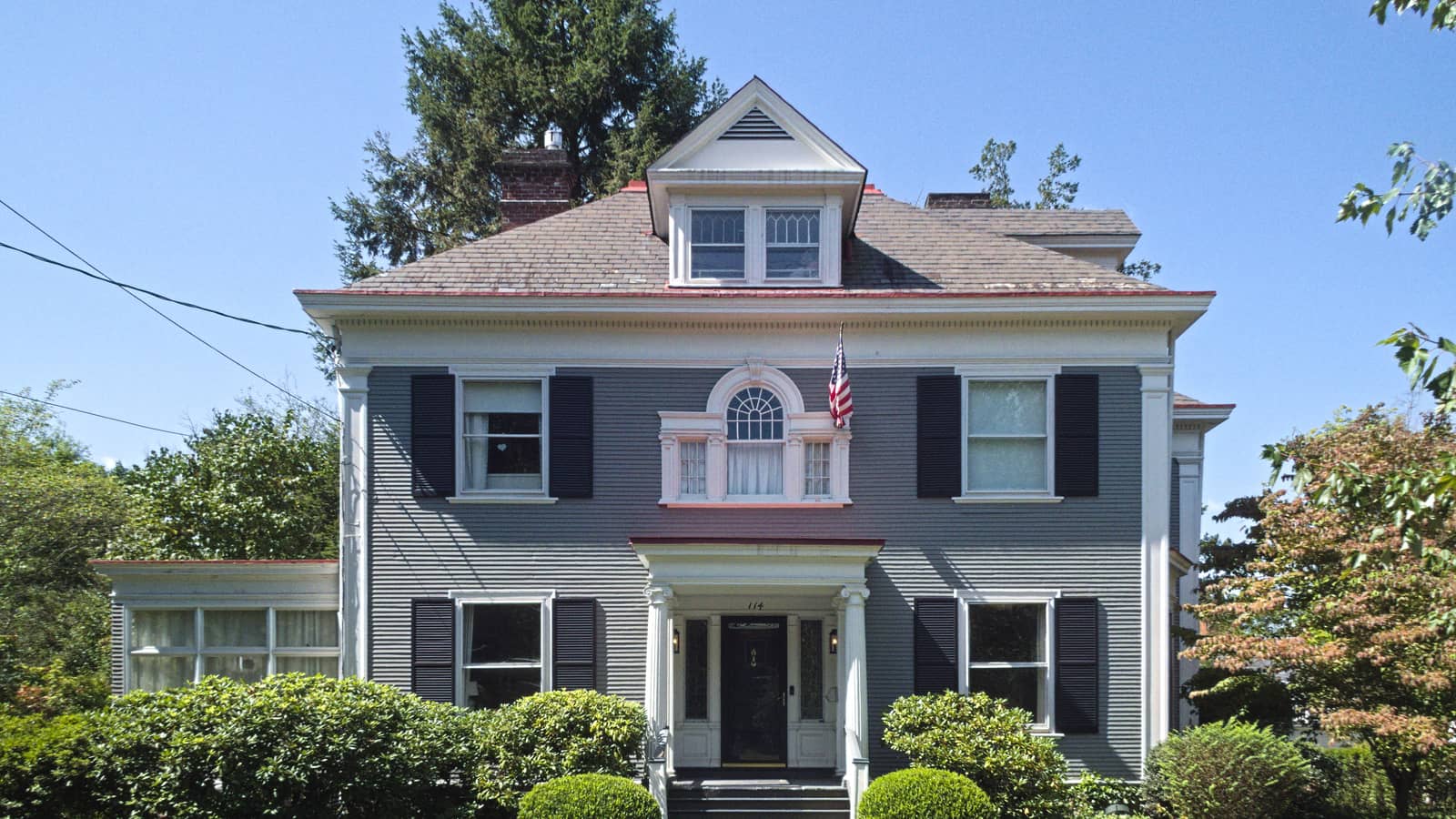
Budget rental property insurance from a written quote for the address and rental use. Put the annual premium in operating expenses, then separately check the cash needed for a deductible, excluded damage and any repair payment due before reimbursement arrives.
A low premium can improve projected cash flow while leaving a larger cash gap after damage. The examples below compare two fictional quotes and follow a covered roof repair through its payments. They are budgeting illustrations, not insurance prices, coverage recommendations or predictions of a claim.
Landlord Insurance Is Not Homeowner's Insurance
Tell the insurer how the property will be used: long-term rental, owner-occupied duplex, short-term accommodation, vacant purchase or renovation. The Insurance Information Institute's rental coverage guidance explains why a standard homeowner's policy may not fit rental use. A description on a listing does not establish what an insurer has agreed to cover.
On a narrow screen, swipe or focus the table and scroll sideways to see every column.
| What needs protection? | What to verify in the proposal |
|---|---|
| Building and owner-owned equipment | Covered causes of damage, insured structures, limits and settlement terms |
| Owner liability | Insured people/entities, activities, exclusions and applicable limits |
| Lost rental income | Covered trigger, waiting period, dollar/time limit and proof required |
| Tenant belongings | The tenant's renters coverage; do not assume the owner's policy covers them |
Source: III's landlord and renters coverage distinctions, checked October 18, 2026. This is a comparison checklist; individual policies determine coverage. A covered-damage rental-income provision is different from ordinary vacancy or a tenant's failure to pay.
If a rent advertisement says insurance is included, establish whose coverage it means. An owner's premium is a property operating cost; a tenant's renters policy serves a different purpose. For a changing rental use, pair the insurance review with the short-term versus long-term strategy comparison.
How Much Should You Actually Budget?
Use the total quoted annual cost of the policies you intend to buy, including required charges. Add separately quoted flood or other coverage once. A seller's old bill and a percentage of the purchase price are preliminary inputs to replace, not a rental property insurance estimate for your ownership.
On a narrow screen, swipe or focus the table and scroll sideways to see every column.
| Budget item | Hypothetical amount | Where it belongs |
|---|---|---|
| Annual landlord premium | $1,800 | Operating expense over twelve months |
| Monthly equivalent | $150 | $1,800 divided by 12; not a promise of monthly billing |
| One applicable deductible | $1,000 | Claim cash exposure, not an automatic yearly expense |
| Capital reserve contribution | Separate property assumption | Savings for planned replacements, not insurance coverage |
| Premium prepaid at closing | Actual closing statement | Cash timing; do not add it again as a second annual premium |
Source: original RentalCalcs hypothetical budget, October 18, 2026. Amounts are assumptions, not national averages. Installment fees, escrow requirements, renewals and additional policies can change the total or timing.
If the lender collects insurance through escrow, reconcile principal and interest separately from the insurance and tax amounts. The NOI guide shows the operating-cost boundary; the pro forma guide separates those costs from financing and owner cash.
How much landlord coverage do you need?
Request a documented rebuilding estimate and an explanation of the proposed building limit. Purchase price includes land and market conditions; it is not a reconstruction estimate. Also review liability exposure, owner equipment and rental-income limits with the agent. A single percentage of purchase price cannot resolve all four. The Texas insurance guide explains reconstruction coverage and settlement terms; confirm them on the rental form.
The NAIC's roof coverage explanation distinguishes replacement cost from actual cash value, which deducts depreciation. It is homeowner-oriented guidance: confirm the rental policy's settlement basis, roof endorsements, limits and repair conditions in writing. A replacement-cost building description does not by itself settle every roof claim.
Factors That Drive Your Premium Up or Down
Give each quoting agent the same facts. Correcting a roof date or construction detail can change both the offer and the coverage terms; simply comparing the final annual prices can hide those differences.
On a narrow screen, swipe or focus the table and scroll sideways to see every column.
| Property or policy detail | Evidence to supply or question to ask |
|---|---|
| Address, unit count and occupancy | Exact property, rental duration, owner occupancy and any vacant period |
| Roof age, material and condition | Installation record and inspection; what settlement endorsement applies? |
| Building systems and renovations | Documented electrical, plumbing, heating and completed work |
| Rebuilding limit | Insurer's estimate, assumptions and how the limit is updated |
| Deductibles | Dollar amount for each relevant cause of loss and the base for any percentage |
| Exclusions and renewal changes | Compare forms and endorsements, not only the declarations summary |
Source: Texas Department of Insurance roof guidance, March 2026, supports checking roof age, materials, settlement and wind/hail deductibles. The remaining rows are RentalCalcs quote-comparison prompts, not a universal rating formula. State and insurer rules differ.
For a percentage deductible, write down the dollar calculation. If the contract applies 2% to a $250,000 insured building limit, the deductible is $5,000. It is not $4,000 merely because the property costs $200,000. The policy determines the base, minimum, cause of loss and whether separate deductibles apply.

Additional Coverage Worth Considering
Review gaps against the property and your actual policy. An extra endorsement's name does not prove that every loss involving that subject is covered.
On a narrow screen, swipe or focus the table and scroll sideways to see every column.
| Exposure | Question to resolve before relying on payment |
|---|---|
| Flood | Is separate coverage needed, what form applies and when does it begin? |
| Sewer or drain backup | Which causes and limits are covered, and which are excluded? |
| Code-required rebuilding work | Does ordinance-or-law coverage address the relevant added cost? |
| Lost rent after damage | Does this cause of loss trigger payment, and for how much and how long? |
| Liability above the base limit | Is additional liability coverage available for this ownership and rental use? |
Source: original policy-review checklist. FEMA's NFIP policy overview says most homeowners, renters and business policies exclude flood damage. NFIP insurance covers eligible direct physical flood damage but excludes business-interruption losses; it generally has a 30-day waiting period with specified exceptions. Confirm the applicable form, effective date and any private-policy differences.
Keep routine vacancy and capital work in the operating model even when coverage includes lost rent. An aging roof reaching the end of its life is a capital reserve planning question. Do not forecast an insurance payment without a covered event and applicable terms.
How to Get Accurate Quotes for Your Analysis
Ask for written proposals based on the same property facts and coverage assumptions. Keep the quoted premium, effective date, required inspections and outstanding conditions beside the operating budget. A proposal still subject to repairs or underwriting approval is not a completed coverage check.
- Describe the risk: give the address, ownership, units, use, roof records and planned work to each agent.
- Match the coverage: reconcile limits, exclusions, deductibles and settlement conditions before comparing prices.
- Date the money: separate the annual premium, closing payment, claim deductible and possible reimbursement delay.
- Check the balance: test a covered-loss cash calendar while retaining money for loan payments and other bills.
Original RentalCalcs workflow, October 18, 2026. Use written proposals and the issued contract. This workflow does not determine coverage or calculate an insurer’s premium.
On a narrow screen, swipe or focus the table and scroll sideways to see every column.
| Compare these fields side by side | What a mismatch can change |
|---|---|
| Named insured, address, units and use | Whether the intended ownership and activity are described correctly |
| Building limit and settlement basis | Potential payment and owner-funded depreciation |
| Roof terms and separate deductibles | The cash required for a roof loss |
| Liability and rental-income limits | Protection outside the physical repair bill |
| Exclusions, endorsements and conditions | Which events or work are outside the proposal |
| Annual total, payment schedule and effective date | Recurring cost, closing cash and any coverage gap |
Source: original RentalCalcs comparison checklist, October 18, 2026. The existing quote worksheet in the calculator below provides space for the proposals. Ask the agent to identify the relevant form or endorsement, rather than relying on an unexplained yes/no answer.
Worked example: premium savings versus cash exposure
Quote A has a $1,800 annual premium and a $1,000 deductible. Quote B costs $1,440 with a $2,500 deductible. For this comparison only, assume every other coverage term is identical and the covered loss is large enough to use the full deductible.
On a narrow screen, swipe or focus the table and scroll sideways to see every column.
| One-year cash cost | Quote A | Quote B |
|---|---|---|
| Premium, with no claim | $1,800 | $1,440 |
| Premium plus one full deductible | $2,800 | $3,940 |
| Difference from A, with no claim | $0 | $360 less |
| Difference from A, with one full deductible | $0 | $1,140 more |
Source: original hypothetical arithmetic. B saves $360 annually but retains $1,500 more deductible exposure. $1,500 divided by $360 is about 4.2 claim-free years of savings, assuming unchanged premiums and terms. This is not an expected-loss calculation, a claim-frequency estimate or the largest possible loss. Uncovered damage can cost more.
Rental property insurance budget calculator
Enter a quoted premium, applicable deductible and cash actually available for that deductible. This tool calculates the monthly budget equivalent, the deductible funding gap and the premium's effect on one fixed property example. It does not price an insurance policy or estimate a claim payout. Keep money already needed for mortgage payments and other bills out of the available-cash input.
Test the decision
Can your cash cover the deductible?
Hypothetical illustration, reviewed October 18, 2026. Cash available must be money you can access without reusing funds already committed to other bills. The deductible test assumes one covered loss large enough to use the full deductible; it does not estimate a payout.
Cash remaining after one deductible
$3,500
A negative amount is a funding gap, before other bills or uncovered losses.
Available cash$6,000
Deductible$2,500
Original RentalCalcs calculation; bar lengths show dollar magnitude. Red means a negative value. Figures are rounded for display.
- Premium per month
- $150
- Cash after one deductible
- $3,500
- Worked house: annual cash before a claim
- $3,097
The recurring-cash illustration holds the linked $200,000 house budget fixed: $2,200 monthly rent, 5% vacancy/loss, 10% management on collected income, $2,400 taxes, $1,500 repairs, $300 other costs, $1,500 capital reserve and a $150,000 loan at an illustrative 7% for 30 years. Only the annual premium changes. The deductible is not subtracted as a recurring expense.
Download the quote comparison worksheet (CSV)Free to use without an account. This illustration does not save a deal.
The tool starts with a separate hypothetical budget: $1,800 premium, $2,500 deductible and $6,000 available cash. Its recurring-cash illustration uses a $200,000 house with $2,200 monthly rent and 5% vacancy/collection loss. Management is 10% of collected rent; annual taxes are $2,400, repairs $1,500, other costs $300 and capital reserve funding $1,500. Debt is a $150,000 loan at an assumed 7% for 30 years. Only the premium changes.
At a $1,300 premium, annual cash after debt and reserve funding is about $3,597. At $1,800 it is $3,097: exactly $500 less before rounding. This is a recurring-cost comparison before claims and income tax. The cash-on-cash return guide explains why cash committed and cash available for a loss must also be accounted for.
Why claim cash can exceed the deductible
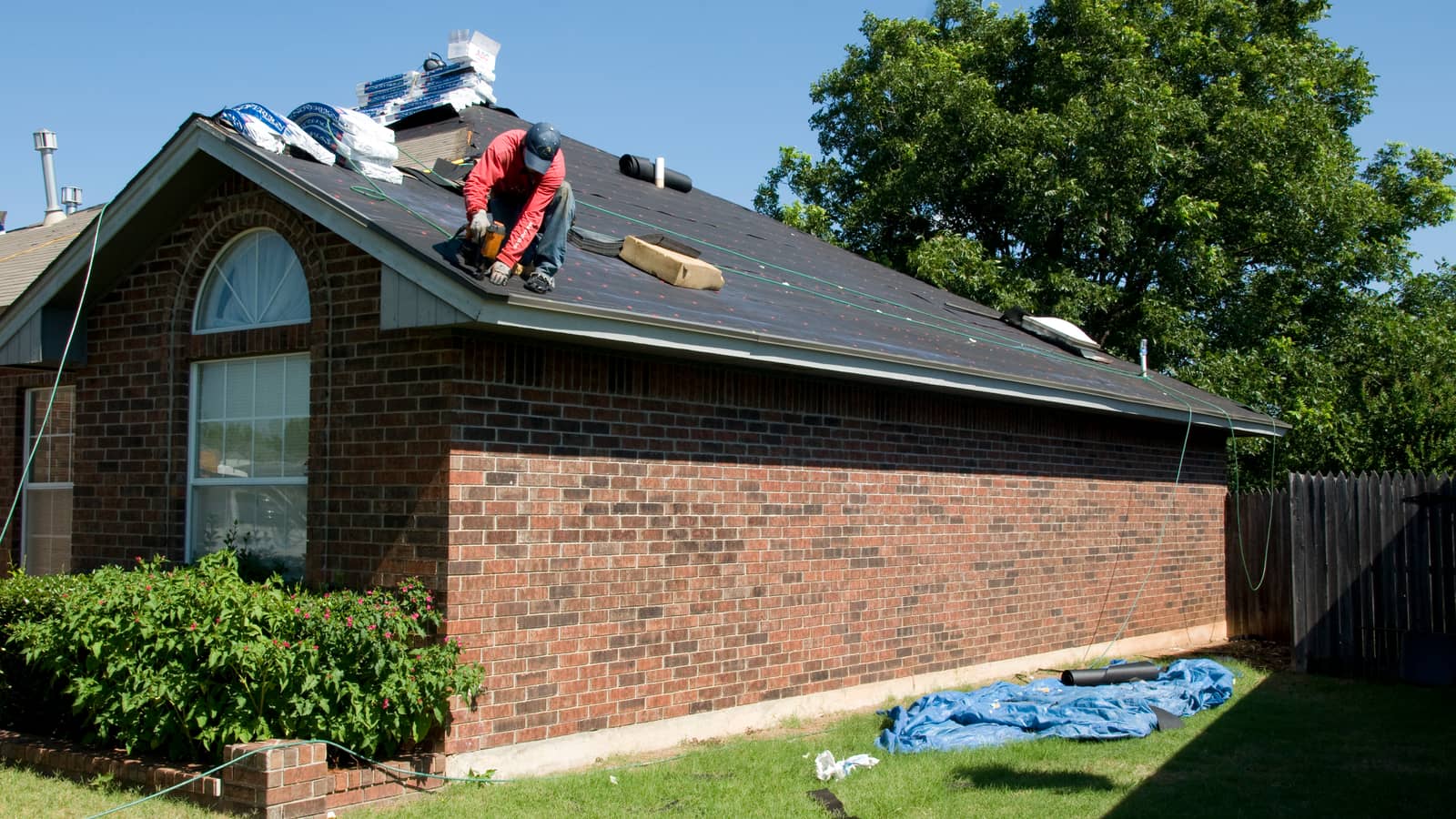
A replacement-cost claim can involve more than one payment. Allstate's landlord policy explainer describes an initial actual-cash-value payment and a later reimbursement after qualifying repairs. That is an example of one insurer's provision, not a promise about every landlord policy or current product availability. Ask what your proposed contract requires.
Consider a fictional $20,000 covered repair, $6,000 depreciation and Quote B's $2,500 deductible. Assume the first $11,500 insurance payment is cleared and available before the contractor's final bill. All $20,000 is due by completion, before the $6,000 recoverable depreciation arrives. No contractor financing, borrowing or other cash flow is assumed.
Owner money tied up in one hypothetical covered repair. The first insurance payment is already usable before the full repair bill; the depreciation reimbursement comes afterward.
All bars start at $0 and share a $10,000 maximum. The complete values and calculation are in the table.
On a narrow screen, swipe or focus the table and scroll sideways to see every column.
| Step | Calculation | Owner cash committed |
|---|---|---|
| Before the repair | No repair paid | $0 |
| Initial insurance payment | $20,000 − $6,000 depreciation − $2,500 deductible = $11,500 | $0; insurance funds are available for the repair |
| Pay the full repair cost | $20,000 − $11,500 available insurance funds | $8,500 |
| Receive recoverable depreciation | $8,500 − $6,000 reimbursement | $2,500 final repair cost |
With $5,000 of uncommitted cash, the modeled funding shortfall is $8,500 − $5,000 = $3,500. The later $6,000 receipt reduces the owner’s final cost, but does not fund an earlier bill. Under ACV-only settlement with no depreciation recovery, the owner retains the full $8,500 cost.
Original RentalCalcs example, October 18, 2026. Assumed $20,000 covered repair, $6,000 depreciation and $2,500 deductible; sufficient limits, no uncovered work and full qualifying depreciation recovery. Allstate’s landlord explainer, printed page 8, illustrates conditional staged reimbursement. This example supplies its own amounts and payment sequence; it does not reproduce a quote or establish a claim’s settlement terms. No rent loss, premium, interest, tax or other bill is included.
With $5,000 of uncommitted cash, the owner needs another $3,500 to bridge the modeled $8,500 repair gap, even though $5,000 comfortably covers the $2,500 deductible. After the assumed $6,000 reimbursement, the owner's final repair cost is $2,500. The $6,000 bridge is temporary funding, not an extra final expense.
On a narrow screen, swipe or focus the table and scroll sideways to see every column.
| If the settlement changes | Effect in this $20,000 example |
|---|---|
| Roof is settled at ACV with no recoverable depreciation | $8,500 remains the owner's final repair cost |
| Initial insurance funds arrive after the full repair bill | Up to $20,000 may be needed before payment, under that timing assumption |
| Limit, exclusion or uncovered work reduces reimbursement | Owner cost can exceed both the modeled bridge and deductible |
| Rent stops while bills continue | Add those dated net cash outflows separately; no lost-rent payment is assumed here |
Source: original sensitivities using the same repair and deductible assumptions. NAIC's ACV/RCV distinction supports the depreciation distinction; the amounts and timing are invented. Claim review, lender release conditions, contractor installments and recovery deadlines require their own cash calendar.
Common Mistakes in Insurance Budgeting
Use separate rows for recurring cost, owner-retained loss and temporary funding. Otherwise a model can make an affordable premium look like an affordable claim, or count the same expense twice.
On a narrow screen, swipe or focus the table and scroll sideways to see every column.
| Mistake | Correction |
|---|---|
| Treating the seller's premium as your quote | Quote your ownership, use and coverage effective date |
| Counting escrow and the annual premium as two expenses | Reconcile insurance once; track when the cash is collected |
| Subtracting the full deductible every ordinary year | Test it in a claim scenario; retain a separate accessible cash balance |
| Adding recoverable depreciation to final owner cost | Distinguish temporary bridge funding from unreimbursed loss |
| Spending the same reserve on two obligations | Ring-fence upcoming bills and planned work before testing claim cash |
| Assuming a lower premium means equal protection | Compare limits, exclusions, deductibles and settlement forms |
Source: RentalCalcs budgeting controls. No loss probability or recommended reserve amount is implied. The first-rental cash guide helps separate acquisition cash, working cash and planned repairs.
Getting Insurance Right in Your Analysis
Before relying on the deal's cash flow, complete three checks:
- Cost: replace the placeholder with the complete written annual premium and its payment schedule.
- Coverage: reconcile the rental use, limits, deductibles, exclusions and settlement conditions against the proposal.
- Cash: date the repair payments and usable reimbursements, then test the lowest balance alongside other property bills.
Enter the verified annual premium in the Single-Family Rental Calculator. Review property-tax reassessment and operating expense ratios beside it: insurance is one line in a complete budget. Use the 50% expense rule only as a screen until actual cost evidence replaces it.
Get new articles and market updates
Investing guides and market data, straight to your inbox. Unsubscribe anytime.


