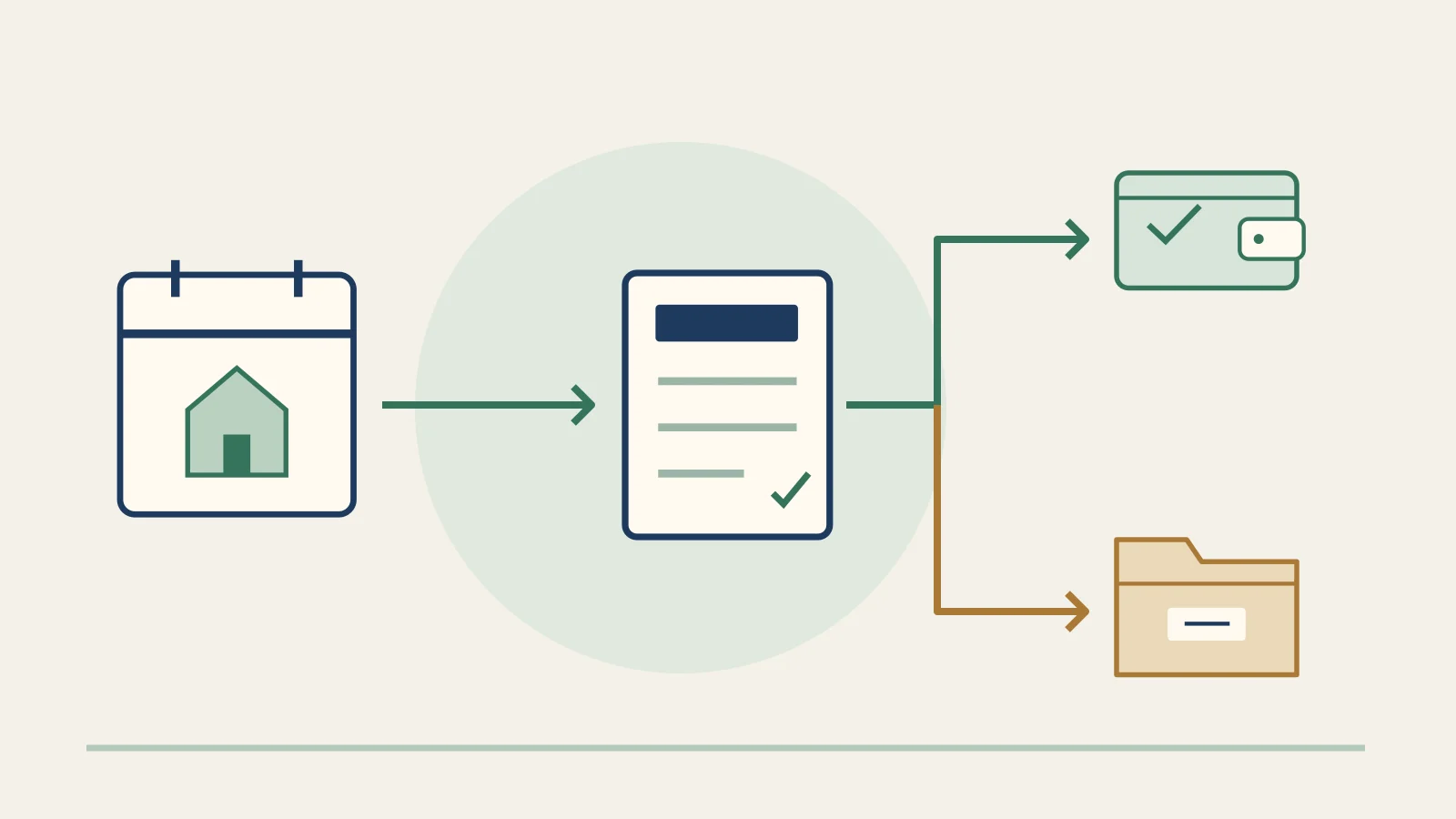
The 2026 bonus depreciation percentage is generally 100% for eligible property acquired and placed in service after January 19, 2025. That does not mean you can deduct the entire price of a rental building. Asset eligibility, acquisition rules and your ability to use the deduction are separate questions.
In the hypothetical $750,000 duplex below, a study increases first-year depreciation by about $145,682. At the assumed 32% federal rate, the extra current tax reduction ranges from $0 to $46,618, depending on the available income and loss limitations. The $5,000 study fee is paid either way.
This guide connects the rules to that decision. The 2026 bonus depreciation guide focuses on eligibility; the cost segregation guide covers the study itself. Use the investor tax tools for scenarios, then reconcile them with your tax records.
The Baseline: What 27.5-Year Straight-Line Actually Costs You
Start with supported basis, not the purchase price alone. Land is not depreciable. For residential rental property under the general depreciation system, the building normally uses 27.5-year straight-line depreciation and a mid-month convention. Required alternative depreciation, personal use and other facts can change the calculation. IRS Publication 527 explains the rental rules.
Suppose a $750,000 purchase has $150,000 allocated to land and $600,000 to depreciable property. Treating the entire $600,000 as residential structure gives a simplified full-year comparison of $600,000 / 27.5 = $21,818. It is not the first-year result if the property enters service during the year.
For a March service date, the mid-month convention gives 9.5 months: $600,000 / 27.5 × 9.5 / 12 = $17,273. Service begins when the property is ready and available for rental use, which can differ from closing. Keep the listing, completion and availability records with the closing file. A purchase in March that is not ready until September needs a different first-year calculation.
The depreciation calculator helps organize basis and timing. Ordinary expenses belong in a separate operating schedule; the rental deduction guide explains those categories. Neither a deduction nor a lower tax estimate is rent received from a tenant.
What Changed in 2025: 100% Bonus Depreciation Is Back, Permanently
Public Law 119-21 restored 100% bonus for qualifying property acquired and placed in service after January 19, 2025. IRS Notice 2026-11 provides interim guidance. For ordinary qualifying property, before elections or special exceptions:
| Acquisition timing under the tax rules | Service year | Bonus percentage |
|---|---|---|
| After January 19, 2025 | After January 19, 2025, including 2026 | 100% |
| On or before January 19, 2025 | 2025 | 40% |
| On or before January 19, 2025 | 2026 | 20% |
| On or before January 19, 2025 | 2027 or later | 0% |
This is not a complete schedule for long-production-period property, aircraft or other special categories. The structure of an ordinary residential rental does not become bonus-eligible because it appears in the first row.
Acquisition date is not always the date you signed or closed
Notice 2026-11 applies existing acquisition rules with the new cutoff. A written contract's enforceability, cancellation periods and contingencies can affect the controlling date. Do not automatically classify every December-signed/March-closed purchase as a pre-cutoff acquisition. Have the actual contract reviewed, rather than relying on a closing-date dropdown.
When taking less than 100% may be an option
The law provides a special 40% election for qualifying property in the first tax year ending after January 19, 2025, generally 2025 for a calendar-year taxpayer. That is not an annual 40% choice. A separate election out of bonus generally applies by property class; Publication 946 explains the procedures. Elections deserve a return-level comparison, including later income, rather than an assumption that the largest deduction is always preferable.
Bonus Depreciation on Real Estate in 2027 and Beyond
For eligible post-cutoff property, current law has no scheduled bonus phase-down. “Permanent” describes the absence of a scheduled expiration, not a guarantee against future legislation. A service date in 2027 does not by itself force a 0% rate, and a 2026 purchase does not by itself establish 100% eligibility.
Keep two dates in the plan: acquisition under the tax rules and the date each asset is ready for use. A cost segregation study completed years later does not reset those dates. That matters when buying an existing property, adding equipment later or reviewing an old depreciation schedule.
Cost Segregation: The Mechanism That Makes Bonus Depreciation Usable for Real Estate
How it works · illustrated
A qualifying asset and a valid service date establish the deduction calculation. The income and loss rules then determine whether it reduces current tax or remains in the carryforward file.
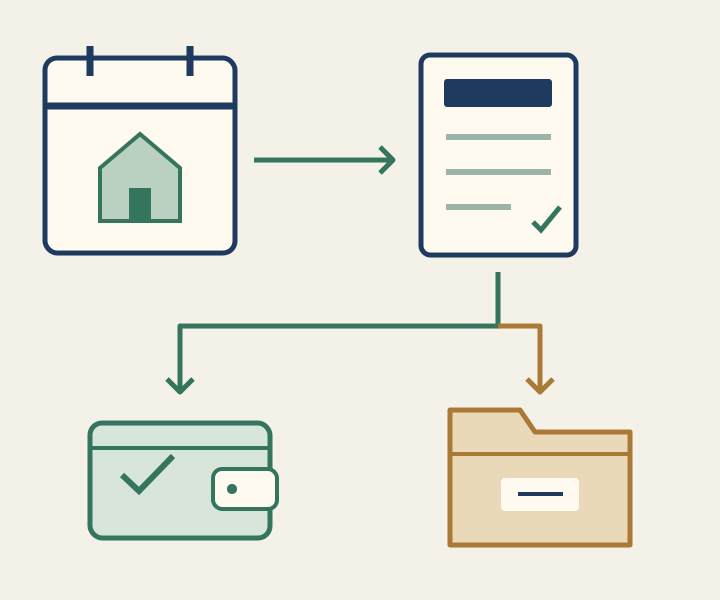
- 1 · Eligible asset basis
- $150,000
Hypothetical qualifying short-life assets. The $750,000 purchase price is not the bonus basis.
- 2 · Total March depreciation
- $162,955
$150,000 bonus plus approximately $12,955 on the remaining structure, before loss limits.
- 3 · Extra current tax reduction
- $0–$46,618
The worked scenarios compare usable deductions in both paths at an assumed 32% federal rate.
Conceptual artwork, not a monetary scale. Original hypothetical March 2026 example; amounts are rounded. The figure below separates the tax reduction from the $5,000 study fee and later-year effects.
Reviewed October 15, 2026 · Eligibility: IRS Publication 946. Loss limitations: Publication 925. Original RentalCalcs artwork and calculations.
A study identifies and supports the classification of individual assets. Eligible MACRS tangible property with a recovery period of 20 years or less can qualify for bonus; the ordinary 27.5-year residential structure cannot. Certain used property can qualify, subject to acquisition restrictions. Required ADS treatment and other exclusions also matter. See Publication 946's qualified-property rules.
What gets reclassified, and what stays in the building
Appliances, qualifying carpeting and some site improvements may have shorter recovery periods. A roof, foundation or building system cannot be moved into a short-life category simply because a larger deduction is desirable. Classification depends on the asset and its use. Ask for a reconciled asset schedule with the supporting basis and legal treatment, not just a percentage of purchase price.
Our example assigns $150,000 to qualifying short-life assets and leaves $450,000 as structure. The 25% allocation is invented for the comparison; it is not a standard allocation, a guaranteed study result or evidence that a particular property qualifies.
Price the work before estimating its benefit
Obtain a property-specific quote covering the report, asset detail, records required, return-preparation work and support if questions arise. The IRS audit-guide directory includes cost segregation guidance for examining and preparing studies. A provider's marketing label does not establish IRS approval or protection from examination.
There is no universal purchase-price or holding-period threshold that makes a study worthwhile. Compare its incremental usable deductions with its fees and later consequences. The $5,000 fee below is an assumption, not a market quote; fee deductibility is excluded from the cash comparison and should be addressed separately.
Section 469: Passive Activity Rules and the Real Estate Professional Designation
A correctly calculated deduction can still be unavailable against wages this year. Rental activities are generally passive, with exceptions. Apply the relevant basis and at-risk limits as well as the passive rules; passing one test does not bypass the others.
Active participation is different from material participation
The Form 8582 instructions describe the rental-real-estate special allowance. For an eligible single or joint filer who actively participates, it can allow up to $25,000 of loss against nonpassive income. The usual allowance falls by half the MAGI above $100,000 and is generally gone at $150,000. Separate-filing rules differ.
For example, $125,000 of relevant MAGI leaves a $12,500 allowance before other applicable limits. If both depreciation alternatives already produce more than $12,500 of eligible loss, a larger study deduction adds no current deduction under that allowance. It increases the amount carried forward instead.
A high salary alone does not prove the current benefit is zero: the taxpayer might have passive income available to absorb losses. Conversely, managing tenants does not automatically make rental losses nonpassive. Keep wages, passive income and any special allowance on separate lines.
Qualifying as a real estate professional
Publication 925 requires more than 750 hours and more than half of personal services in qualifying real-property trades or businesses in which the taxpayer materially participates. Rental material participation must also be established, considering any valid aggregation election. Status alone does not make every loss deductible.
An average customer-use period of seven days or less is one exception to rental-activity treatment under Section 469; material participation and other rules still matter. An “Airbnb” label does not prove the exception. The short-term versus long-term comparison addresses the operating choice separately.
Suspended passive losses generally carry forward. A qualifying fully taxable disposition of the entire activity to an unrelated person can release them; a partial sale or exchange is not automatically equivalent. Keep the carryforward records, rather than treating a blocked deduction as either cash today or permanently worthless.
The Exit: Depreciation Recapture Under Section 1250
Depreciation affects adjusted basis and the character of gain at sale. For ordinary residential structure held more than one year, straight-line depreciation can contribute to unrecaptured Section 1250 gain, taxed at a maximum 25% federal rate. That is not a flat 25% tax on every depreciation dollar regardless of the sale result.
Section 1245 assets can generate ordinary-income recapture, generally limited by depreciation and the gain allocated to those assets. Do not apply that label to every asset in a study: land improvements and other property need their own classification. Publication 544 covers these distinctions and allowed-or-allowable depreciation.
For a separate illustration, assume a fully depreciated Section 1245 asset originally cost $80,000 and receives $30,000 of properly allocated sale proceeds. With zero adjusted basis, the $30,000 gain can be ordinary recapture; it is not automatically $80,000. At a hypothetical 32% rate, that portion produces $9,600 of federal tax. The example excludes selling costs and other return effects.
Use the recapture guide to assemble the sale records. A 1031 exchange and its calculator address a separate deferral decision; an exchange should not be assumed to erase every asset's tax or release every suspended loss. Model a taxable-sale alternative alongside it.
Running the Numbers: $750K Duplex, Straight-Line vs. Cost Seg
Assume a calendar-year taxpayer buys an eligible duplex in March 2026 and makes it ready and available for rent that month. The supported hypothetical allocation is $150,000 land, $450,000 structure and $150,000 qualifying short-life assets. Assume the latter qualify for 100% bonus, no election out, sufficient basis/amount at risk, no prior suspended losses and no other deduction limitation except the stated usage cases.
The comparison uses a constant 32% federal marginal rate, not an actual graduated tax-return calculation. It excludes state tax, NIIT, QBI interactions, fee deductibility and financing effects. The simplified no-study benchmark places $600,000 on the building schedule; it does not authorize misclassifying known assets on a return.
Preview: 3 of 8 rows
| Depreciation line | Simplified building-only benchmark | Supported study allocation |
|---|---|---|
| Land, excluded from depreciation | $150,000 | $150,000 |
| Short-life basis receiving bonus | $0 | $150,000 |
| Residential structure basis | $600,000 | $450,000 |
| March first-year structure deduction: basis / 27.5 × 9.5 / 12 | $17,273 | $12,955 |
| First-year bonus deduction | $0 | $150,000 |
| Total first-year depreciation | $17,273 | $162,955 |
| Depreciation in each full year 2-5 | $21,818 | $16,364 |
| Cumulative depreciation through year 5 | $104,545 | $228,409 |
The study adds about $145,682 of first-year depreciation, not $162,955 of incremental benefit. The benchmark already supplies a deduction. Values are calculated before rounding; both paths use the same March service date and no later additions, disposals or changes in use.
How much of the added deduction reduces tax now?
The worked decision · First-year federal dollars
Compare the usable study deduction with the usable building-only benchmark. The bars show the extra tax reduction before the fee, not the total depreciation or a promised refund.
Full deduction usable$46,618
All modeled loss limits cleared; enough income to use both deductions.
After the assumed fee: $41,618
$50,000 available passive income$10,473
No special allowance. The study leaves about $112,955 suspended.
After the assumed fee: $5,473
No available income or allowance$0
No current tax reduction; the $5,000 fee still needs funding.
After the assumed fee: -$5,000
Common bar scale: $0–$50,000. Same $750,000 property, March service date and 32% federal rate. All other modeled loss limits are assumed satisfied; available income changes by scenario. The $0 case has a zero-length bar.
Original RentalCalcs calculations · Reviewed October 15, 2026. No state tax, NIIT, QBI effects, fee deductibility, later deductions or sale tax included. This is a current-year comparison, not lifetime return. Rules: IRS Form 8582 instructions. Full assumptions and arithmetic follow.
Open the tax-strategy decision worksheetAssume the property breaks even before depreciation. “Available use” below means the amount these depreciation deductions can offset after the stated limitations, with all other modeled conditions held constant.
The second case has $50,000 of other usable passive income and no special allowance; the last has neither. The first assumes the full loss is usable, for example through sufficient nonpassive income with qualifying status, material participation and all other limits satisfied.
| Current-use case | Benchmark deduction used | Study deduction used | Extra current tax reduction at 32% | After $5,000 study fee |
|---|---|---|---|---|
| Full deduction usable | $17,273 | $162,955 | $46,618 | $41,618 |
| $50,000 available passive income | $17,273 | $50,000 | $10,473 | $5,473 |
| No available income or allowance | $0 | $0 | $0 | -$5,000 |
Scroll the table sideways for more columns.
For the middle row, ($50,000 - $17,272.73) × 32% gives about $10,473. The study leaves about $112,955 suspended. Multiplying all $162,955 by 32% would overstate this case, and counting the benchmark's deduction as an extra study benefit would overstate it again.
The $125,000-MAGI allowance illustration works differently: if both alternatives can use only $12,500, their current deduction is the same. The extra current tax reduction is zero at any shared tax rate. That can be true even though the owner receives a tax benefit from rental depreciation generally.
What happens after the first year
In each full year 2-5, the study path has about $5,455 less depreciation. If both paths' deductions are usable at 32%, that is approximately $1,745 less tax reduction per year. By year 5, the cumulative depreciation difference is about $123,864, down from $145,682 in year 1. Sale taxes and the time when suspended losses become usable still sit outside that comparison.
The economic question is the value of earlier usable deductions, net of fees, lower later deductions and exit effects. A current-year benefit divided by a fee is not a lifetime return. A small sensitivity schedule with different service dates, usable-income amounts and sale allocations is more useful than a large headline multiple.
State-Level Conformity: Don't Assume Federal = State
Keep separate federal and state depreciation schedules where required. As a dated example, California's 2025 Form 3885A instructions identify differences for Section 168(k) additional depreciation. That source concerns the 2025 form; check the applicable state's current-year guidance before preparing a 2026 return.
Do not multiply the federal bonus deduction by a combined federal/state rate unless both treatments support that calculation. Different basis, timing and loss limits can change the result. This example deliberately uses only a federal rate; it makes no claim that the federal study benefit is always positive.
Practical Next Steps for 2026 Acquisitions
Use the tax-strategy decision worksheet to collect acquisition evidence, service dates, basis, usable income, fees and an exit scenario. It is a local fill-and-print worksheet; nothing is submitted or automatically saved.
Reconcile the calculators with the dated example
Enter $150,000 of qualifying assets, not the $750,000 property price, in the bonus depreciation calculator. With 2026, post-cutoff acquisition and 32%, its $48,000 result is bonus deduction × rate before loss limitations. It does not subtract the depreciation those assets displaced in the benchmark or decide whether the deduction is currently usable.
The cost segregation calculator uses a simplified full-year structure allowance. At the article's inputs, it produces about $166,364 versus $21,818 and an incremental $46,255 tax estimate before limitations. This article's March convention instead gives $162,955 versus $17,273 and up to $46,618. Compare matching dates and assumptions; neither tool replaces the asset schedule or passive-loss calculation.
For an older property, a depreciation method change may involve Form 3115 and a Section 481(a) adjustment. The Form 3115 instructions describe the procedural requirements. A new study does not automatically qualify for every automatic-change procedure or allow every missed deduction immediately. Bring prior returns, elections and depreciation schedules to the preparer before choosing the correction route.
Underwrite the property's operations separately: use the single-family calculator for one-to-four-unit deals and the multifamily calculator for five-plus units. Analyses and sensitivity are free; account-saving and paid workflow features are described on pricing. Fund the purchase and repairs without counting a projected tax reduction as cash already available.
The useful next action is a comparison your tax adviser can check: supported asset basis, dated eligibility, a usable-loss calculation, the actual fee and a sale scenario. Federal sources and tool behavior were reviewed October 15, 2026; this is an educational illustration, not an individualized filing position.
Get new articles and market updates
Investing guides and market data, straight to your inbox. Unsubscribe anytime.
