Section 8 Housing in Washington, DC
Waitlist status, housing authority contacts and local application guidance across 5 public housing authorities serving the metro area.
5
Voucher waitlists tracked
1
Waitlists open / lottery
4
Waitlists closed
6,304,975
Metro population (2023)
Is the Section 8 waitlist open in Washington?
Yes, in part. When we checked in September 2026, Housing Opportunities Commission of Montgomery County (HOC, MD004) was accepting Section 8 applications. Of the other lists we track in the Washington area, 4 are closed to new applications. Housing authorities open and close lists with little notice, and applying is always free, so confirm with the authority before you rely on this.
Status, phone number and application link for each housing authority · Checked September 2026 · See every open Section 8 waiting list we track
Waitlist Status: Where to Apply
District of Columbia Housing Authority (DCHA)
closedWaitlist is closed to new applicants and DCHA says there is no scheduled time to reopen it. People already on the list can check status through the customer portal or by phone.
202-535-1000 · Waitlist and application page
Checked September 19, 2026
Source: dchousing.orgHousing Opportunities Commission of Montgomery County (HOC, MD004)
openHousing Path waitlist is still taking applications online year round. However, HOC says it cannot issue new vouchers right now because of a HUD funding shortfall (notice dated June 30, 2026) and expects to resume in early spring 2027.
240-627-9400 · Waitlist and application page
Checked September 19, 2026
Source: hocmc.orgArlington County Department of Human Services (Housing Choice Voucher Program)
closedWaitlist is closed with no reopening date. The county opens lists by lottery only occasionally (last opening was 2023). Call to confirm status; for other rental help such as housing grants call 703-228-1300.
Checked September 19, 2026
Source: arlingtonva.usHousing Authority of Prince George's County (HAPGC)
closedHCV waitlist is closed. The last application window ran Dec 1-5, 2025, with 5,000 applicants chosen by lottery. No new window is announced. Applicants should check their status in the online portal.
Checked September 19, 2026
Source: section8waitlist.orgFairfax County Redevelopment and Housing Authority (FCRHA, VA019)
closedTenant-based HCV list remains closed. A separate PBV pre-application window runs October 5, 2026 at 8 a.m. through October 11 at 11:59 p.m. The notice identifies Telestar Court and The Exchange at Spring Hill Station; selections may also serve other properties in the county PBV portfolio. Read current eligibility and application instructions at the official source.
703-246-5000 · Waitlist and application page
Checked September 27, 2026
Source: fairfaxcounty.govGet an email when a waiting list opens in Washington, DC
We check the housing authorities here and email you when a Section 8 list starts taking applications, plus new voucher-friendly listings. Free, no account needed.
One email to confirm — unsubscribe anytime.
Voucher-friendly listings in Washington
1 listing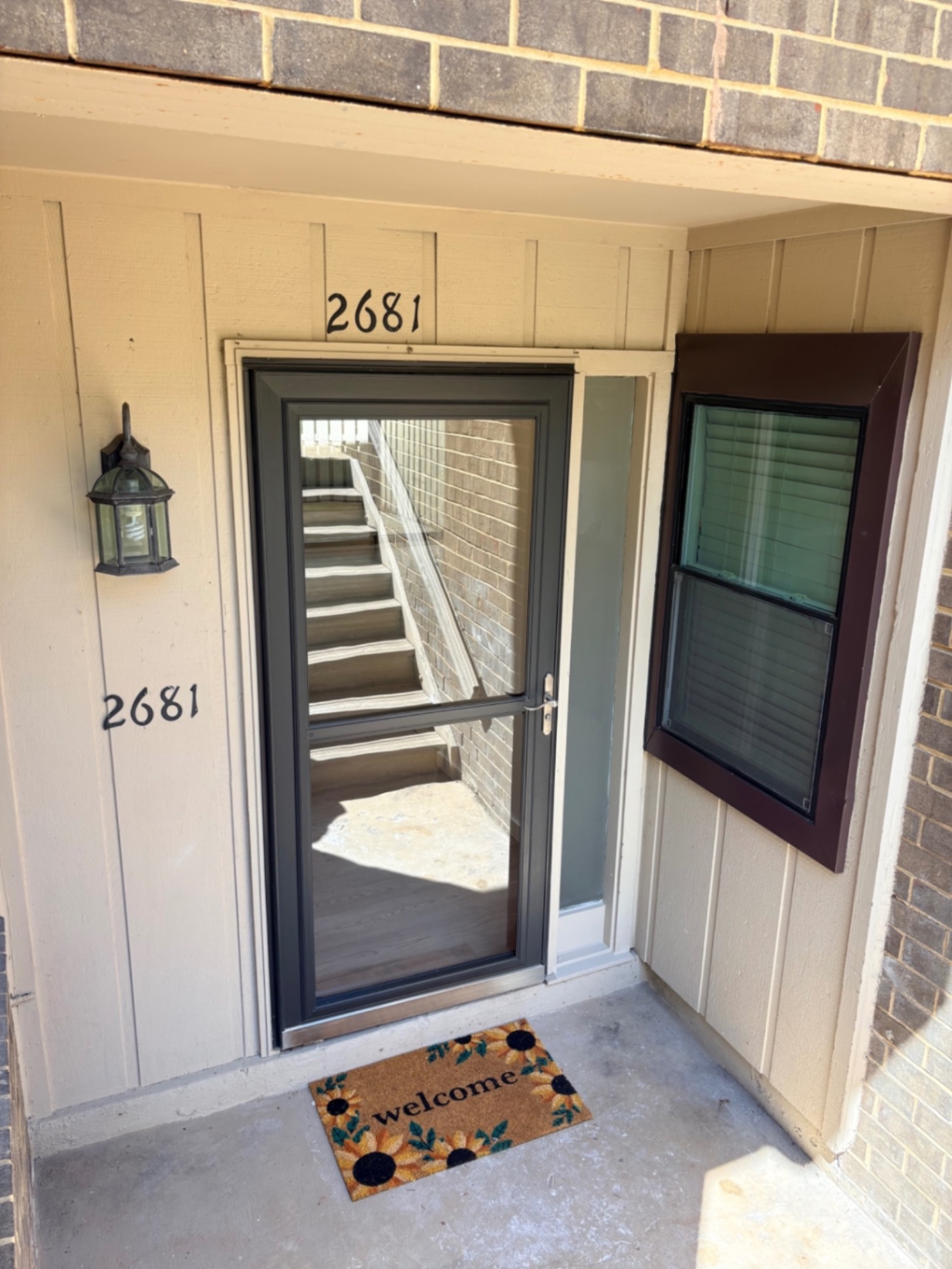
DCHA, Montgomery County, Prince George’s County, Arlington and Fairfax have separate housing programs. Match each application or transfer to its administrator, and distinguish an open application list from immediate voucher issuance.
Fair Market Rent by bedroom count
HUD rent benchmarks for FY2027, effective October 1, 2026. These are not adopted housing-authority payment standards or household subsidy amounts. The illustration shows 90% to 110% of FMR; ZIP-based schedules, approved exceptions and Moving to Work rules can differ.
| Bedrooms | FMR | Illustration: 90% to 110% of FMR |
|---|---|---|
| Efficiency (studio) | $2,111 | $1,900 to $2,322 |
| 1-bedroom | $2,204 | $1,984 to $2,424 |
| 2-bedroom | $2,438 | $2,194 to $2,682 |
| 3-bedroom | $3,107 | $2,796 to $3,418 |
| 4-bedroom | $3,658 | $3,292 to $4,024 |
The two-bedroom HUD benchmark for Washington is $2,438. Multiplying by 90% and 110% gives $2,194 to $2,682, not an approval range. Gross rent includes the applicable allowance for tenant-paid utilities. Your agency must calculate assistance using its adopted standard, your household and the proposed unit.
What changed from FY2026 to FY2027 in Washington
HUD's two-bedroom Fair Market Rent for the Washington-Arlington-Alexandria, DC-VA-MD-WV metro rose from $2,246 in FY2026 to $2,438 in FY2027, a change of +$192 a month (+8.5%). FY2027 figures took effect on October 1, 2026.
| Bedrooms | FY2026 | FY2027 | Change |
|---|---|---|---|
| Efficiency (studio) | $1,953 | $2,111 | +$158 (+8.1%) |
| 1-bedroom | $2,015 | $2,204 | +$189 (+9.4%) |
| 2-bedroom | $2,246 | $2,438 | +$192 (+8.5%) |
| 3-bedroom | $2,835 | $3,107 | +$272 (+9.6%) |
| 4-bedroom | $3,332 | $3,658 | +$326 (+9.8%) |
The FMR is not what the voucher pays. Each housing authority sets its own payment standard. The basic range is 90% to 110% of the applicable FMR or SAFMR, with exceptions and Moving to Work policies that may differ. A HUD effective date is not a household rent-change notice. Confirm the adopted schedule and its application to your lease or reexamination with your agency.
Already renting with a voucher in Washington? Under standard HCV rules, once the housing authority raises its payment standard, the higher amount must be used for your subsidy no later than the earliest of three dates: a rent increase that would raise your share, your next regular or interim reexamination, or one year after the increase took effect (24 CFR 982.505(c)(4)). Confirm any applicable Moving to Work policy with your agency.
Landlords: a higher FMR does not raise a contract rent by itself. You still request the increase from the housing authority, and the new rent has to pass its rent reasonableness review against comparable unassisted units.
Source: HUD Fair Market Rents, FY2026 and FY2027, huduser.gov.
Apartments that accept Section 8 in Washington
Compare voucher-friendly listings by neighborhood, bedroom size and ZIP code, with guidance on the responsible agency, rent and utilities.
Local guidance checked September 27, 2026. The HUD table above shows rent benchmarks. Your housing authority's adopted payment standard, utility allowance and household calculation determine your assistance.
Choose the correct Washington-area application
| Your situation | First step | Keep as your record |
|---|---|---|
| New DCHA applicant | Read DCHA's current list notice | Program and opening status |
| Existing DCHA applicant | Follow its applicant update process | Confirmation and current contact details |
| Considering Montgomery or Fairfax | Read that agency's named program notice | Separate application and conditions |
| Moving an issued voucher | Contact the current issuing authority | Receiving agency and transfer instructions |
This guide concerns Washington, DC. It does not cover Washington State. DCHA and the surrounding Maryland and Virginia authorities are separate administrators, even when a property is marketed as part of the Washington metro.
Keep one record per agency and program. An application to a property, a place on a general list and an issued voucher are different stages. Do not interpret a website accepting registrations as confirmation that immediate assistance is available.
Sources: dchousing.org, hocmc.org, fairfaxcounty.gov
DCHA applicants: maintain the existing record
DCHA's waiting-list page says the list is closed and does not give a reopening date. Existing applicants should follow its official update instructions and retain their original confirmation. A new rental advertisement does not require replacing an existing authority record.
When a notice arrives, identify the program, requested response and deadline. Keep the notice and submission receipt together. If account access fails, use the agency's official assistance channel rather than repeatedly creating new profiles or sending private records to an unofficial contact.
If exploring other jurisdictions, maintain those applications separately. A decision or missing-document request from one office should not be mistaken for a decision about every housing application in the region.
Sources: dchousing.org
HOC applications and voucher issuance are different
HOC's June 30, 2026 update says Housing Path applications remain open while a funding shortfall pauses most new HCV processing and issuance. Its projected early-spring-2027 resumption is a forecast, not an appointment or guarantee for an individual applicant.
The notice describes exceptions and separate treatment for certain programs and existing participants. Read the current update for the actual assistance type rather than assuming every HOC activity is stopped. An online confirmation preserves an application record; it does not establish a funded voucher offer.
For a proposed move, ask the current and receiving agencies how the funding notice affects that specific transfer. Keep the agency response with the portability packet and search deadline instead of relying on an older general summary.
Sources: hocmc.org
Fairfax’s October window concerns project-based assistance
Fairfax announces a PBV pre-application window from October 5, 2026 at 8 a.m. through October 11 at 11:59 p.m. Its notice identifies Telestar Court and The Exchange at Spring Hill Station and says selections can also serve other properties in the county PBV portfolio.
This is separate from the closed tenant-based HCV list. Read the official eligibility and application instructions before the window, then keep the completed pre-application confirmation. A pre-application is not a unit reservation or assurance of immediate selection.
Check the live county notice before acting, particularly if reading this guide after the dates above. Other nearby status cards retain their own verification dates; this October event does not imply that Arlington or Prince George's County reopened their lists.
Sources: fairfaxcounty.gov
Current DCHA participants can ask about deposit help
DCHA says security-deposit assistance resumed August 7, 2026, subject to funding and eligibility. Older information saying the service ended does not describe the current program. Ask the housing specialist whether the household's new-lease or transfer circumstances qualify.
The support instructions describe an award up to one month's contract rent, with unit approval and completed lease/HAP steps before payment to the landlord with the first assistance payment. Do not count a pending request as advance cash for a deposit.
Build a separate move-in budget, confirm the request and payment sequence with the specialist, and ask the owner how an approved award will be handled. Retain the decision and any remaining household expenses in writing.
Sources: dchousing.org, dchousing.org
Prepare a unit and keep local rights in view
Use the Washington apartment page to compare exact addresses, rent, utilities, availability and owner contacts. The Washington payment article explains DCHA's adopted amounts and household examples. A DCHA figure is not a substitute for a Maryland or Virginia authority's calculation.
Start any agency transfer with the current issuer, and track packet receipt, intake, rent review and inspection separately. Keep the voucher deadline and extension decisions visible. An owner accepting a rental application does not approve the assisted-tenancy start date.
DC's Office of Human Rights explains source-of-income protections and screening restrictions for District properties, with applicable exemptions. Retain criteria and written responses if a problem arises. For an address outside DC, check that jurisdiction's rules instead of treating the District's ordinance as a metro-wide law.
Sources: dchousing.org, ohr.dc.gov
Local housing help and official resources
DCHA waiting-list information
govOfficial program instructions, current notices and local requirements.
dchousing.org →HOC current voucher funding update
govOfficial program instructions, current notices and local requirements.
hocmc.org →Fairfax waiting-list notices
govOfficial program instructions, current notices and local requirements.
fairfaxcounty.gov →DCHA participant FAQ
govOfficial program instructions, current notices and local requirements.
dchousing.org →DCHA deposit assistance resumed
govOfficial program instructions, current notices and local requirements.
dchousing.org →DCHA participant and landlord support
govOfficial program instructions, current notices and local requirements.
dchousing.org →DC fair-housing resources
govOfficial program instructions, current notices and local requirements.
ohr.dc.gov →Frequently Asked Questions
Is the Section 8 waitlist open in Washington right now?⌄
Yes, in part. When we checked in September 2026, Housing Opportunities Commission of Montgomery County (HOC, MD004) was accepting Section 8 applications. Of the other lists we track in the Washington area, 4 are closed to new applications. Housing authorities open and close lists with little notice, and applying is always free, so confirm with the authority before you rely on this.
Is DCHA’s general waiting list open?⌄
DCHA’s official page says it is closed with no reopening date. Existing applicants should follow its update instructions.
Does an HOC application mean a new voucher can be issued now?⌄
No. Its current funding update separates continued applications from the pause on most new HCV issuance. The resumption estimate is not a promise.
Is Fairfax’s October opening a portable voucher list?⌄
The announced window concerns PBV assistance and is separate from the closed tenant-based HCV list.
Is DCHA deposit assistance available again?⌄
The agency says it resumed August 7, 2026, subject to funding, eligibility and the required approval and payment steps.
More housing help in Washington
- Apartments that accept Section 8 in Washington, by neighborhood, ZIP code and bedroom size
- 53 income-based apartment properties in Washington, you apply to the building and need no voucher
- Housing authorities in District of Columbia, phone numbers, addresses and programs
- Open Section 8 waiting lists nationwide
- Listings from landlords in Washington who accept vouchers
Own property in Washington? List free.
Reach households searching with a Housing Choice Voucher. The housing authority determines the approved rent and assistance payment for each household and unit. List it free today — post the unit, receive applications, and message voucher tenants directly.
List your property freeAlready have an account? Sign in to add a listing.
Prefer we reach out first? Join the Washington landlord list
Landlord and investor tools for Washington
RentalCalcsFree calculators and guides from RentalCalcs, built by the VoucherMatch team, for landlords deciding whether to accept vouchers.
- Section 8 rent analyzerHUD rent benchmarks and modeled comparisons for District of Columbia ZIP codes. Confirm adopted amounts with the agency.
- Compare HUD benchmarks with market rent in District of ColumbiaExplore modeled ZIP comparisons; these do not establish an approved rent or agency payment.
- Average rent in District of ColumbiaMarket rent versus HUD fair market rent by city and bedroom count.
- How Section 8 rent is calculatedFair market rent, payment standards and rent reasonableness, step by step.
- Section 8 landlord math for 2026What the payment standard changes mean for cash flow this year.