In San Diego, HUD Fair Market Rent does not tell an owner how much a voucher will pay. As checked October 17, 2026, SDHC uses ZIP-based payment standards alongside unit and household rules. Use the live market references below to start the comparison, then verify the approved rent and the property's costs separately.
Market rent and voucher rent by ZIP code in San Diego
The ZIP table compares market indices with HUD references; it cannot establish an approved voucher rent for a particular home.
The median of the 33 tracked ZIP-level rent indices for San Diego is $2,986 a month; the newest ZIP observation is September 2026. This is an unweighted summary of ZIP indices, not a citywide rent estimate. ZIP 92113 has the lowest index at $2,216 and ZIP 92014 the highest at $6,055. Unit mix, observation dates and coverage can differ.
Across San Diego County, typical rent is $2,967 as of September 2026. That is up 2.4% from a year earlier and up 22.4% over five years.
HUD's FY2027 Fair Market Rent for a two bedroom in San Diego County is $2,823. HUD marks this area for Small Area FMRs; check the applicable ZIP and housing authority schedule. In 22 of 33 tracked San Diego ZIPs, the two-bedroom HUD reference exceeds the all-size rent index. This comparison does not establish what a voucher tenancy will pay for a particular unit.
- Start with the address. These are ZIPs grouped under a San Diego postal label. Postal coverage does not establish legal city boundaries or the administering housing authority. County figures cover a wider area than the city.
- Match the home. Zillow's all-size rent index combines housing types and bedroom counts. A two-bedroom HUD figure beside it is not a like-for-like rent comparison. Choose comparable rentals before setting an asking rent.
- Read each date. The observation month and HUD fiscal year can differ. An unavailable value is a coverage gap, not zero rent. The San Diego rent lookup provides the companion market reference.
On a narrow screen, swipe or focus the table and scroll sideways to see every column.
| Postal ZIP | All-size ZORI / month | HUD 2BR | HUD 3BR | HUD basis / year |
|---|---|---|---|---|
| 92014 | $6,055September 2026 | $4,170 | $5,530 | ZIP SAFMR / FY2027 |
| 92037 | $3,925September 2026 | $3,380 | $4,480 | ZIP SAFMR / FY2027 |
| 92101 | $2,917September 2026 | $4,090 | $5,420 | ZIP SAFMR / FY2027 |
| 92102 | $2,301September 2026 | $2,700 | $3,580 | ZIP SAFMR / FY2027 |
| 92103 | $2,764September 2026 | $3,210 | $4,260 | ZIP SAFMR / FY2027 |
| 92104 | $2,505September 2026 | $2,910 | $3,860 | ZIP SAFMR / FY2027 |
| 92105 | $2,248September 2026 | $2,290 | $3,040 | ZIP SAFMR / FY2027 |
| 92106 | $2,875September 2026 | $2,930 | $3,880 | ZIP SAFMR / FY2027 |
| 92107 | $2,854September 2026 | $3,170 | $4,200 | ZIP SAFMR / FY2027 |
| 92108 | $3,168September 2026 | $4,120 | $5,460 | ZIP SAFMR / FY2027 |
| 92109 | $3,272September 2026 | $3,480 | $4,610 | ZIP SAFMR / FY2027 |
| 92110 | $2,968September 2026 | $3,250 | $4,310 | ZIP SAFMR / FY2027 |
| 92111 | $3,059September 2026 | $2,820 | $3,740 | ZIP SAFMR / FY2027 |
| 92113 | $2,216September 2026 | $2,240 | $2,970 | ZIP SAFMR / FY2027 |
| 92114 | $2,857September 2026 | $2,420 | $3,210 | ZIP SAFMR / FY2027 |
| 92115 | $3,293September 2026 | $2,650 | $3,510 | ZIP SAFMR / FY2027 |
| 92116 | $2,444September 2026 | $2,860 | $3,790 | ZIP SAFMR / FY2027 |
| 92117 | $2,716September 2026 | $2,810 | $3,730 | ZIP SAFMR / FY2027 |
| 92119 | $2,456September 2026 | $2,940 | $3,900 | ZIP SAFMR / FY2027 |
| 92120 | $2,700September 2026 | $3,110 | $4,120 | ZIP SAFMR / FY2027 |
| 92121 | $3,835September 2026 | $3,290 | $4,360 | ZIP SAFMR / FY2027 |
| 92122 | $3,285September 2026 | $3,700 | $4,910 | ZIP SAFMR / FY2027 |
| 92123 | $3,197September 2026 | $3,590 | $4,760 | ZIP SAFMR / FY2027 |
| 92124 | $2,986September 2026 | $4,010 | $5,320 | ZIP SAFMR / FY2027 |
| 92126 | $3,044September 2026 | $3,480 | $4,610 | ZIP SAFMR / FY2027 |
| 92127 | $3,762September 2026 | $3,410 | $4,520 | ZIP SAFMR / FY2027 |
| 92128 | $3,060September 2026 | $3,610 | $4,790 | ZIP SAFMR / FY2027 |
| 92129 | $3,567September 2026 | $3,090 | $4,100 | ZIP SAFMR / FY2027 |
| 92130 | $4,198September 2026 | $4,230 | $5,610 | ZIP SAFMR / FY2027 |
| 92131 | $3,589September 2026 | $3,950 | $5,240 | ZIP SAFMR / FY2027 |
| 92139 | $3,483September 2026 | $2,730 | $3,620 | ZIP SAFMR / FY2027 |
| 92154 | $2,971September 2026 | $2,770 | $3,670 | ZIP SAFMR / FY2027 |
| 92173 | $2,566September 2026 | $2,310 | $3,060 | ZIP SAFMR / FY2027 |
Market rent is the Zillow Observed Rent Index, which covers all unit sizes. Dates and HUD geography are shown for each row.These columns compare different measures and periods; the difference is not a matched-unit premium, an adopted payment standard or an approved rent. Check bedroom-matched comps, the authority's schedule and utility allowance before underwriting.

Which agency's schedule applies?
SDHC administers assistance in the City of San Diego. The county housing authority serves unincorporated areas and its listed participating cities, including Chula Vista and La Mesa. Start with the actual address and voucher agency, not the largest number on a neighboring schedule.
- City case: use SDHC's jurisdiction guidance and confirm the unit's address with the agency.
- County case: check the Housing Authority of the County of San Diego service area. A San Diego County location alone does not put a home in SDHC's program.
- Different program: the Choice Communities page links separate EHV and VASH material. Do not substitute their waivers or higher figures for an ordinary voucher's rules.
How much will HUD pay for rent in San Diego?
There is no single HUD payment for every San Diego rental: SDHC determines assistance using the applicable standard, the approved unit and the household's circumstances.
The linked Choice Communities schedule lists $2,793 per month for a two-bedroom unit in ZIP 92119. It is marked updated September 8, 2025. That printed update date is different from the October 17, 2026 research date; confirm the edition applicable to a new lease with SDHC.
Illustrative monthly split · USD
Assume ZIP 92119, a two-bedroom voucher and unit, a $700 agency-determined family contribution, and all utilities paid by the owner. No tenant utility adjustment. All three rents require separate approval.
On a narrow screen, swipe or focus the table and scroll sideways to see every column.
| Contract rent | Agency assistance | Tenant to owner |
|---|---|---|
| $2,600 | $1,900 | $700 |
| $2,793 | $2,093 | $700 |
| $3,000 | $2,093 | $907 |
The agency amount stops rising at $2,093 in this example. At $3,000 rent, the tenant pays $907. These are two parts of the same $3,000, never $3,000 plus assistance.
Original RentalCalcs arithmetic: assistance = lower of rent or $2,793, less the assumed $700 contribution. The SDHC schedule supplies the benchmark; $700 is invented, not calculated from income. Bars start at zero on a shared $3,000 scale: green agency, navy tenant. Check affordability and rent reasonableness with SDHC. Reviewed October 17, 2026.
What changes the agency and tenant amounts?
The written household determination matters more than a generic percentage of income. The FY2027 SDHC administrative plan contains program-specific income and utility provisions; applying one nationwide 30% shortcut would erase those differences.
- Voucher and unit size: verify both. The agency's rent calculator warns that moving to a smaller unit can lower the applicable standard.
- Utility responsibility: list each service and who pays it. Ask SDHC which utility treatment applies to this household and program. Do not import another authority's allowance or assume every SDHC household has the same adjustment.
- Written affordability limit: use the household's Maximum Rent Notice with SDHC's rent affordability calculator. The calculator itself does not guarantee approval.
- Rent evidence: SDHC's establishing-rents guidance considers comparable unassisted units and property characteristics. A rent below the payment standard still needs review.
Keep the two decisions separate: the agency decides whether the proposed tenancy and rent can be approved. The owner decides whether the approved total rent covers the property's costs. A ZIP reference answers neither question on its own.
For the general distinction among contract rent, gross rent and assistance, use the voucher rent calculation guide. Its general example is not a substitute for SDHC's current household determination.
HUD Fair Market Rents for San Diego County
The county table supplies HUD's published rent references by bedroom size, rather than SDHC's adopted ZIP standards or approved contract rents.
On a narrow screen, swipe or focus the table and scroll sideways to see every column.
| Unit size | FY2027 Fair Market Rent | Change from FY2026 |
|---|---|---|
| Studio | $2,192 | -4.2% |
| 1 bedroom | $2,335 | -5.0% |
| 2 bedroom | $2,823 | -5.9% |
| 3 bedroom | $3,743 | -6.4% |
| 4 bedroom | $4,526 | -6.6% |
San Diego County, HUD fiscal year 2027. Source: HUD Fair Market Rents. These are the latest figures loaded into RentalCalcs, not an authority's adopted payment standards or a rent approval.
- HUD reference: begin with the fiscal year shown in the table. The HUD FMR dataset explains the federal figures; Small Area FMRs use ZIP geography.
- Agency standard: confirm the administering authority's adopted schedule and which bedroom size applies. A new federal fiscal year does not prove that a particular agency has adopted a new schedule.
- Owner receipts: use the approved contract rent, split between agency and tenant where applicable. Do not count assistance a second time as additional rental revenue.
Put the same measures beside each other
On a narrow screen, swipe or focus the table and scroll sideways to see every column.
| Evidence | Useful comparison | What it cannot establish |
|---|---|---|
| ZIP ZORI, observation month shown | Direction of the local all-size index | Rent for a specific two-bedroom unit |
| HUD FMR or SAFMR, fiscal year shown | Federal bedroom-specific benchmark | SDHC's approved rent or agency payment |
| SDHC schedule, applicable edition confirmed | Input to this voucher calculation | Approval without household and unit review |
| Dated comparable units and lease terms | Evidence for the proposed asking rent | A guaranteed tenant or collection date |
Source: Zillow's ZORI methodology, HUD datasets above and SDHC's establishing-rents guidance. What it means: a gap between the first two rows is not a measured Section 8 premium. The rows describe different populations, dates and decisions.
How rents in San Diego County have moved
The county series shows the direction of the broader all-home-type rent index, not the change in rent for a particular San Diego lease.
- Typical county rent
- $2,967
- September 2026
- One-year change
- +2.4%
- Since September 2025
- Five-year change
- +22.4%
- Since September 2021
San Diego County · all-home-type monthly rent index. $1,730 in December 2015 to $2,967 in September 2026.
The vertical scale starts at $1,600, not zero, to show change. Earlier points are year-end observations; the final year may be partial. The table below gives the full dates and values.
Source: Zillow Observed Rent Index, smoothed and seasonally adjusted. Latest loaded observation: September 2026. This is county evidence, not a forecast for one rental.
On a narrow screen, swipe or focus the table and scroll sideways to see every column.
View all 12 dated observations
| Observation month | Rent index / month | Year-over-year change |
|---|---|---|
| September 2026 | $2,967 | +2.4% |
| December 2025 | $2,909 | -0.0% |
| December 2024 | $2,910 | +2.4% |
| December 2023 | $2,843 | +2.8% |
| December 2022 | $2,765 | +9.5% |
| December 2021 | $2,524 | +16.9% |
| December 2020 | $2,160 | +3.0% |
| December 2019 | $2,096 | +3.8% |
| December 2018 | $2,020 | +4.8% |
| December 2017 | $1,927 | +5.9% |
| December 2016 | $1,819 | +5.2% |
| December 2015 | $1,730 | Not available |
San Diego County typical rent, last published month of each year. Source: Zillow Observed Rent Index (all home types, smoothed and seasonally adjusted), refreshed monthly. Each percentage compares the same month one year earlier. The index covers all home types, rather than a specific bedroom count.
- Read the annual comparison correctly. Year-over-year means the same observation month one year earlier. A partial current year compared with last December is a different measurement.
- Separate demand from permission. A rising market index does not authorize a rent increase or revise an approved voucher tenancy. Confirm the current lease and agency requirements before changing a forecast.
- Test flat rent first. A property that works only with future increases has less margin for delays, concessions or an unexpected repair. The break-even occupancy guide helps translate lower collections into a funding question.
What this means if you own a rental in San Diego
Build a property budget from the approved or defensible contract rent, then test local fees, association costs and the period before receipts begin.
- Check the local comparison set. The highest tracked ZIP index is 2.7 times the lowest. Check unit type and bedroom-matched comps before using that spread to price a property.
- Verify the voucher calculation independently. HUD references and all-size ZORI describe different things. Obtain the housing authority's payment standard and utility allowance, then check rent reasonableness for the actual unit. The table cannot determine a voucher premium, turnover rate or collection outcome.
- Test the deal without future rent increases. County rents are up 2.4% from a year ago. That observation does not establish the increase available on a particular lease. Compare a flat-rent case before choosing a growth assumption.

Which local costs belong in the budget?
The City's rental unit business tax schedule lists a $50 annual base per parcel plus $5 per unit for properties with one to ten units, with a $4 state fee. The single-unit example is therefore $59 before additional charges. Two units on one parcel would be $64 on the same basis, not twice $59.
- Check the parcel and bill. Confirm unit count, applicable district charges, exemptions and any penalties with the City. This is a City of San Diego fee illustration, not a countywide charge.
- Separate existing and acquisition taxes. The seller's current tax payment is not a buyer's tax forecast. Review the county treasurer's supplemental tax explanation before relying on a transferred owner's expense history.
- Read the HOA documents. Dues may cover expenses that should not also appear as separate owner bills. Check pending assessments and reserve information; a low monthly amount alone says little about future cash demands.
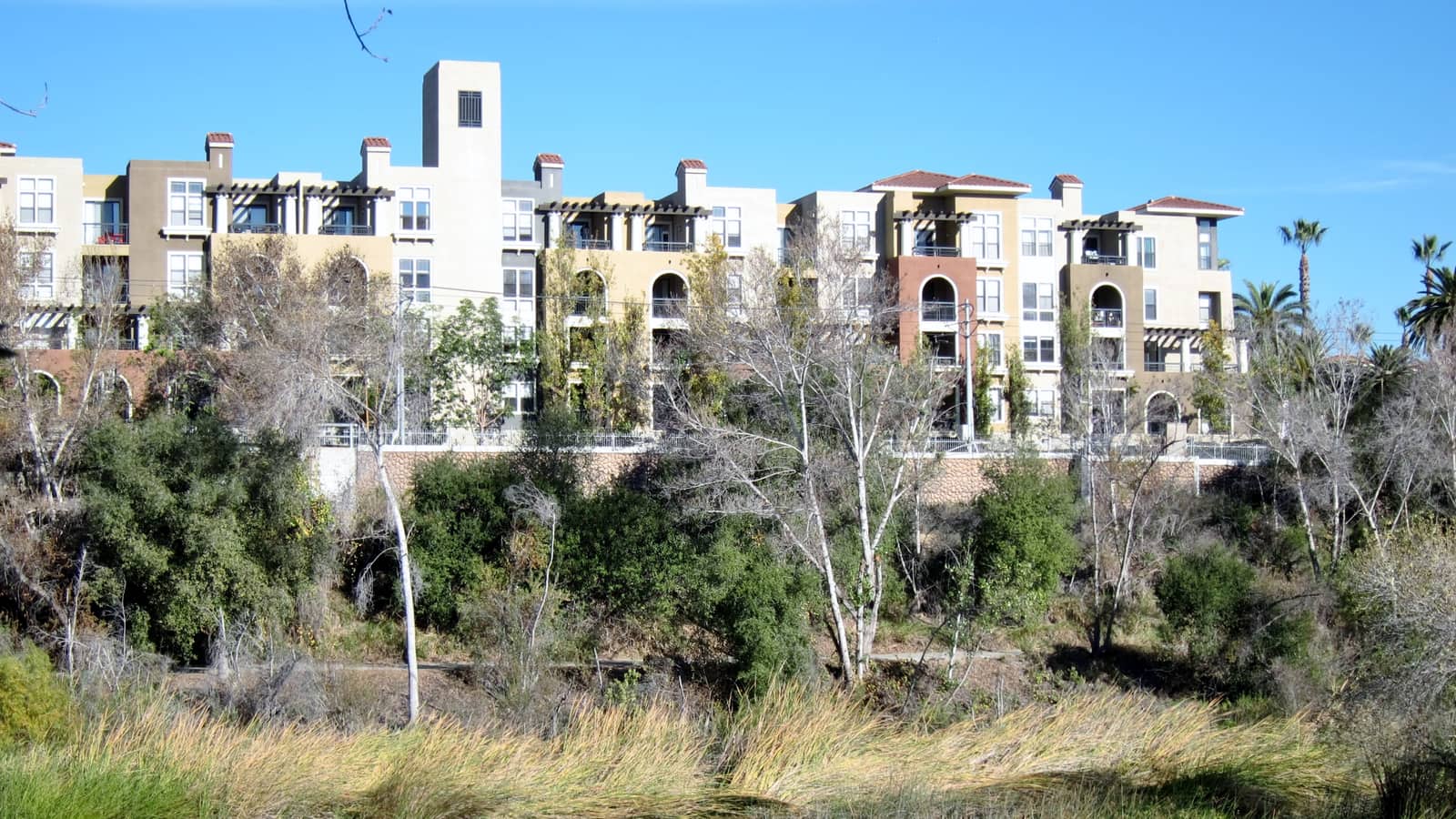
- Price actual insurance and capital work. Use a property-specific quote, then follow the insurance-cost analysis and capital reserve guide. The photograph above illustrates why building records matter; no condition assessment has been performed on it.
Original owner calculation · hypothetical existing condo
- $2,030
- Base annual cash after debt and reserve; 5% income loss.
- -$995
- Downside annual cash; $2,800 rent and 8% income loss.
On a narrow screen, swipe or focus the table and scroll sideways to see every column.
| Budget item | Base case | Downside |
|---|---|---|
| Monthly contract rent | $3,000 | $2,800 |
| Annual scheduled rent | $36,000 | $33,600 |
| Vacancy / collection loss | $1,800 | $2,688 |
| Effective income | $34,200 | $30,912 |
| Management: 8% of collected income | $2,736 | $2,473 |
| Property tax | $6,000 | $6,000 |
| Insurance | $1,800 | $1,800 |
| Owner utilities | $2,400 | $2,400 |
| Routine repairs | $1,800 | $1,800 |
| HOA dues | $3,600 | $3,600 |
| Rental business tax and state fee | $59 | $59 |
| Net operating income | $15,805 | $12,780 |
| Loan payments | $11,975 | $11,975 |
| Capital reserve | $1,800 | $1,800 |
| Cash after debt and reserve | $2,030 | -$995 |
- Financing: $150,000 outstanding loan at an assumed fixed 7%, amortized over 360 months. This is an existing owner scenario, not a current mortgage quote or a claim about acquisition affordability.
- Costs: all figures are assumptions except the illustrated $59 fee calculation. HOA dues exclude the separately budgeted utilities, repairs and insurance. Substitute the actual association budget and policy so the same expense is not counted twice.
- Risk: there is no HOA special assessment, leasing commission, purchase cost, rehabilitation budget, income tax or sale proceeds here. A positive result is not a return-on-equity calculation.
- Reserve: $1,800 is cash set aside for future capital work, below NOI. It is not the routine repair expense and does not establish that a particular building is adequately funded.
Original RentalCalcs calculation, October 17, 2026. NOI = collected rent − management − $15,659 fixed operating costs. Cash = NOI − unrounded loan payments − $1,800 reserve. Fee basis: City of San Diego. Unit, costs and loan are fictional; pictured buildings are unrelated.
Cash needed before the first receipts
On a narrow screen, swipe or focus the table and scroll sideways to see every column.
| Stage | Cash movement | Owner cash still committed |
|---|---|---|
| Before leasing: make-ready | -$3,000 | $3,000 |
| Month 1: no receipts | -$2,453 | $5,453 |
| Month 2: no receipts | -$2,453 | $7,906 |
| Month 3: full $3,000 received | $307 | $7,599 |
The peak funding need is about $7,906 before month 3, plus any costs omitted above. Monthly carrying cash is about $2,453, including reserve funding; management applies only when rent is collected.
This calendar assumes two months without receipts and no retroactive catch-up payment. It replaces the stabilized annual loss allowance for this timing test; do not add both vacancy allowances together. Security deposits are excluded from spendable income. It does not predict a tenant’s or SDHC’s payment behavior.
Which records should support each input?
- Rent and collections: save dated comparable-unit evidence, the proposed lease, concessions and the approved agency/tenant split. An asking price is weaker evidence than the actual terms of a comparable lease.
- Operating expenses: collect the tax bill, insurance quote, utility responsibility sheet, HOA budget and repair history. The NOI guide explains why debt payments and capital reserves sit below operating income.
- Financing: enter the actual outstanding balance, rate and amortization. The example's $150,000 balance is not a proposed purchase loan for a typical San Diego condo.
- Timing: keep a month-by-month source-and-use plan alongside the property pro forma. Record when cash leaves, when receipts are expected and which dates remain unconfirmed.
- Submit the tenancy packet. Supply the Request for Tenancy Approval and proposed, unsigned lease. Identify rent, utilities and the actual unit.
- Resolve review and inspection. SDHC reviews the tenancy and required inspection. A requested rent is not an approval; leave room for questions or corrections.
- Complete approved documents. Return the signed lease, tenancy addendum and housing assistance payments contract required by SDHC before payments can be processed.
- Reconcile receipts. Confirm the approved start date and each payer’s amount. Keep cash available until receipts arrive; a passed inspection is not cash in the bank.
Source: SDHC leasing steps, checked October 17, 2026. Sequence only: no promised processing time. Confirm the actual dates with SDHC.
To replace the illustration with a specific property's assumptions, open the single-family rental calculator. Use total owner rent as income, retain the downside case and inspect cash after financing and reserves. The calculator models the investment; SDHC determines voucher affordability and approval.
Where these numbers come from
The live tables display the dates of the RentalCalcs-loaded HUD and Zillow data; the fixed policy references and original calculations were checked October 17, 2026.
- Market data: Zillow's research data and ZORI methodology support the live index. County and ZIP figures cover different geographies, and all-size indices are not bedroom-matched comps.
- Voucher policy: the SDHC Choice Communities schedule, current administrative plan, jurisdiction, affordability and leasing pages support the local explanation. Schedule update dates are preserved separately from the research date. Confirm the household's written determination before committing to a rent.
- Local expense evidence: the City's rental tax page supports the $59 calculation. Other owner-budget inputs are labeled assumptions. No rent survey, insurance quote, inspection, professional review or actual tenant experience is implied.
- Corrections: use RentalCalcs contact to identify a source or data problem, including the relevant date and page. Avoid sending private tenant income, identification or case documents.
Can the payment-standard amount be entered as guaranteed rent?
No. It is an assistance-calculation input. The actual unit, household, utilities, reasonable rent and approval process still matter. Underwrite the approved or evidenced total contract rent, then test collections separately.
Is the county index the average rent for this condo?
No. It is a broader all-home-type index. Use dated, bedroom-matched comparable units with similar condition, amenities and lease terms to support a particular condo's asking rent.
Does a positive annual forecast cover the first lease?
No. An annual total can hide a cash shortage before receipts start. The separate calendar above tests that timing; substitute the property's actual make-ready costs and confirmed dates instead of treating its two-month delay as a forecast.
Get new articles and market updates
Investing guides and market data, straight to your inbox. Unsubscribe anytime.


