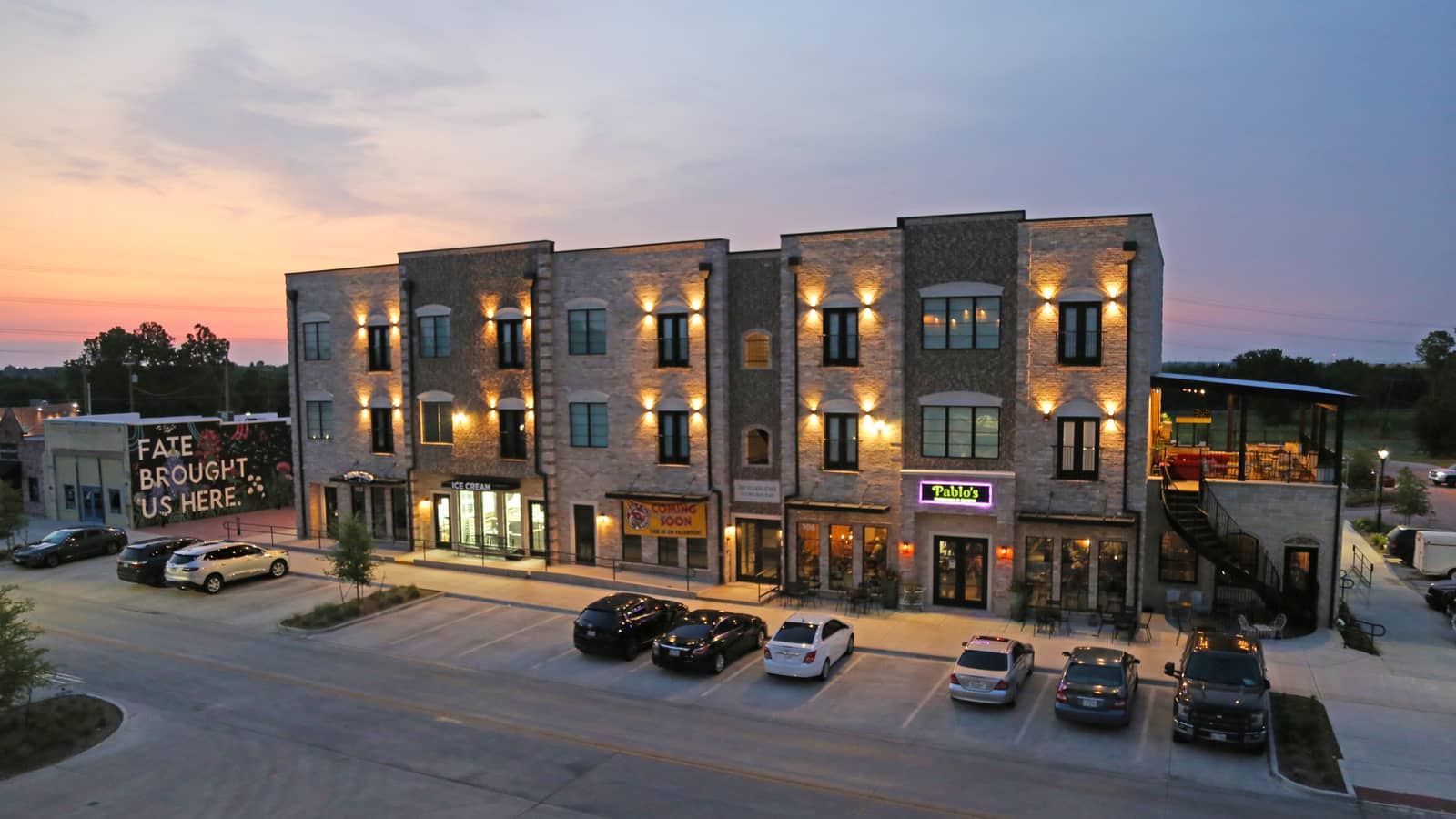
Value a mixed-use property by separating its residential and commercial cash flows, then reconciling the result for the whole building. If the office space is vacant, a fully leased valuation is a future scenario. Model the missing rent, improvements, commissions and time needed to reach it. In the hypothetical example below, a $486,943 stabilized indication becomes about $416,713 at today's valuation date under the stated assumptions.
This US investor guide was reviewed October 17, 2026. All property figures are invented planning inputs; no inspection, signed lease, appraisal or financing quote was obtained. The two apartments and 1,200-square-foot commercial space remain one property. The vacancy case treats that space as an office, without assuming a retail-to-office conversion is permitted.
Why mixed-use properties require a different approach
A commercial lease can concentrate a large share of the income in one tenant. In this example, the office supplies $24,000 of $57,000 scheduled annual rent, or 42.1%. Losing that tenant leaves all the commercial space empty while both apartments can remain occupied. A building-wide unit count would conceal that concentration.
On a narrow screen, swipe or focus the table and scroll sideways to see every column.
| Question | Evidence needed | Consequence for the budget |
|---|---|---|
| Which uses are legal? | Zoning, occupancy approvals and applicable restrictions | Do not assume the space can accept a different business |
| Which rent is enforceable? | Signed leases, amendments, options and collection records | Asking rent cannot replace an existing lease overnight |
| Who pays each bill? | Lease clauses, utility accounts, insurance and service contracts | A lease label alone cannot establish owner costs |
| When does cash arrive? | Possession date, rent commencement and concessions | Occupied space may still be in a free-rent period |
Source: RentalCalcs document checklist. The OCC's commercial real estate lending handbook, version 2.0, distinguishes lease-specific expenses and re-leasing cash costs in its office-property discussion. Verify the actual records before using the standard multifamily analysis as a starting point.
Understanding the two income streams
Build one rent roll with separate residential and commercial schedules. Use actual apartment leases and unit-matched rent evidence. For the office, record the remaining term, contractual increases, termination rights and the cost of getting the next tenant into possession. A guarantee needs its own review; it is not collected rent.
On a narrow screen, swipe or focus the table and scroll sideways to see every column.
| Lease detail | Apartments | Office or retail space |
|---|---|---|
| Rent evidence | In-place leases and comparable units | Signed lease, concessions and comparable space with matching use |
| Expiration risk | Model each unit's renewal or turnover | Identify the income exposed to one expiration or break option |
| Expense responsibility | Check each utility and service | Read reimbursement exclusions, caps and collection requirements |
| Replacement costs | Make-ready work and leasing costs | Buildout, broker commission and negotiated concessions |
| Vacancy measure | Lost rent by unit and month | Empty area, lost rent and unpaid months are different measures |
Keep apartment and commercial vacancies separate in the property pro forma. A six-month office vacancy plus two later free-rent months means eight months without office rent. If the initial six-month assumption already includes concessions, adding another two months would double-count them.
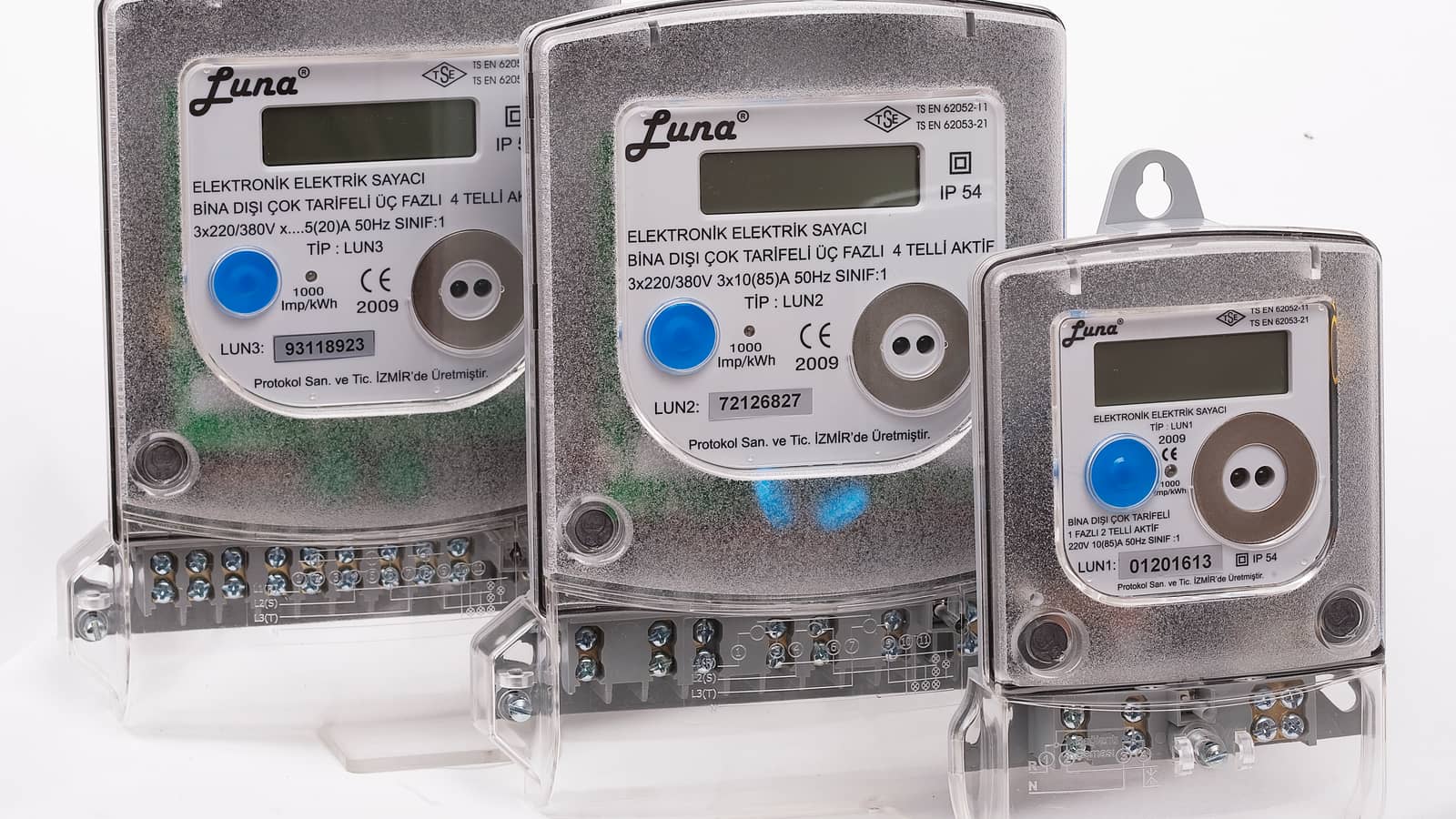
Allocate directly traceable bills to the use that incurs them. Allocate shared costs with a documented method, such as measured usage or an appropriate area allocation. The example uses a disclosed 60/40 split for shared fixed costs only; it is not a recommended allocation. A meter photograph cannot establish separate accounts, lease responsibility or reimbursable charges.
The operating-expense comparison guide explains why included services and income denominators must match. For below-market rents, preserve the enforceable lease and renewal dates instead of treating today's asking rent as immediate income.
How to value each portion
For a split-income sensitivity, divide each portion's stabilized net operating income by an assumed cap rate, then add the indications. This can expose different income risks. It does not make the portions separately saleable or prove that component capitalization is the best appraisal method for every mixed-use building.
- Separate the income: reconcile apartment and commercial leases, collections and expiration dates.
- Assign the costs: trace direct bills first; document shared allocations and collectible reimbursements.
- Date the valuation: distinguish current operations from the future stabilized case; reconcile with whole-building evidence.
- Fund the transition: schedule unpaid months, improvements, commissions and financing before relying on the future income.
Original RentalCalcs workflow, October 17, 2026. The OCC handbook distinguishes current-condition and prospective stabilized valuation dates. This process is an underwriting checklist, not an appraisal.
Reconcile the result against whole-building comparable sales and an appraisal of the actual property interest. A single supported whole-building cap rate can be appropriate; the mistake is using an unsupported rate or inconsistent NOI. The cap-rate guide explains what evidence must sit behind the denominator.
The implied blended rate is total NOI divided by total indicated value. Equivalently, it is a value-weighted average of the component rates. Weighting the rates by rent, income or floor area will not generally reproduce the same value. Keep this check separate from the mortgage and the buyer's equity return.
A complete worked example
The hypothetical asking price is $425,000. Two apartments have scheduled rents of $1,400 and $1,350 a month; the 1,200-square-foot office has an assumed $2,000 monthly rent when leased. The owner pays the modeled operating bills. The stabilized budget deducts a 5% collection allowance from each stream before charging management at 8% of effective income.
On a narrow screen, swipe or focus the table and scroll sideways to see every column.
| Budget line | Apartments | Office | Total |
|---|---|---|---|
| Scheduled rent | $33,000 | $24,000 | $57,000 |
| Collection loss: assumed 5% | −$1,650 | −$1,200 | −$2,850 |
| Effective income | $31,350 | $22,800 | $54,150 |
| Property taxes | $2,880 | $1,920 | $4,800 |
| Insurance | $1,440 | $960 | $2,400 |
| Owner-paid utilities | $2,160 | $1,440 | $3,600 |
| Routine maintenance | $1,800 | $1,200 | $3,000 |
| Management: 8% of effective income | $2,508 | $1,824 | $4,332 |
| Operating expenses | $10,788 | $7,344 | $18,132 |
| Net operating income | $20,562 | $15,456 | $36,018 |
The 60/40 split allocates only the $13,800 fixed-cost assumption. Management follows each stream’s effective income. For an actual property, direct bills and signed reimbursement terms replace this simplified allocation.
Original RentalCalcs arithmetic, October 17, 2026. Hypothetical USD over twelve months. No debt, capital replacement, reserve transfer, improvement payment, commission or income tax is included in operating expenses. Lost rent is deducted once, in income.
The recurring budget excludes tenant improvements, leasing commission, loan payments, capital-reserve deposits and income taxes. The NOI classification guide explains that boundary. It is different from the later lease-up calendar, which replaces the office's general allowance with specific unpaid months. No second office vacancy allowance is deducted from that calendar.
On a narrow screen, swipe or focus the table and scroll sideways to see every column.
| Acquisition cash assumption | USD |
|---|---|
| Purchase price | $425,000 |
| Loan proceeds | $318,750 |
| Down payment | $106,250 |
| Closing costs, assumed | $12,750 |
| Opening working cash, separately funded | $24,000 |
| Initial owner cash committed | $143,000 |
Source: original hypothetical budget. The loan assumes 7.25%, 300 monthly amortizing payments and no balloon in this illustration. Annual debt service is $27,647 before rounding. Stabilized cash after debt and $2,400 annual capital-reserve funding is $5,971, about 4.2% of the full $143,000 cash commitment. Using only the down payment would overstate this cash-on-cash return.
How to value a mixed-use property with high office vacancy
Start with the property's current condition and a credible leasing plan. Estimate the future stabilized income, schedule each lease-up cost and collection, then discount those property cash flows to the valuation date. Do not capitalize an office asking rent as if a paying tenant already occupies the space.
The OCC distinguishes current-condition value from a prospective value at the date stabilization is expected. Its valuation definitions do not provide a universal vacancy discount. The following calculation is an original sensitivity, not an appraisal or an OCC-prescribed model.
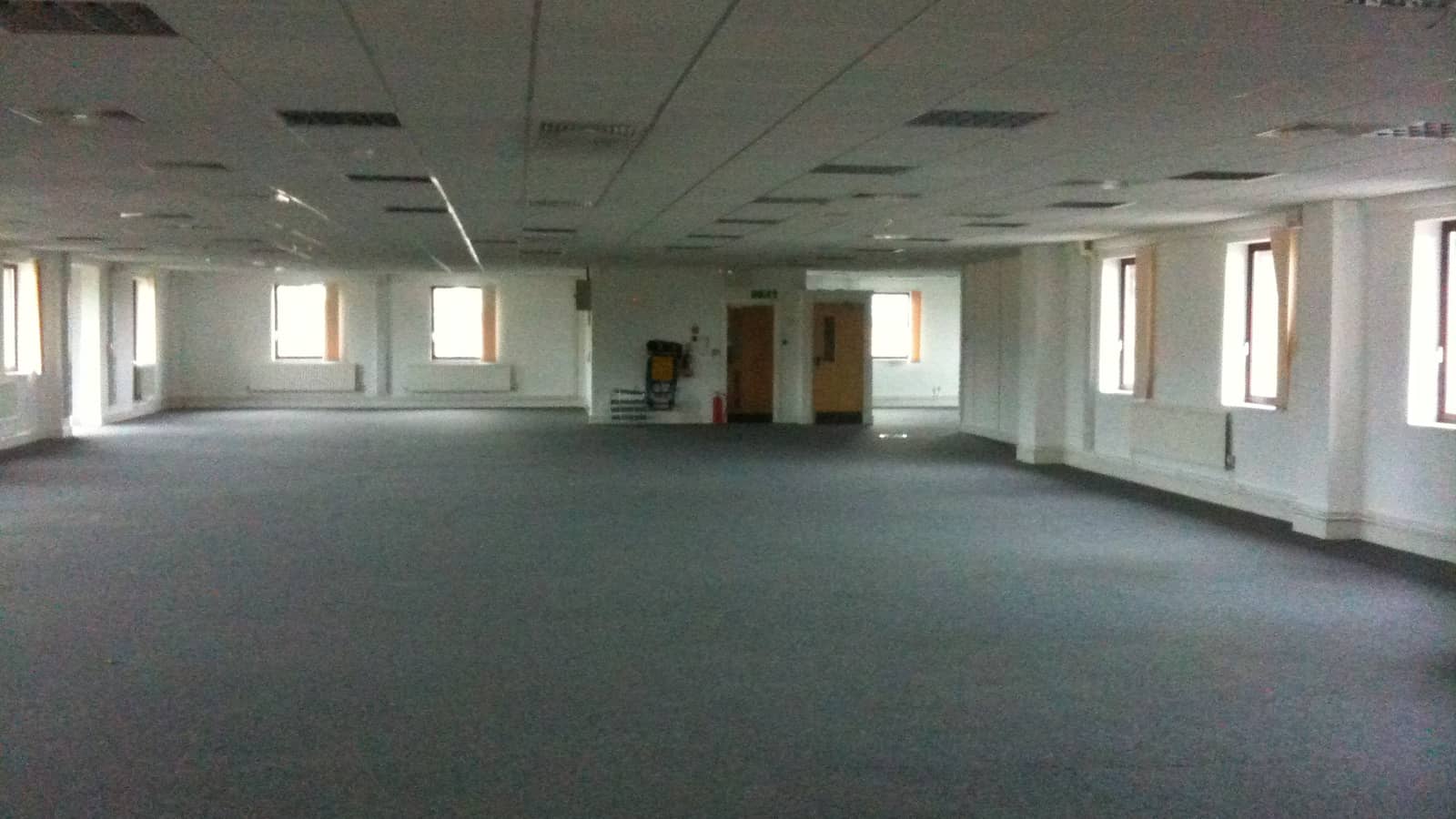
The office is empty at the start. Assume six months without occupancy, followed by two free-rent months; paid rent begins in month nine. The apartments retain their 5% collection allowance throughout. Pay $18,000 of improvements in month four, another $18,000 in month six and a $4,800 commission in month six. Those amounts are assumptions, not construction or broker quotes.
On a narrow screen, swipe or focus the table and scroll sideways to see every column.
| Income stream | Annual NOI | Cap rate | Indicated value |
|---|---|---|---|
| Apartments | $20,562 | 7.0% | $293,743 |
| Office | $15,456 | 8.0% | $193,200 |
| Whole building | $36,018 | 7.40% implied | $486,943 |
The implied blended rate is $36,018 ÷ $486,943, about 7.40%. It reconciles the component arithmetic; it does not prove market support for either assumed rate or a separate sale of the apartments and office.
On a narrow screen, swipe or focus the table and scroll sideways to see every column.
| Annual discount rate | Current-date indication | Difference from $425,000 price |
|---|---|---|
| 10% | $424,561 | -$439 |
| 12% | $416,713 | -$8,287 |
| 14.000000000000002% | $409,143 | -$15,857 |
At 12%: sum each month’s property cash ÷ 1.12^(month ÷ 12), then add $486,943 ÷ 1.12. The result is $416,713. Cash flows occur at month-end in this model. The terminal value uses the following year’s stabilized NOI; the annual effective discount rate is converted consistently.
Original hypothetical calculation, October 17, 2026. Property cash is NOI less scheduled improvements and commission. No buyer financing, reserve-account transfers, selling costs, taxes, rent growth or additional major replacements are modeled. The OCC valuation definitions support keeping the dates distinct; these specific rates and amounts are RentalCalcs assumptions.
Discount each month's property cash flow, then add the present value of the stabilized indication at the end of month twelve, using the following year's stabilized NOI. Property cash here is NOI less improvements and commission; it excludes the buyer's debt and transfers into the buyer's reserve account. The terminal cap rates and discount rate require market support before this model can inform an offer.
No rent growth, sale costs, income taxes or additional major replacements are modeled. Add known work and use a consistent reserve/capital-cost convention in the terminal value. If leasing takes longer, the assumed stabilization date fails: extend the calendar and reassess the income, costs and value rather than merely changing the label.
A month-by-month commercial vacancy budget
The valuation calculation and owner cash budget answer different questions. The budget adds loan payments and monthly capital-reserve funding to the same collection and improvement calendar. Its largest cumulative funding need occurs before the year ends. Opening working cash must cover that low point, not just the annual loss.
Cumulative cash needed after operating bills, loan payments, improvements, commission and reserve funding. Bars start at $0 and share a $60,000 maximum; the opening $24,000 balance is applied separately.
On a narrow screen, swipe or focus the table and scroll sideways to see every column.
| Milestone | Result |
|---|---|
| Month 8: peak cumulative funding need | $50,804 |
| Opening working cash funded at purchase | $24,000 |
| Additional funding required by month 8 | $26,804 |
| Month 12: cumulative cash shortfall | $48,445 |
Inspect all twelve monthly cash flows and chart values
On a narrow screen, swipe or focus the table and scroll sideways to see every column.
| Month | Office rent | NOI | Improvements + commission | Owner cash | Cumulative funding needed |
|---|---|---|---|---|---|
| Month 1 | $0 | $1,254 | $0 | -$1,250 | $1,250 |
| Month 2 | $0 | $1,254 | $0 | -$1,250 | $2,501 |
| Month 3 | $0 | $1,254 | $0 | -$1,250 | $3,751 |
| Month 4 | $0 | $1,254 | $18,000 | -$19,250 | $23,002 |
| Month 5 | $0 | $1,254 | $0 | -$1,250 | $24,252 |
| Month 6 | $0 | $1,254 | $22,800 | -$24,050 | $48,303 |
| Month 7 | $0 | $1,254 | $0 | -$1,250 | $49,553 |
| Month 8 | $0 | $1,254 | $0 | -$1,250 | $50,804 |
| Month 9 | $2,000 | $3,094 | $0 | $590 | $50,214 |
| Month 10 | $2,000 | $3,094 | $0 | $590 | $49,624 |
| Month 11 | $2,000 | $3,094 | $0 | $590 | $49,035 |
| Month 12 | $2,000 | $3,094 | $0 | $590 | $48,445 |
Owner cash equals NOI less the stated leasing costs, $2,304 monthly debt service and $200 monthly reserve funding. Rent starts in month nine, after six vacant and two free-rent months. Positive later cash reduces the cumulative shortfall, but cannot pay an earlier bill.
On a narrow screen, swipe or focus the table and scroll sideways to see every column.
| Office scenario | Income | NOI | Cash after debt, reserves and leasing costs |
|---|---|---|---|
| Office pays all 12 months | $55,350 | $37,122 | $7,075 |
| Six months without office rent | $43,350 | $26,082 | -$3,965 |
| Six vacant + two free-rent months; buildout and commission | $39,350 | $22,402 | -$48,445 |
| No office rent for 12 months | $31,350 | $15,042 | -$15,005 |
Original RentalCalcs calculation, October 17, 2026. Only the six-vacant-plus-two-free scenario includes $36,000 improvements and $4,800 commission. The six-month-only case is a rent-loss sensitivity, not a complete re-leasing budget. No blanket office vacancy allowance is also deducted; apartments retain their 5% allowance. Monthly net balances assume month-end flows; earlier bills or delayed receipts can require more cash within a month.
The $24,000 working-cash balance funded at purchase falls short of the illustrated peak need by $26,804. Fully funding that low point raises the cash commitment to $169,804, including down payment and closing costs. The same $5,971 stabilized annual cash is then about 3.5% of that larger commitment. Monthly $200 capital-reserve transfers remain set aside for replacements; the chart does not assume they can also pay leasing bills.
The $36,000 improvement allowance is paid once in the calendar. It is not also deducted as a recurring annual operating expense. The CapEx reserve guide separates funded balances from future work, while break-even occupancy tests whether collections can meet recurring commitments.
Financing mixed-use properties
There is no universal rule that 51% residential floor area makes this rental eligible for a standard residential loan. Financing eligibility, the lender's valuation and the buyer's cash capacity are separate checks. Confirm the exact unit count, permitted uses, occupancy, lease structure and property condition before relying on a quote.
On a narrow screen, swipe or focus the table and scroll sideways to see every column.
| Issue | Verified scope | Implication |
|---|---|---|
| Fannie Mae single-family mixed-use eligibility | The cited rule requires a one-unit principal residence; the borrower owns and operates the business | It does not establish eligibility for two rented apartments plus a third-party office |
| SBA 504 | The program excludes passive activities and investment in rental real estate | Do not assume it finances this passive rental purchase |
| Debt terms | Amortization, maturity, reserves, guarantees and prepayment terms come from the actual lender | A 25-year payment schedule does not establish a 25-year maturity |
| Tax classification | IRS Publication 946 generally uses an 80% dwelling-unit share of gross rental income for the tax year | Floor area and scheduled rent shares cannot alone settle depreciation classification |
Sources checked October 17, 2026: Fannie Mae B2-3-04, dated October 8, 2025; SBA 504 eligibility; and IRS Publication 946, 2025 edition. Owner-use and transient-occupancy rules can affect the tax test; obtain a tax-year-specific classification before assigning a recovery period.
The hypothetical stabilized NOI covers annual debt about 1.30 times, before capital reserves. In the office lease-up year, NOI falls to $22,402 and coverage to about 0.81, before improvement and commission payments. A DSCR calculation is a screen; it is not a loan approval or a substitute for the cash calendar.
The commercial lease deep-dive
Read the signed lease and every amendment before treating its rent as dependable. For each clause, record the document, effective date and budget line it changes. Use the seller rent-roll verification guide to reconcile the paperwork with actual collections.
On a narrow screen, swipe or focus the table and scroll sideways to see every column.
| Clause or record | Question to resolve | Budget effect |
|---|---|---|
| Term and options | When can either party end, extend or change the arrangement? | Place the relevant risk in the correct month |
| Commencement and concessions | When does possession start, and when is rent payable? | Separate buildout, free rent and cash collections |
| Reimbursements | Which bills, caps, exclusions and reconciliation dates apply? | Show the owner's bill and collectible recovery consistently |
| Improvements and restoration | Who approves, pays for and owns the work? | Schedule deposits, completion payments and exit obligations |
| Assignment and permitted use | Can the space be transferred or used by the proposed replacement tenant? | Verify the practical leasing plan before forecasting income |
| Guarantee and deposits | Who is obligated, on what terms, and with what recoverable security? | Do not count an uncollected recovery as current operating cash |
This is a document-to-budget checklist, not an interpretation of an unsigned lease. A manager for apartments above commercial space must be able to administer both sets of obligations. Confirm experience with reimbursement statements, business-use restrictions and commercial rent commencement rather than assuming residential management covers those tasks.
Common mistakes with mixed-use analysis
- Treating stabilized value as today's value. Keep the valuation dates visible and fund the period between them.
- Counting vacancy twice. Use specific missing collections in the calendar instead of also subtracting a blanket office vacancy percentage.
- Calling every reimbursement net income. Retain the associated owner-paid cost and check whether the reimbursement is collectible.
- Using down payment as total cash. Include closing costs, opening working cash and additional funding needed during lease-up.
- Choosing a cap rate from a tenant label. Support the rate with the relevant market and consistent income/capital-cost definitions.
- Assuming a universal improvement price. Obtain a scoped budget for the proposed use and building; the example's $30 per square foot is only an input.
When mixed-use makes sense
The example's asking price is above its $416,713 current-date indication at the assumed 12% discount rate, and its $24,000 opening working cash cannot fund the modeled lease-up. A higher stabilized indication does not resolve either shortfall. Changing the offer, obtaining better-supported rent or costs, or committing more cash would require a revised calculation.
On a narrow screen, swipe or focus the table and scroll sideways to see every column.
| Decision check | Evidence that could change the conclusion |
|---|---|
| Can the vacant space lease as modeled? | Comparable executed leases, allowed use, credible tenant demand and a scoped buildout plan |
| Does the price reflect the leasing risk? | Whole-building sales, supported income assumptions and an appraisal with the correct effective date |
| Can the owner fund the low point? | Available committed cash and a dated payment schedule with contingency for delays |
| Can the debt survive weak collections? | Lender terms, covenants, maturity and a longer-vacancy sensitivity |
The conclusion is conditional on this fictional building. It is not a recommendation to reject every property with commercial vacancy, and it does not establish a market value for the photographed buildings.
Running your own numbers
Use the multifamily calculator for an aggregate operating/debt screen, then retain a separate commercial lease calendar. The tool does not replace a monthly mixed-use valuation model or approve a lease. Its displayed NOI includes capital reserves; add that reserve back to compare with this article's pre-reserve NOI, and do not deduct it twice from cash flow.
- Reconcile residential and commercial leases, collections and owner-paid costs.
- Establish a supported stabilized case and compare it with current operations.
- Schedule vacancy, concessions, improvements and commissions by month.
- Test value and peak cash needs under a longer leasing period and weaker rent.
The sensitivity-analysis guide helps organize those alternatives. Keep the evidence and assumptions with any saved analysis. Core calculations are free; saving and professional workflows remain subject to the site's current account and plan limits.
Get new articles and market updates
Investing guides and market data, straight to your inbox. Unsubscribe anytime.


