
Three places to get your bearings
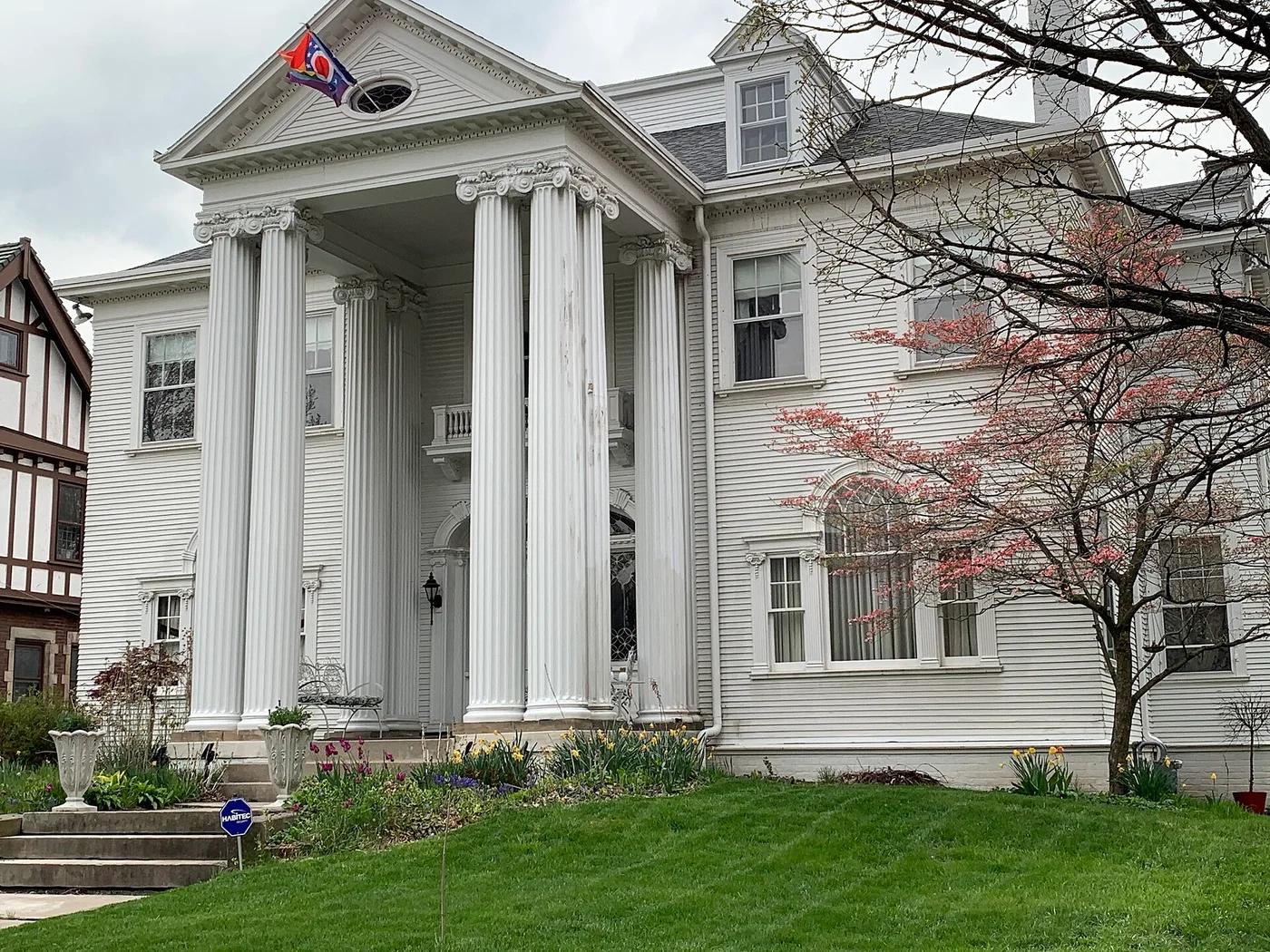
The historic district is a defined area, while rental advertisers may use “Old West End” more broadly. Toledo’s district description covers roughly 35 blocks, with much of the housing dating from 1875–1915, alongside apartment houses and the museum. Use that history for context; use the exact address for your apartment search. A 43620 ZIP alone does not place a unit on a particular historic street.
Toledo Museum of Art, 2445 Monroe Street
A good beginning if repeated museum visits and the streets near its campus are part of the attraction.
- What changes the decision
- A pleasant museum walk tells you little about grocery access or the route to work. Monroe is also a crossing to examine at the actual entrance you use.
- Try it on a visit
- Start at the museum, walk to the apartment and continue to your homeward transport.
Read all three locations together
Toledo Museum of Art, 2445 Monroe Street
A good beginning if repeated museum visits and the streets near its campus are part of the attraction. A pleasant museum walk tells you little about grocery access or the route to work. Monroe is also a crossing to examine at the actual entrance you use.
On a visit: Start at the museum, walk to the apartment and continue to your homeward transport. Museum visitor information.
Collingwood Boulevard, including Black Kite at 2499
A coffee stop and Route 20 give you two concrete reasons to test this corridor, beyond the architecture. The nearest useful stop depends on direction and destination. Service and a short cafe walk do not settle a full week of errands.
On a visit: Find the current Route 20 stop for your trip, then walk to the actual apartment entrance. TARTA Route 20.
Residential streets within the historic district
Start here to understand the older-house setting that draws many people to Old West End. A rental can occupy only one part of a larger house. The street-facing porch, driveway or yard may not come with your unit.
On a visit: Ask which entrance and outdoor spaces are yours, then walk the stairs, laundry route and exits. City historic district description.
These are scouting areas, not rankings. An apartment on Collingwood may work better for one journey; a side-street home may offer a layout you prefer. Compare the addresses against the same set of daily needs so that the neighborhood name does not do the decision-making for you.
Not every Old West End rental is a Victorian apartment
Historic houses dominate many photographs of the area. The rental market also includes more conventional apartment buildings. The Avenue at 2115 Collingwood, for example, is described by its advertiser as a 45-unit building dating to 1964. Its small one- and two-bedroom layouts are a different proposition from a portion of a large older house.
Scroll the table sideways to see every column.
| Advertised layout | Asking rent and status on the page | Details to confirm |
|---|---|---|
| The Avenue: 1 bedroom, 1 bathroom, 518 sq. ft. | $640 per month; the reviewed page listed individual units as available now. | Confirm the exact unit, lease length, total fees and what heats the apartment. Advertiser availability has not been independently verified. |
| The Avenue: 2 bedrooms, 676 sq. ft. | $740 per month; shown as available soon. | Ask for an actual move-in date. A floor plan on the page is not an immediately available apartment. |
The same page lists water, sewer and trash among included services, and a separate parking charge of $20–$25. Request the complete written breakdown. Its amenity labels do not make clear enough who pays every heating and cooling cost to assume those are all included. The two prices come from one building; they cannot establish what a converted house elsewhere should cost.
For a house conversion, start with a floor plan or sketch. Does reaching one bedroom require going through another room? Is the bathroom on the same level? Is the advertised porch shared, private or outside the lease? Look at the route for bringing in a sofa and carrying laundry. Those details often distinguish two apartments with the same bedroom count more usefully than another exterior photograph.
Keep short-term, furnished and annual leases in separate comparisons. A monthly figure attached to a furnished stay may have very different inclusions and renewal terms. Before paying an application fee, ask whether the owner will offer the length of tenancy you actually need.
A low asking rent needs a winter budget
The old-house appeal is real, but so is the need to understand how your particular rooms are heated. Ask whether the unit has its own furnace or shares a system, where the thermostat is and which meter you would pay. If the answer is tenant-paid heat, request actual redacted bills for the apartment, including cold months. Floor area alone cannot predict the bill.
In a converted home, look at the windows in the rooms you will use, not just the renovated kitchen. Ask about rooms that run colder, the repair contact and any work promised before move-in. A fresh finish does not tell you what sits behind it. Nor does an older exterior prove there is a defect; this is an address-specific conversation.
The calculator uses fictional choices: $700 rent with $220 utilities and $120 transport, versus $875 with $90 utilities and $70 transport. Add $25 parking to the second and it totals $1,060, compared with $1,040 for the first. The $175 rent gap becomes a $20 monthly difference under those assumptions. Neither set of numbers is a forecast for the apartments above.
Put two apartments side by side
These are made-up starting amounts. Enter your own costs, use 0 for anything that doesn’t apply, and leave unknowns blank.
Apartment A
- Recurring monthly total
- $1,040.00
- First-year cost, excluding refundable deposit
- $12,780.00
- First-month cash, including deposit and one-time costs
- $2,040.00
Apartment B
- Recurring monthly total
- $1,060.00
- First-year cost, excluding refundable deposit
- $13,020.00
- First-month cash, including deposit and one-time costs
- $2,235.00
Apartment A costs $240.00 less over 12 months, excluding refundable deposits.
Totals assume 12 months at the same costs, with the refundable deposit kept separate. If you have rental assistance, enter your confirmed household payment and expected utility bills. Your agency’s utility allowance is a separate calculation. Check fee rules before including a charge.
The calculator does not save or send the amounts you enter.
Run the comparison with an annual monthly utility average and again with a cold-month amount. Include trips to a laundromat if the apartment has no usable laundry. Keep deposit cash separate from recurring costs, and use your confirmed tenant share if a housing subsidy will cover part of the rent.
The museum can be an ordinary afternoon
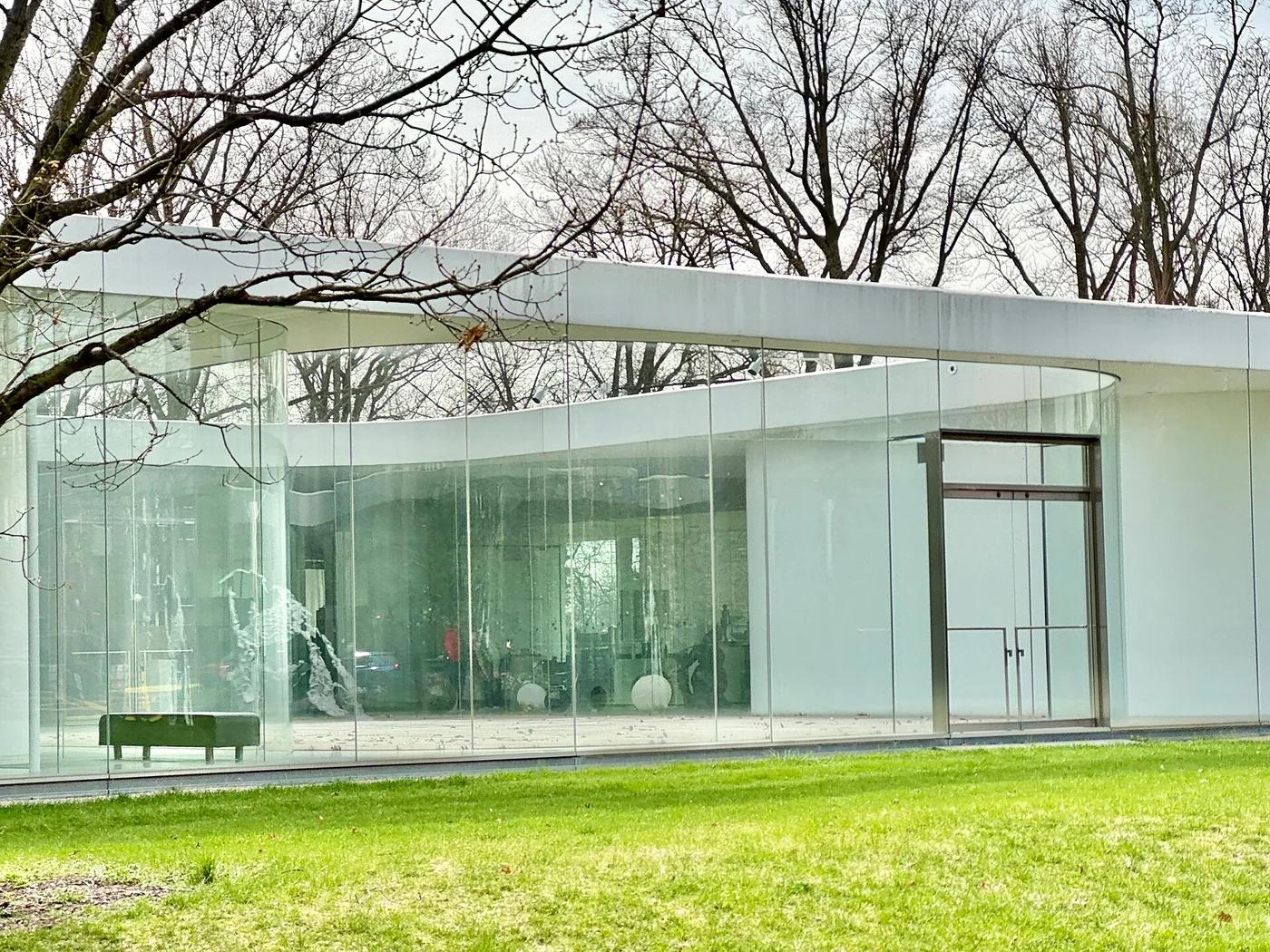
The Toledo Museum of Art’s Glass Pavilion in April 2024. The museum campus is a useful starting point for a walk through the neighborhood.
Photographed April 10, 2024. Warren LeMay / Wikimedia Commons · CC BY-SA 2.0. Resized and converted to WebP; no scene content changed.

One of the strongest reasons to choose this part of Toledo is the possibility of making the museum a regular visit. The Toledo Museum of Art’s visitor information lists free general admission and free visitor parking. Special exhibitions can have separate charges. Check the current museum calendar for the day you plan to go; living nearby does not mean every building or exhibition is open every day.
The Glass Pavilion on Monroe Street gives the campus a very different architectural character from the surrounding houses. A first visit can include both the museum and the walk back through the neighborhood. For someone who would use it often, that repeated walk is a more meaningful amenity than an abstract distance-to-downtown number.
Black Kite Coffee at 2499 Collingwood provides another specific stop. Try combining a coffee visit with an apartment showing, then keep walking along the route you would take home. Check the operator’s current hours rather than assuming it will be available before an early shift or late in the evening.
A museum visit and a coffee stop make a good introduction to the area. Leave time afterward for the less scenic part of the search: the grocery run, the return bus and another look at the apartment. A place can make an excellent afternoon out and still need a few adjustments to work as home.
Coffee on foot is not the whole grocery plan
Before calling an apartment walkable, separate a neighborhood stroll from carrying a week’s food home. Name the stores you would use, check their entrances and work out the trip with bags. If you drive for the larger shop, include that in the cost comparison. If you use the bus, the homeward trip matters most when you have perishables or a heavy load.
TARTA Route 20, Meijer Central via Central/Collingwood, offers one concrete journey to investigate. The operator lists the museum and Collingwood Arts Center among its points of interest, and its current page advertises 30-minute service during weekday peak hours. That does not mean a bus every half hour throughout the week: select the correct day and check both departures.
Scroll the table sideways to see every column.
| Trip | Look up | Try during a visit |
|---|---|---|
| A larger grocery shop | Route 20 toward Meijer Central, including the return departure. | The walk from your apartment to the stop, plus the store entrance-to-stop connection with bags. |
| Work or an appointment | The exact destination and shift time, including any transfer. | The final walk at the far end. A route passing a campus or corridor may not stop at your entrance. |
| An evening or weekend outing | The day-specific schedule and the last workable trip home. | Your alternative if an event ends after that departure. |
How long is your trip, door to door?
An invented 50-minute door-to-door trip. These figures are not a TARTA schedule, a museum journey or a Meijer travel-time estimate. Replace them with your own checked route, including transfers.
One way, door to door
50 minutes
28 minutes are outside the train or bus.
Home to stop or platform: 7 min
Wait / arrival buffer: 15 min
On the train or bus: 22 min
Stop or platform to destination: 6 min
5h 0m per week for 3 round-trip days, assuming the return journey takes the same time.
Include stairs, transfers and station exits. This calculator doesn’t check live service. Your entries aren’t saved or sent.
If you cycle, inspect the complete route you would use and the building’s bike storage. A short distance on a map does not show the crossings, traffic or carrying stairs. For parking, establish whether the offered space is assigned and available to your unit; an attractive driveway in a house photograph may be shared with several households.
A neighborly place, with errands farther afield
A September 2023 discussion offers a useful distinction from someone who described moving from downtown to Old West End about 16 years earlier. u/vertdupuy enjoyed walking to friends’ homes and neighborhood gatherings, but named the museum and Black Kite as the main destinations to walk to.
“I'd say it's more of a bikeable neighborhood”
The account describes the pleasure of knowing neighbors as well as the limits of nearby errands. Those two things can coexist. It is not evidence that every tenant will form the same relationships, or that no additional business has opened since 2023. The museum and coffee shop were checked separately against their current operator information.
In a separate September 2026 discussion, u/upso described living in an Old West End house built around 1910. Plumbing, electrical work and roofing were ongoing concerns, but the contributor emphasized the difference that a history of good maintenance makes. That is a homeowner’s account, not a tenant’s repair bill or a finding about the apartment you are considering.
For a renter, the useful follow-up is to ask about that history and who responds when something fails. Both accounts are self-reported public comments. We have not verified the contributors’ residences or interviewed them.
For a small older rental, ask about the Lead-Safe Certificate
The city’s Lead-Safe Certificate guidance states that residential rental properties with one to four units built before 1978 must obtain and maintain a valid certificate before being rented or re-rented. A converted older house can fall within that scope. Ask the owner for the current paperwork covering the rental unit and consult the city’s linked tenant guidance if its status is unclear.
That specific one-to-four-unit rule should not be applied indiscriminately to a larger apartment building such as The Avenue. Other requirements may still apply. “Lead-safe” also does not mean the building contains no lead. A photograph, a fresh coat of paint or the age of the house cannot establish its present condition.
Toledo’s landlord and tenant resources provide a starting point for rental registration information and city contacts. Keep the street address and unit number together when requesting records. At the viewing, reconcile the paperwork with the apartment you are shown, its entrances and exits, and any repairs promised before your lease starts.
Ask which parts of the house are shared, who handles snow and exterior maintenance, and how an urgent repair is reported outside office hours. Historic character makes those details worth understanding; it should not distract from a clear lease and a usable home.
Keep the affordable-housing search wider than one street
Our Toledo housing resource page covers citywide voucher information. For official program and application notices, use Lucas Metropolitan Housing. Check the specific program and current notice; an agency’s existence does not establish an open waiting list or an apartment available in Old West End.
If you already have a voucher, confirm the proposed unit and utility responsibilities with the agency administering it. A low advertised rent or a landlord’s general willingness to discuss vouchers does not establish the unit’s approval or your final contribution.
There are also income-restricted and property-specific assistance routes that differ from a portable voucher. The guide to finding housing without Section 8 explains what to ask. Keep a record of which manager or agency handles each application so a tenant account on one site is not mistaken for an application elsewhere.
If the first apartments do not work, compare other Toledo addresses using the same bedroom needs and actual journeys. For a downtown alternative, test the trips you expect to gain; for somewhere farther along a bus corridor, check the service you would depend on. Neither a central location nor a farther-out address guarantees the better total cost.
Use a second visit to test the ordinary week
- Begin at the museum or Black Kite and walk to the building. Notice the actual crossings and entrance.
- See the whole unit, including stairs, laundry, storage and the rooms used at night. Ask for heating and parking terms.
- Try the trip to your chosen grocery store or workplace, including the return connection.
- Come back during your usual evening to assess the bedroom, shared entry and parking. Follow up on the building records and promised repairs before committing.
Explore Toledo-wide housing resources or create a tenant account. These are next steps for the broader search, not evidence of live Old West End vacancies or a submitted housing-agency application.
Research and dates
Reviewed October 12, 2026 using city guidance, TARTA, local operators, rental advertisements and public resident accounts. This is desk research; no apartment visit or interview is implied. Rental prices are dated examples from one advertiser, not market averages or verified vacancies. Photographs carry separate dates and credits, and the calculator examples are hypothetical. Recheck routes, rents, museum information and program notices before using them for a move.