For application status, account recovery or a move with an existing voucher, use the Philadelphia Housing Authority guide. It separates tenant-based HCV from property applications and links the official program contacts.
Philadelphia Housing Authority uses an adopted schedule with five ZIP groups for tenant-based Housing Choice Vouchers. In its schedule effective November 1, 2025, the two-bedroom amounts range from $1,420 in Group 1 to $2,720 in Group 5. The household’s actual subsidy and tenant payment still require an individual calculation.
A HUD ZIP benchmark is not automatically the PHA payment standard. Match the property’s ZIP to PHA’s group, then use the applicable bedroom column and utility allowance. Project-based vouchers use a different rent schedule.
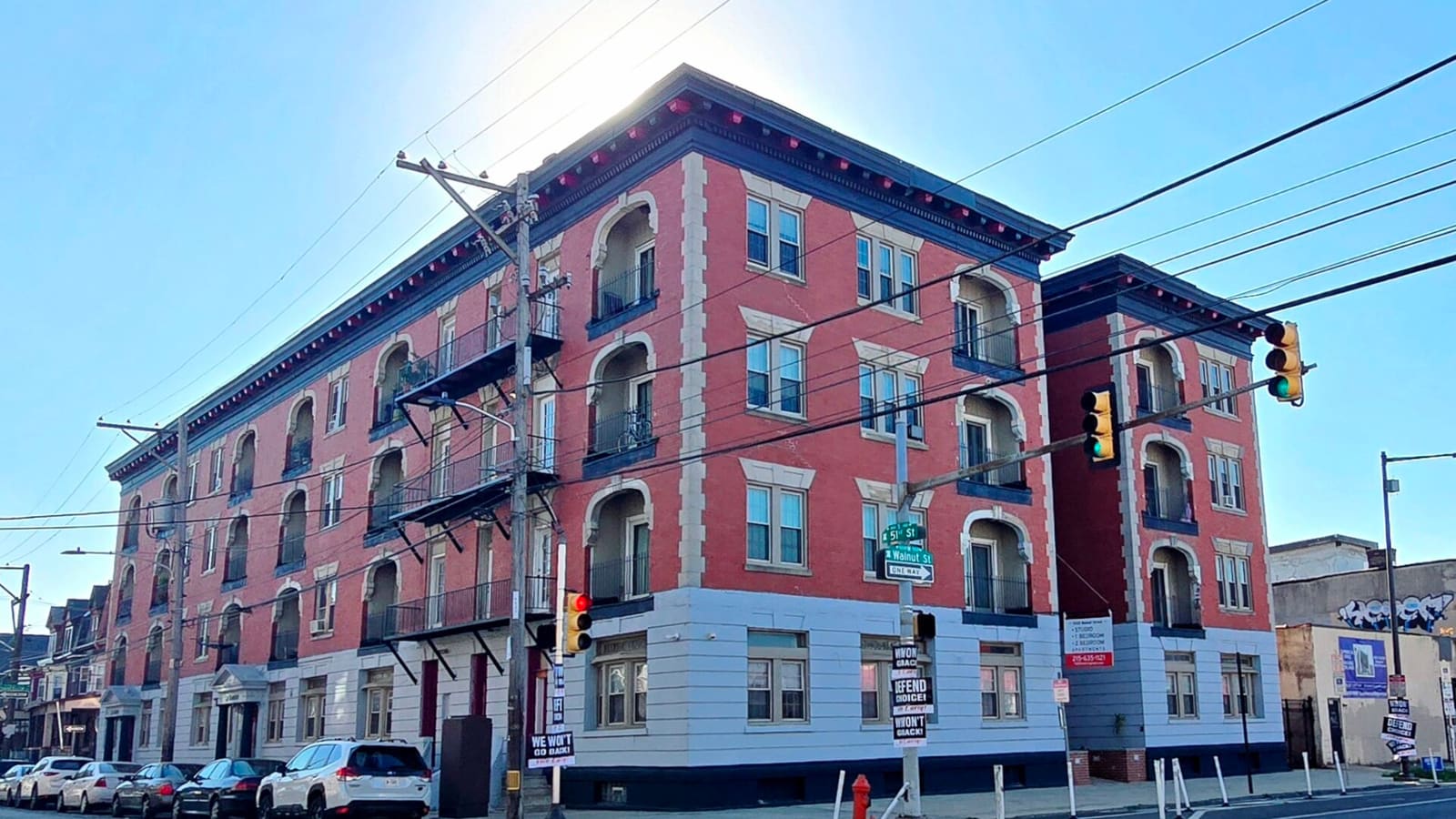

Philadelphia PHA's five adopted ZIP groups
PHA's tenant-based HCV schedule effective November 1, 2025 remains the agency document used for this September 2026 review. Its groups combine ZIPs rather than assigning every ZIP its own distinct adopted amount. A HUD SAFMR for a ZIP can therefore differ from the PHA group amount.
| PHA group | Example ZIPs | Studio | 1 BR | 2 BR | 3 BR | 4 BR |
|---|---|---|---|---|---|---|
| 1 | 19124, 19132 | $1,100 | $1,190 | $1,420 | $1,700 | $1,900 |
| 2 | 19120, 19134, 19139, 19142 | $1,280 | $1,390 | $1,660 | $1,990 | $2,220 |
| 3 | 19145, 19148 | $1,550 | $1,690 | $2,010 | $2,410 | $2,690 |
| 4 | 19125, 19146 | $1,800 | $1,960 | $2,330 | $2,790 | $3,120 |
| 5 | 19103, 19147 | $2,100 | $2,280 | $2,720 | $3,260 | $3,640 |
Source: PHA's adopted ZIP-group schedule. ZIP examples are selected, not the complete group membership. Verify the actual property ZIP against the full document and use the bedroom size PHA assigns to the household. These are tenant-based figures; PHA's separately posted project-based schedule is a different table.
The local distinction matters in our neighborhood coverage. The ZIP examples used for Kensington (19134), Carroll Park (19139), Paschall (19142) and Strawberry Mansion (19121) are in Group 2, whose adopted two-bedroom standard is $1,660. Nearby ZIP 19132 is in Group 1 at $1,420. Check the actual address rather than assigning a group from a neighborhood label. A neighborhood article quoting a HUD benchmark as a hard cap would give the wrong starting point for a PHA calculation.
Why 30% is not the right assumption for every PHA household
PHA's schedule describes MTW Total Tenant Payment percentages based on adjusted monthly income: 28% for one or two people, 27% for three to five, and 26% for six or more. It separately lists 30% for VASH and Mainstream, with minimum-rent provisions also affecting the calculation. Your household's program and PHA-calculated TTP therefore belong in the worksheet before selecting a unit.
For illustrative adjusted monthly income of $2,000, those percentages produce $560, $540, $520 or $600 respectively. They are calculations showing why program and household size matter, not a choice among payment options. Do not select a percentage based on the number of bedrooms or omit a household member to obtain a different result. Report household information to PHA and use its determination.
FY2026 HUD rent benchmarks in five Philadelphia ZIP codes
These are HUD Small Area Fair Market Rents, not adopted agency payment standards. FY2026 covers October 1, 2025 through September 30, 2026. Figures are monthly gross rent benchmarks, which include an allowance for tenant-paid utilities.
| ZIP | Studio | 1 BR | 2 BR | 3 BR | 4 BR |
|---|---|---|---|---|---|
| 19120 | $1,130 | $1,230 | $1,470 | $1,760 | $1,970 |
| 19124 | $1,080 | $1,180 | $1,400 | $1,680 | $1,870 |
| 19132 | $1,100 | $1,190 | $1,420 | $1,700 | $1,900 |
| 19146 | $1,800 | $1,960 | $2,330 | $2,790 | $3,120 |
| 19148 | $1,450 | $1,580 | $1,880 | $2,250 | $2,520 |
Source: HUD SAFMR datasets, FY2026 values stored in VoucherMatch’s rent dataset, checked September 22, 2026. This is a selected five-ZIP comparison, not the lowest-to-highest range for the entire city or metro. It does not show whether an apartment is available. Use the ZIP links for a broader rent-data view and the apartment search page for housing options.
Which local schedule should you use?
PHA’s payment-standard page separates tenant-based ZIP groups from its project-based citywide FMR schedule. Its November 2025 tenant-based document puts ZIP 19124 in Group 1, 19120 in Group 2, 19148 in Group 3 and 19146 in Group 4. Use the exact address ZIP, not a neighborhood label.
PHA also has local Total Tenant Payment rules. The same document lists 28% of adjusted monthly income for households of one or two people, 27% for three to five, and 26% for six or more, with a $50 minimum. VASH and Mainstream participants use 30%. Ask PHA to confirm the rule applicable to your household instead of assuming every Philadelphia family pays exactly 30%.
How utilities change the apartment you can afford
Have the owner identify the utilities the tenant will pay on the Request for Tenancy Approval. PHA reviews the proposed rent, the utility arrangement and market comparables. The advertised price by itself is not the full affordability test.
The PHA landlord resources page links the agency’s current rent and leasing materials. When comparing units in different ZIP groups, carry the utility responsibilities along with the rent. A higher payment standard can expand the range of homes to consider, but it is not a reason to assume every asking rent will pass review.
A Philadelphia Group 1 example for a three-person household
PHA’s adopted Group 1 two-bedroom standard is $1,420. For an illustrative three-person household subject to the published 27% MTW rule, $2,000 adjusted monthly income produces $540 Total Tenant Payment. Assume $1,300 proposed rent and a $100 utility allowance. Those unit costs are illustrative, and PHA must confirm the complete household calculation.
| Item | Calculation |
|---|---|
| Proposed contract rent | $1,300 |
| Utility allowance | $100 |
| Gross rent | $1,300 + $100 = $1,400 |
| Applicable payment standard | $1,420 |
| Housing assistance payment | $1,400 − $540 = $860 |
| Tenant rent to owner | $1,300 − $860 = $440 |
The owner would receive $1,300 in total: $860 in assistance plus $440 from the tenant. The tenant also pays actual utility bills. The allowance is a calculation amount, not a guarantee of what those bills will be.
This shows why a payment standard is not the landlord’s check. If gross rent exceeds the applicable standard, the household may face an additional contribution; the agency must assess any applicable initial-lease limit and affordability requirements. Rent reasonableness and inspection also apply. Do not use a separate side payment to bypass the approved rent. See HUD’s tenant guidance for the approval process.
What happens when the asking rent is above a Philadelphia group standard?
Use the Group 2 two-bedroom amount of $1,660 for this example. Assume a three-person MTW household with $2,000 adjusted monthly income and a PHA-determined $540 TTP. The rents and $100 allowances below are illustrative unit inputs.
| Proposed contract rent | Allowance | Gross rent | Assistance | Tenant rent | Family share with allowance |
|---|---|---|---|---|---|
| $1,500 | $100 | $1,600 | $1,060 | $440 | $540 |
| $1,700 | $100 | $1,800 | $1,120 | $580 | $680 |
| $1,900 | $100 | $2,000 | $1,120 | $780 | $880 |
PHA's published moving-unit affordability limit is 40% of monthly adjusted income. In this example that is $800. The middle proposal's $680 family share is below the limit; the last proposal's $880 is above it. This is why “the rent exceeds the payment standard, so it is always forbidden” and “I can always pay any difference” are both poor rules for searching. PHA must calculate and approve the actual proposal.
The general shortcut “payment standard plus 10% of adjusted income” assumes a 30% TTP. Here, the gap between the illustrative $800 limit and $540 TTP is $260, not $200. That does not establish an entitlement to a $1,920 gross rent: reasonable-rent review, actual income, utilities and other program requirements still apply. It shows why the household's real TTP is needed before any affordability shortcut.
Read the correct date for your PHA transaction
PHA's schedule distinguishes an initial lease, regular recertification and an interim change. For an initial lease it uses the applicable current schedule when the lease is approved and executed. Its regular-recertification instructions include protections when the current standard is lower, and its interim line refers to the last regular recertification's standard. Household-size changes can also affect the bedroom size used.
Keep the rent notice for your own case. When a new PDF appears, ask which transaction rule applies rather than assuming your rent changes on the PDF upload date. The same principle applies to FY2027 HUD figures: a new federal benchmark and a PHA household notice are different documents. See the action-type table in PHA's payment-standard schedule.
Three separate checks before a Philadelphia landlord receives a rent offer
First, the RFTA must accurately identify the proposed rent and utility responsibilities and be signed by the prospective tenant. Second, PHA assesses market rent for comparable unassisted housing. Third, PHA checks affordability for the particular household. The group standard informs the subsidy calculation but does not replace the other checks.
If an owner expected the full group amount as an agency-only payment, clarify that approved contract rent normally combines assistance and the tenant's rent portion. If the rent offer is lower than requested, establish whether the reason is market comparison or household affordability before changing the proposal. Any change to utilities needs to reach PHA as well as the lease.
The Philadelphia apartment hub handles the search by neighborhood and bedroom count. The application guide handles voucher and property-list pathways. Keep this payment worksheet with the actual unit proposal rather than treating a waitlist entry or advertised “Section 8 accepted” label as approval.
FY2027 preview: changes effective October 1, 2026
HUD’s FY2027 benchmark year begins October 1, 2026. It is future data as of this September 23 review. A new HUD figure does not automatically change your agency’s adopted standard, your tenant share or your landlord’s approved rent.
| ZIP | FY2026, 2 BR | FY2027, 2 BR | Change |
|---|---|---|---|
| 19120 | $1,470 | $1,610 | +$140 |
| 19124 | $1,400 | $1,450 | +$50 |
| 19132 | $1,420 | $1,460 | +$40 |
| 19146 | $2,330 | $2,410 | +$80 |
| 19148 | $1,880 | $1,950 | +$70 |
The comparison uses the same ZIPs and bedroom size in both years. Check the administering agency’s effective date before using any change for a lease, transfer or recertification. Keep the written rent notice for your own case.
Before you submit an apartment for approval
- Confirm the agency and program on your voucher, its bedroom size and search expiration date.
- Ask the owner for the exact address, unit number, rent, building type and utility responsibilities.
- Request the agency’s affordability calculation using that unit, rather than multiplying a HUD figure by a percentage yourself.
- Make sure the owner will complete the tenancy paperwork and provide access for inspection. Keep copies and submission receipts.
- Confirm the approved lease start, tenant rent and assistance payment before treating the move as final.
If you do not yet have a voucher, start with Philadelphia waitlists, housing authorities and how to apply. Searching listings does not place you on an agency waiting list.
Local payment questions
Does renting a three-bedroom automatically raise a two-bedroom PHA voucher?
No. PHA's schedule explicitly illustrates a two-bedroom voucher used for a three-bedroom unit: the payment-standard calculation still uses the two-bedroom voucher size. Ask PHA to evaluate the unit and allowance.
If two neighborhoods have different HUD benchmarks, must PHA pay different standards?
No. Several ZIPs share each adopted PHA group. Check group membership before assuming a ZIP boundary changes the household's applicable standard.
Continue your Philadelphia search
Browse Section 8 apartments in Philadelphia by location and bedroom count, or return to the local application guide for agency contacts. Owners with an available unit can list their property.
Sources for this article (5)
- PHA's adopted ZIP-group schedule (pha.phila.gov)
- HUD SAFMR datasets (huduser.gov)
- payment-standard page (pha.phila.gov)
- PHA landlord resources (pha.phila.gov)
- HUD’s tenant guidance (hud.gov)
VoucherMatch Editorial Team
Every rule, date and dollar amount in this article is checked against the agency document it comes from, and the sources are listed above. How VoucherMatch articles are researched and corrected
Related Articles
How Much Section 8 Pays in Columbus (2026)
Compare Columbus voucher standards, local utility rules and household costs with official sources and worked rent examples.
7 min readHow Much Section 8 Pays in Cincinnati (2026)
Understand Cincinnati voucher rent calculations, agency documents, utility allowances and household costs before choosing an apartment.
5 min readHow Much Section 8 Pays in Las Vegas (2026)
Compare Las Vegas voucher standards, local utility rules and household costs with official sources and worked rent examples.
7 min readHow Much Section 8 Pays in Austin (2026)
Compare Austin adopted voucher standards, utilities and household costs with official sources and worked examples.
7 min readHow Much Section 8 Pays in Portland (2026)
Understand Portland voucher standards, utility costs and household rent calculations before choosing a rental. Includes agency sources and approval steps.
5 min readHow Much Section 8 Pays in St. Louis (2026)
Understand St. Louis voucher rent calculations, agency documents, utility allowances and household costs before choosing an apartment.
5 min read