Section 8 Reasonable Accommodation in NYC: How to Request

Quick answerIn New York City, as of October 2026, a Section 8 household that includes a person with a disability can ask its voucher agency for a change such as more search time, an extra bedroom or a payment standard up to 120% of fair market rent, and can ask the landlord for a rule change or a physical change to the home. NYCHA uses Form 059.109 and generally decides within five business days of receiving complete documents.
- 120%share of fair market rent an agency can approve without asking HUD
- 5 business daysNYCHA's usual decision time once documents are complete
- 10 business daysNYS HCR's written response time
- 30 calendar dayswindow to ask NYCHA for an impartial hearing after a denial
- 1 yeardeadline to file with HUD or the City Commission on Human Rights
- 718-707-7771NYCHA Customer Contact Center
Who Does What: Tenant, Housing Agency and Landlord
A request has three possible parties, and each has a different job. The agency changes voucher rules. The landlord changes building rules or the apartment. The tenant starts both.
- Tenantsays what change is needed and how it connects to a disability. You can ask out loud, but writing leaves a record. You do not have to name a diagnosis. If the need is not obvious, you get a short statement from a health care provider or social worker.
- Housing agency (NYCHA, HPD or NYS HCR)decides requests about the voucher itself: search time, bedroom size, payment standard, transfers, renting from a relative, and how it communicates with you. It may ask for verification, and it answers a denial in writing with a way to appeal.
- Landlorddecides requests about the lease and the building: an assistance animal, a reserved parking space, grab bars, a ramp. In New York City the landlord must talk the request through with you, give a written decision, and normally pay for the change.
What it means: a voucher problem goes to the agency, a building problem goes to the landlord, and one disability can justify a request to each.
Source: 24 CFR 100.204; NYCHA Administrative Plan, effective May 2026, section II.D; NYC Administrative Code 8-107(15) and (28).
What Qualifies as a Disability
Federal fair housing law covers a physical or mental impairment that substantially limits a major life activity, a record of one, or being regarded as having one. City law is wider.
| Law | Definition | Notes |
|---|---|---|
| Fair Housing Act and Section 504 | A physical or mental impairment that substantially limits one or more major life activities, a record of such an impairment, or being regarded as having one | Major life activities include caring for yourself, walking, seeing, hearing, speaking, breathing, learning and working. The rule names conditions such as diabetes, heart disease, cancer, HIV infection and emotional illness |
| NYCHA Section 8 FAQ | "A physical, medical, mental, or psychological impairment that substantially limits one or more major life activities" | Examples given: mobility, breathing, hearing or vision impairments and chronic health problems |
| NYC Human Rights Law | "Any physical, medical, mental or psychological impairment, or a history or record of such impairment" | No "substantially limits" test |
What it means: a condition nobody can see, such as a chronic illness or a mental health condition, counts the same as one that is visible.
Source: 24 CFR 100.201; NYCHA Section 8 tenant FAQ; NYC Administrative Code 8-102.
Two points settle most questions about who is covered:
- Benefits are not required. You do not need SSI or SSDI. If you are under 65 and receive either, federal guidance says that proof usually shows you meet the definition (HUD and Justice Department joint statement, 2004, question 18).
- Current illegal drug use is not covered. Past addiction and alcoholism are covered under the federal definition.
Types of Reasonable Accommodations from NYCHA
NYCHA, HPD and NYS HCR, NYC's three voucher agencies, can each change how the voucher works for a household member with a disability, and federal rules set the outer limits.

| Accommodation | What the rules say |
|---|---|
| More time to search | The agency must extend the voucher term as long as reasonably required. NYCHA's term is 180 days; ask before it expires. HPD's initial term is 120 days |
| Extra bedroom | An approved live-in aide gets one additional bedroom. An agency can also grant a larger size when health or disability justifies it |
| Higher payment standard | Up to 120% of fair market rent for one family, with no HUD approval. Above 120% needs HUD approval first |
| Renting from a relative | Normally barred for a parent, child, grandparent, grandchild, sister or brother. The agency can waive the bar as an accommodation |
| Transfer | A move to a unit that fits the disability, including a first-floor or elevator apartment. NYCHA asks for a transfer or portability form with medical verification |
| Communication | Large print, Braille, audio, a phone call to read a notice, or a sign language or certified deaf interpreter |
| Higher utility allowance | The agency must approve one on request if it is needed as an accommodation |
| Broker fee | NYCHA pays a broker fee only where a household member needs it as a disability accommodation |
What it means: the list is not closed, and each agency reviews other requests case by case.
Source: 24 CFR 982.303, 982.306, 982.316, 982.402, 982.503 and 982.517; NYCHA Administrative Plan, effective May 2026; HPD Administrative Plan, April 15, 2025, sections 7.2 and 7.3.
A higher payment standard does not remove the rent reasonableness test: the rent still has to match comparable unassisted units. The relative rule applies only when the family first gets assistance in that unit. NYCHA approves a relative as landlord where the apartment or building relieves the disability "through better accessibility, mobility, or the provision of medical care."
Sister guides cover the details: voucher extensions, adding a live-in aide, current payment standards and transfers.
Requesting an Accommodation from NYCHA
At NYCHA you send Form 059.109 and a medical verification together, and a decision generally comes within five business days once everything is in.
- 1Get the formdownload Form 059.109, Disability Status Notice and Reasonable Accommodation Request, or call 718-707-7771 (TTY 212-306-4845) for a copy or for help filling it in.
- 2Check the boxeslarger voucher size, transfer, more time on the voucher, documents in a usable format, an interpreter, or "Other", such as a higher payment standard.
- 3Get verificationa health care provider completes Form 059.109A, which comes with the request form, or writes a statement on letterhead. An interpreter request needs no medical form.
- 4Send one packagethrough the Self-Service Portal, by mail to PO Box 19196, Long Island City, NY 11101-9196, or in person at a Walk-in Center. Forms sent separately slow the decision.
- 5Read the decisionit arrives on Form 059.664. NYCHA may offer a different accommodation from the one you asked for.
- 6Appeal a denialNYCHA must receive your impartial hearing request within 30 calendar days of your receiving Form 059.664.
What it means: the clock NYCHA describes starts only when the request and the verification are both in.
Source: NYCHA Form 059.109 (Rev. 01/30/26); NYCHA Section 8 tenant FAQ; NYCHA guide for applicants and tenants.
Watch outMissing NYCHA's document deadline means the request is denied.If the documents do not arrive in the time NYCHA allows, the request is denied. You can file again at any time with the documents attached.
The form tells the provider to give "only the information necessary to support the request," and says NYCHA "does not use medical records." You can also complain about how a request was handled to NYCHA's Department of Equal Opportunity within three months of the denial notice. It reports findings within 90 calendar days.
What Is NYCHA Form 040.426?
Form 040.426 is NYCHA's seven-page Medical Verification Form (Rev. 10/1/21). NYCHA lists it with the public housing forms that go to a Property Management Office. Section 8 households use Form 059.109 with 059.109A instead.
- Who fills it in: the person with the disability, then a licensed health care provider or social worker.
- What the provider writes: how the accommodation suits the impairment, "without disclosing the disability".
- Animals: a separate section applies only to an assistance animal request.
- Expiry: the release you sign ends one year after the date signed.
HPD and NYS HCR
HPD and HCR follow the same federal rules with their own forms and timing.
| Step | HPD | NYS HCR |
|---|---|---|
| How to ask | Any way you like: in person, by phone or by mail. HPD encourages its Request for Reasonable Accommodation Form | Through your local administrator, which will consider a request whether or not it is in writing |
| Where to send | Email DTRAI@hpd.nyc.gov, fax 212-863-5299, or mail to 100 Gold St., Rm. 4Z2C, New York, NY 10038. Questions: 917-286-4300 | Your local administrator |
| Verification | The form's second half, completed by a licensed social worker, nurse, doctor or other licensed medical professional | A doctor, another medical professional, a peer support group, a service agency or a reliable third party. Medical records are not accepted |
| Decision time | Not published | Written response within 10 business days |
| If denied | "You may appeal the decision you receive" | Informal review or informal hearing |
What it means: HPD may ask you to resubmit a request every year, so keep a copy of the provider's verification.
Source: HPD accessibility FAQ and Administrative Plan, section 2.3; HCR Administrative Plan Version 2026-2, sections 2-II.C to 2-II.E.
HCR's plan is dated October 1, 2026 and says new policies take effect 60 calendar days after publication. VoucherMatch could not tell which of its policies are new.
Landlord Obligations for Reasonable Accommodations
A private landlord who rents to a voucher holder has its own duty under the Fair Housing Act and the NYC Human Rights Law, separate from anything the agency does.
| Question | What a landlord may do | What a landlord may not do |
|---|---|---|
| Disability and need are both obvious | Grant the request | Ask for any further information |
| Disability is obvious, need is not | Ask only about the disability-related need | Ask for proof of the disability |
| Neither is obvious | Ask for a note showing the person has a disability, what limitation it causes and how the change helps | Require a diagnosis or complete medical records |
| Cost | Charge for actual damage beyond normal wear | Charge an extra fee, deposit or rent as a condition |
| Timing | Ask for missing information | Leave a request unanswered |
What it means: whatever a landlord learns in the process has to be kept confidential.
Source: HUD and Justice Department joint statement, 2004, questions 11 and 15 to 18; City Commission on Human Rights disability guidance, December 2025.
City law adds a step that federal law only recommends, the cooperative dialogue:
- Talk first. A landlord must engage "within a reasonable time" in a good-faith written or oral dialogue about the need, possible accommodations and any difficulty they pose. Failing to do so is itself a violation.
- Decide in writing. The dialogue ends with a written final determination saying what was granted or denied.
- No denial without it. A landlord can conclude that nothing reasonable works only after the dialogue, or an attempt at one.
A landlord can refuse a request that causes undue hardship, and under city law the landlord carries the burden of proving it. The city definition and the dialogue rule are in NYC Administrative Code 8-102 and 8-107(28).
Reasonable Modifications vs. Reasonable Accommodations
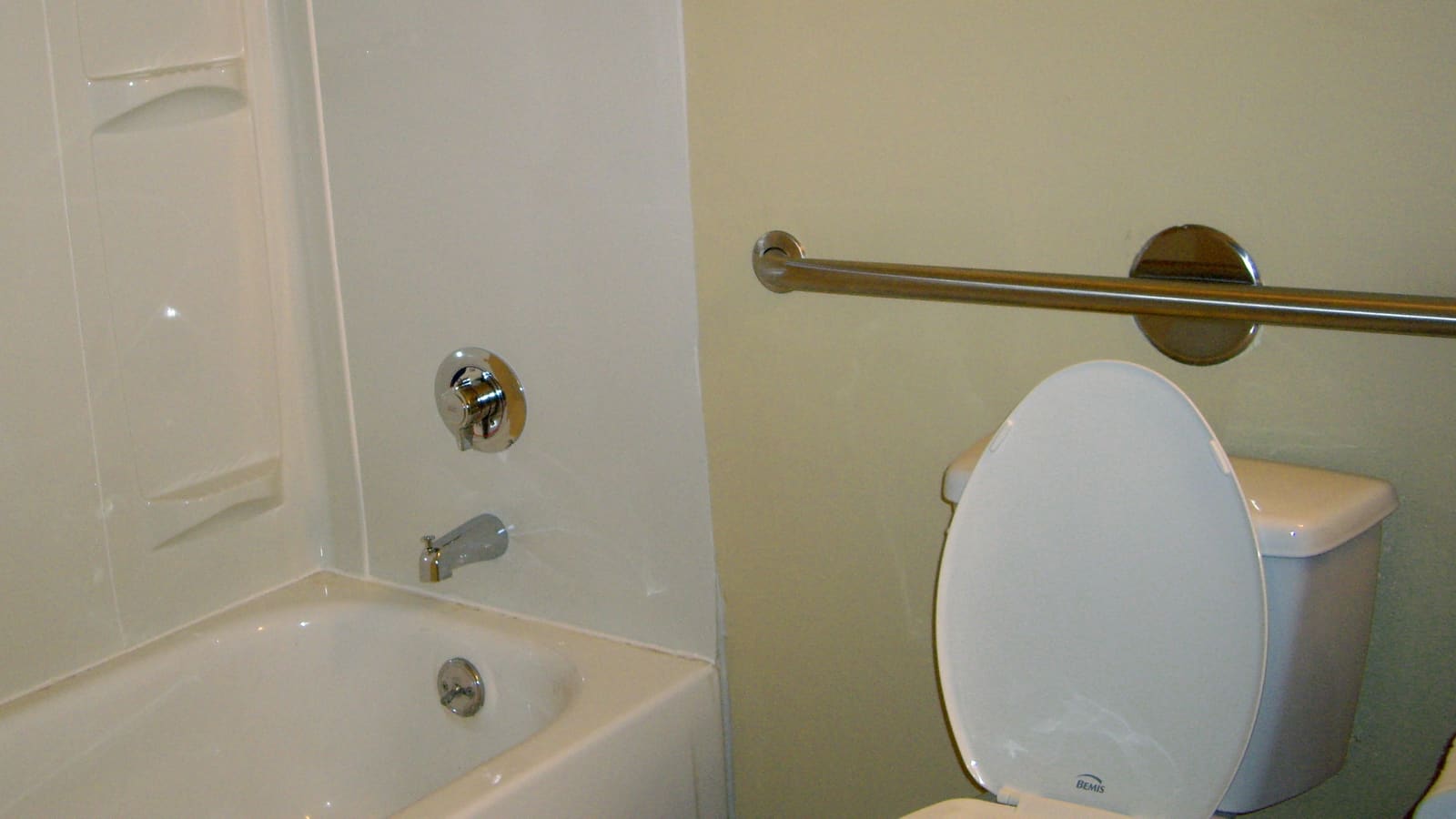
Federal law uses "accommodation" for a change to rules and "modification" for a physical change, and the difference decides who pays. City law does not split them: a structural change is an accommodation too.

| Law | Who it binds | Who pays for a physical change | Restoring the unit at move-out |
|---|---|---|---|
| Fair Housing Act | Nearly all landlords | The tenant. The landlord must permit the work | The landlord may require it for interior changes where reasonable |
| Section 504 | Housing providers that receive federal financial assistance, such as public housing | The provider, unless it is an undue financial and administrative burden | Not stated in the documents checked |
| NYC Human Rights Law | Landlords in New York City | The landlord, unless it proves undue hardship | Cannot be required |
What it means: in a private New York City apartment, ask the landlord to make and pay for the change before you offer to pay yourself.
Source: 24 CFR 100.203; HUD and Justice Department joint statement on modifications, 2008, questions 3 and 31; 24 CFR 8.3; City Commission on Human Rights disability guidance, December 2025, pages 27 and 75 to 76.
A landlord paid through a tenant-based voucher is not covered by Section 504 for that reason alone. NYCHA's FAQ tells voucher holders that NYCHA does not modify privately owned buildings and that the participant pays and restores the unit. That is the federal rule, and the FAQ does not mention city law. Under city law, co-op and condo owners need not pay for interior changes to units owned by others.
Where the federal rule applies and the tenant pays, the landlord can ask for a description of the work, proper permits and workmanlike quality. The landlord cannot choose the contractor, demand extra insurance or raise the security deposit.
Assistance Animals
A landlord must make an exception to a no-pets rule for an animal a tenant needs because of a disability. HUD's own example is a blind applicant's guide dog (24 CFR 100.204).
Watch outHUD's old assistance animal guidance should no longer be relied on.HUD withdrew its two assistance animal guidance documents, FHEO-2020-01 and FHEO Notice 2013-01, effective September 17, 2025, and said they should not be relied upon. The Fair Housing Act and its regulation did not change (91 FR 17291, April 6, 2026).
In New York City the working rules now come from the Commission's December 2025 guidance:
- Service and emotional support animals are not pets. Landlords must make exceptions to no-pet rules, pet fees, and breed, weight or size limits unless that causes undue hardship.
- Documentation. If the disability or the need is not apparent, the landlord may ask for a statement from a health professional. The diagnosis stays private.
- Problems with a particular animal. Where an animal raises a real health or safety concern, the landlord must hold a cooperative dialogue before requiring its removal.
How to Complain If a Request Is Refused
You can complain to the agency that denied you, to a civil rights agency, or both, and each route has its own deadline.
- 30 calendar daysask NYCHA for an impartial hearing after receiving Form 059.664.
- 3 monthscomplain to NYCHA's Department of Equal Opportunity about a disapproved request.
- 180 daysfile a Section 504 complaint with HUD against a housing agency.
- 1 yearfile a Fair Housing Act complaint with HUD, 1-800-669-9777, or with the City Commission on Human Rights, 212-416-0197.
- 2 yearsfile a Fair Housing Act lawsuit in federal court.
- 3 yearsreport to the NYS Division of Human Rights, 844-697-3471, for acts on or after February 15, 2024.
What it means: the City Commission will not take a complaint already filed on the same facts with another agency or court, so choose where to file before you file.
Source: NYCHA Section 8 tenant FAQ; 24 CFR 8.56; HUD and Justice Department joint statement, 2004, question 19; NYC Administrative Code 8-109; NYS Division of Human Rights.
If a landlord refuses your voucher itself, that is source-of-income discrimination, covered in the guide to reporting a landlord who refuses your voucher. For legal help, start with Legal Services NYC.
A sensible next step: write the request down today in two or three sentences, date it, and keep a copy. If you are still searching, browse VoucherMatch listings. Landlords with accessible units can list a property.
Frequently Asked Questions
How do I request a reasonable accommodation from NYCHA Section 8? Send Form 059.109 with a medical verification (Form 059.109A or a provider's letter) through the Self-Service Portal, by mail, or at a Walk-in Center. Send both together.
Do I have to tell NYCHA or my landlord my diagnosis? No. You explain the limitation and how the change helps. NYCHA's forms tell providers not to disclose the disability, and city guidance bars landlords from requiring a diagnosis or full medical records.
How long does NYCHA take to respond to a reasonable accommodation request? Generally five business days after it has every document, according to NYCHA's Section 8 FAQ. The other agencies differ:
- NYCHA's Administrative Plan itself sets no deadline
- NYS HCR answers in writing within 10 business days
- HPD has not published a time
Can a Section 8 landlord refuse an emotional support animal or charge a pet deposit? In New York City, generally no. Landlords must make exceptions to no-pet rules and pet fees for service and emotional support animals unless they can show undue hardship, and may ask for a health professional's statement when the need is not apparent.
Who pays for grab bars or a ramp in a Section 8 apartment? Under the NYC Human Rights Law the landlord pays unless it proves undue hardship.
- The landlord cannot make you restore the unit when you leave
- Federal law alone would put the cost on the tenant
- NYCHA does not pay for work in privately owned buildings
What can I do if my landlord refuses a reasonable accommodation? Ask for the written final determination city law requires, then file with the City Commission on Human Rights (212-416-0197) or HUD (1-800-669-9777) within one year. NYCHA also gives voucher holders a list of agencies that take complaints.
How this article was checked
Last checked: October 4, 2026, against NYCHA's Housing Choice Voucher Administrative Plan (effective May 2026), NYCHA Forms 059.109 and 040.426 and its Section 8 tenant FAQ, HPD's Housing Choice Voucher Administrative Plan (April 15, 2025) and accommodation form, NYS HCR's Administrative Plan Version 2026-2, 24 CFR Parts 8, 100 and 982, the HUD and Justice Department joint statements of 2004 and 2008, and the City Commission on Human Rights' disability guidance (December 2025). This article is general information, not legal advice.
Sources for this article (29)
- 24 CFR 100.204 (ecfr.gov)
- NYCHA Administrative Plan, effective May 2026, section II.D (nyc.gov)
- NYC Administrative Code 8-107(15) and (28) (nyc.gov)
- 24 CFR 100.201 (ecfr.gov)
- NYCHA Section 8 tenant FAQ (nyc.gov)
- HUD and Justice Department joint statement, 2004 (hud.gov)
- 24 CFR 982.303 (ecfr.gov)
- 982.306 (ecfr.gov)
- 982.316 (ecfr.gov)
- 982.402 (ecfr.gov)
- 982.503 (ecfr.gov)
- 982.517 (ecfr.gov)
- HPD Administrative Plan, April 15, 2025 (nyc.gov)
- Form 059.109, Disability Status Notice and Reasonable Accommodation Request (nyc.gov)
- NYCHA guide for applicants and tenants (nyc.gov)
- Medical Verification Form (nyc.gov)
- Request for Reasonable Accommodation Form (nyc.gov)
- HPD accessibility FAQ (nyc.gov)
- HCR Administrative Plan Version 2026-2, sections 2-II.C to 2-II.E (hcr.ny.gov)
- City Commission on Human Rights disability guidance, December 2025 (nyc.gov)
- 24 CFR 100.203 (ecfr.gov)
- HUD and Justice Department joint statement on modifications, 2008 (hud.gov)
- 24 CFR 8.3 (ecfr.gov)
- 91 FR 17291, April 6, 2026 (federalregister.gov)
- HUD (hud.gov)
- City Commission on Human Rights (nyc.gov)
- NYS Division of Human Rights (dhr.ny.gov)
- 24 CFR 8.56 (ecfr.gov)
- Legal Services NYC (legalservicesnyc.org)
Stay Updated on Housing
Get the latest on fair market rents, voucher programs, and finding housing.
No spam, ever. Unsubscribe anytime.
VoucherMatch Editorial Team
Every rule, date and dollar amount in this article is checked against the agency document it comes from, and the sources are listed above. How VoucherMatch articles are researched and corrected
Find apartments
Listings on VoucherMatch come from landlords who say up front which vouchers they accept.
Related Articles
Section 8 Rent Increase NYC: NYCHA, HPD and HCR Requests
Section 8 rent increase in NYC: file with NYCHA, HPD or HCR 60 days ahead, pass rent reasonableness, and follow the 0% stabilized guideline and Good Cause.
9 min readSection 8 Rent Increase: How to Request One (60-Day Rule)
How to request a Section 8 rent increase: 60 days' notice to the housing agency, the reasonable rent test, who pays the difference, and five agencies compared.
10 min readHow to Screen Section 8 Tenants in NYC: What the Law Allows
How to screen Section 8 tenants in NYC: what the agency checks, what landlords may check, and the legal limits on income, credit, court and criminal records.
12 min readRenting to Section 8 Tenants in NYC: Benefits and Costs
NYC landlords cannot refuse a voucher. What a Section 8 tenancy gives an owner, the condition attached to each benefit, and what it costs.
9 min readHow Section 8 Landlords Get Paid in NYC: NYCHA, HPD and HCR
Who pays which share of the rent, what the HAP contract promises, and how first and later payments arrive at NYCHA, HPD and NYS HCR.
12 min readIs Section 8 Worth It for Landlords? An Honest Look at the Numbers
What a NYCHA voucher can pay for your unit in 2026, how the 40% rule and utilities change it, and a worked first-year comparison with market rent.
13 min readList Your Property Today
Join hundreds of landlords connecting with qualified voucher holders on VoucherMatch.
Weighing a purchase? The RentalCalcs investment calculators from the VoucherMatch team run cash flow and Section 8 rent for any address, free.